
Summer Car Emergency Kit: Heat-Specific Gear for Road Trips and Breakdowns
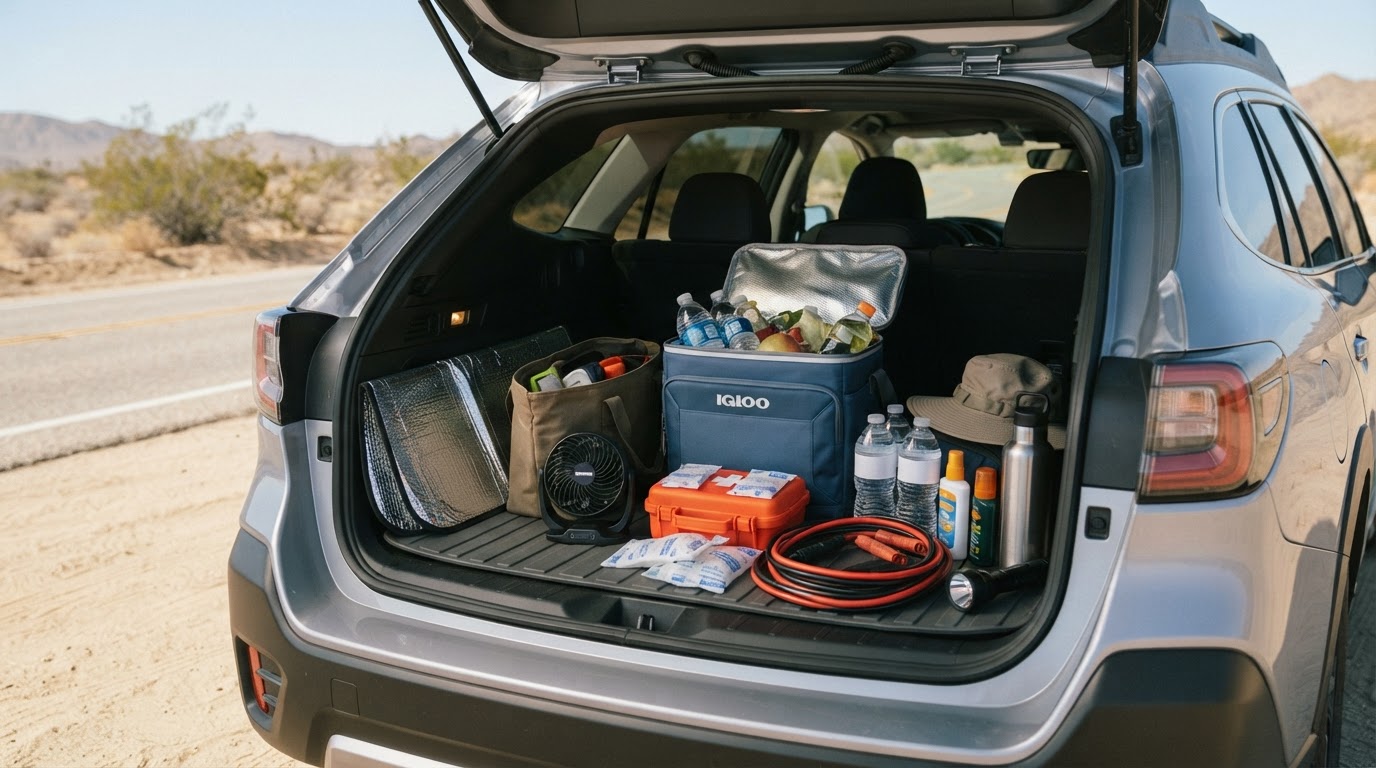
Build a summer car emergency kit for extreme heat: water, shade, a USB fan, cooler, jumper cables, and basic first aid for minor cuts, scrapes, and burns.
This article contains affiliate links. If you buy through these links, we may earn a small commission at no extra cost to you.
A parked car hits 120°F inside within 20 minutes on a 90°F day, even with windows cracked. Children and pets die from heat stroke in roughly 10 minutes once the cabin passes 107°F. A summer car emergency kit is the seasonal companion to the winter car emergency kit already in the trunk.
A summer kit is mostly a swap, not a doubling. The winter shovel and hand warmers come out in May; water, shade, and a way to keep the phone alive go in. Year-round staples (jumper cables, first aid, flashlight, warning triangles) earn their keep in summer too.
The Complete Summer Car Emergency Kit Checklist
The table is the reference list. The gear picks below are the products we'd actually put in each category.
| Item | Why | Repurpose or buy | Cost |
|---|---|---|---|
| Water (1 gal per person per day) (Crystal Geyser Alpine Spring Water, 1 Gallon…, ~$23) | Dehydration drives heat illness; a flat tire in July is hot work | Buy a case, rotate every 3 months | $5–$23 |
| Electrolyte packets or sports drinks | Water alone flushes sodium; replace what you sweat | Stash in the glove box | $5–$10 |
| USB rechargeable fan | Moves air across your face and lap when the AC dies | See fan pick | $30–$70 |
| Reflective sun shade for windshield | Cuts cabin temp 15–30°F; protects dashboard and steering wheel | Cheap foil ones at any auto store | $5–$10 |
| Cooler with ice packs | Keeps water cold through multi-hour delays | See cooler pick | $40–$80 |
| Jumper cables or jump starter | Battery death is still the #1 roadside cause in summer | See jump-start pick | $20–$100 |
| Tire inflator (12V) | Low pressure from heat cycling is the leading cause of summer blowouts | Buy a 12V compressor | $25–$50 |
| Basic first aid kit | Covers cuts, scrapes, and minor burns; heat illness still needs cooling | See first-aid pick | ~$18 |
| Reflective triangles or LED flares | Visibility if you're stopped on the shoulder | Carry over from the winter kit | $20–$40 |
| Paper maps | Cell signal drops in dead zones on summer drives | Print one for your region | $0 |
The single highest-value swap is the reflective sun shade. It is the difference between a cabin that climbs past 140°F in 20 minutes and one that starts 20–30°F cooler. Water is second.
The Gear Worth Buying
The products below are the ones we'd actually put in each category. Prices and ratings are live-checked.
Cooling and shade
- AMACOOL 10 Inch Foldable Rechargeable Oscillating… (about $70): 10-inch oscillating fan with a 20,000mAh battery. Folds flat; recharges by USB-C from any 12V car adapter.
- Coleman Xtreme 50QT Rolling Cooler (~$75, 4.5★): 5 days of ice retention, so cold water and a snack last through a long delay. The wheels and handle earn their keep across a sun-baked lot.
- EcoNour Car Windshield Sun Shade (~$14, 4.3★ over 125,000 reviews): 240T polyester foldable shade for sedans and small SUVs. Pops open, blocks UV, and folds flat. Drops cabin temp 20–30°F in the first ten minutes.
Hydration and salt (water alone is not enough in real heat)
- Nuun Sport Electrolyte Tablets, Lemon Lime, 40… (~$21, 4.6★ across ~3,900 reviews): 40 effervescent tablets with magnesium, calcium, potassium, and sodium. Drop one in a 16-oz bottle when you're sweating hard; the sodium you lose actually gets replaced instead of cramping by hour two. A tube fits in the glove box. Not the WHO ORS packets in the sick-day kit (those are for vomiting and diarrhea); these are the active-heat replacement.
Tires and pressure
- EPAuto 12V Portable Air Compressor (~$36, 4.5★): a 12-volt compressor with a digital gauge that reads pressure and shuts off at your target PSI. The monthly check and the top-up become one driveway job.
Power and first aid
- NOCO Boost GB40 1000A Jump Starter (check current price): a jump starter that fits in a glove box. Heat kills batteries faster than cold, and a July breakdown is no time to wait for a tow.
- First Aid Only 298-Piece All-Purpose Kit (~$18): covers cuts, scrapes, and minor burns. Pair with a printed one-pager on heat-illness signs and you have a credible medical layer.
What to Swap With the Winter Kit
You do not need a second duffel. The same High Sierra 28-Inch Wheeled Rolling Duffle Bag, 64L (~$117) carries both seasons: the winter kit's shovel, ice scraper, and traction mats come out in May; the cooler, fan, and extra water take their place. Stay-put items: jumper cables, warning triangles, flashlight, first aid, paper maps, blanket.
Refresh water every three months and charge the fan monthly. A bottle in a hot trunk is fine if the seal holds, but plastic leaches taste and seals can fail.
Summer Roadside Safety
Heat kills faster than cold, so the rules differ:
- Get out of the sun if you can. If the car is in a safe spot and the engine runs, run the AC in 10-minute bursts with the engine off the rest of the time. A tank of gas gets you roughly an hour of idling.
- Drink before you feel thirsty. Thirst is a late signal; by the time you notice it, you are already behind on fluid.
- Watch for heat-illness signs. Headache, dizziness, nausea, and cold/clammy skin mean stop now, get to shade, and sip water. A body temp above 103°F with hot/dry skin is a 911 call. The full heat exhaustion vs heat stroke breakdown covers the symptoms and the 30-minute decision window.
What NOT to Do
- Do not leave kids, pets, or anyone vulnerable in a parked car, even with windows cracked. Cracking windows does almost nothing; the cabin still climbs past 110°F in 20 minutes.
- Do not rely on a frozen water bottle for "AC." It buys you face-cooling for 15 minutes, then it is just a warm bottle.
- Do not walk for help in the heat of the day unless help is visible within a few hundred feet. Heat stroke on the roadside is a fast, quiet event.
- Do not skip the tire pressure check. Pressure rises 1 psi for every 10°F of air temperature; a 95°F day can push a warm tire past its safe ceiling. Check before long drives.
Quick Recommendations
- Budget build (~$50): A case of bottled water, electrolyte packets, a $5 sun shade, jumper cables, and reflective triangles. Rotate water quarterly.
- Mid-range build (~$150): Add the AMACOOL 10 Inch Foldable Rechargeable Oscillating…, the First Aid Only 298-Piece All-Purpose Kit, and a 12-volt tire inflator like the EPAuto 12V Portable Air Compressor.
- Premium build (check the live total): Everything above plus the Coleman Xtreme 50QT Rolling Cooler and a NOCO Boost GB40 1000A Jump Starter jump starter. The NOCO runs about $100.
The winter kit handles cold and ice. The summer kit handles heat and dehydration. Together they cover the two failure modes a car faces in any year; the swap takes about twenty minutes in the driveway. Do it when you change the clocks in March and November. For the deep dive on what to do if a breakdown strands you for hours, the winter car emergency kit covers the survival rules that apply when the engine dies in July.