
Tire Blowout at Highway Speed: What to Do in the First Ten Seconds
A blowout at highway speed is survivable if you skip the brake pedal. The AAA four-step drill, why tires fail, and the monthly checks that prevent them.
A tire blowout sounds like a gunshot and changes the car's behavior in the same instant. NHTSA defines it as a rapid loss of tire air pressure, and the risk is exactly what you would guess: losing control at speed. What most drivers get wrong is the first reaction. Slamming the brakes while a tire has failed can upset the car's balance and make a bad moment worse, AAA warns. The recovery is a short, counterintuitive sequence, and it works whether the failure is a full blowout or a fast leak.
The first ten seconds, in order
AAA's four steps:
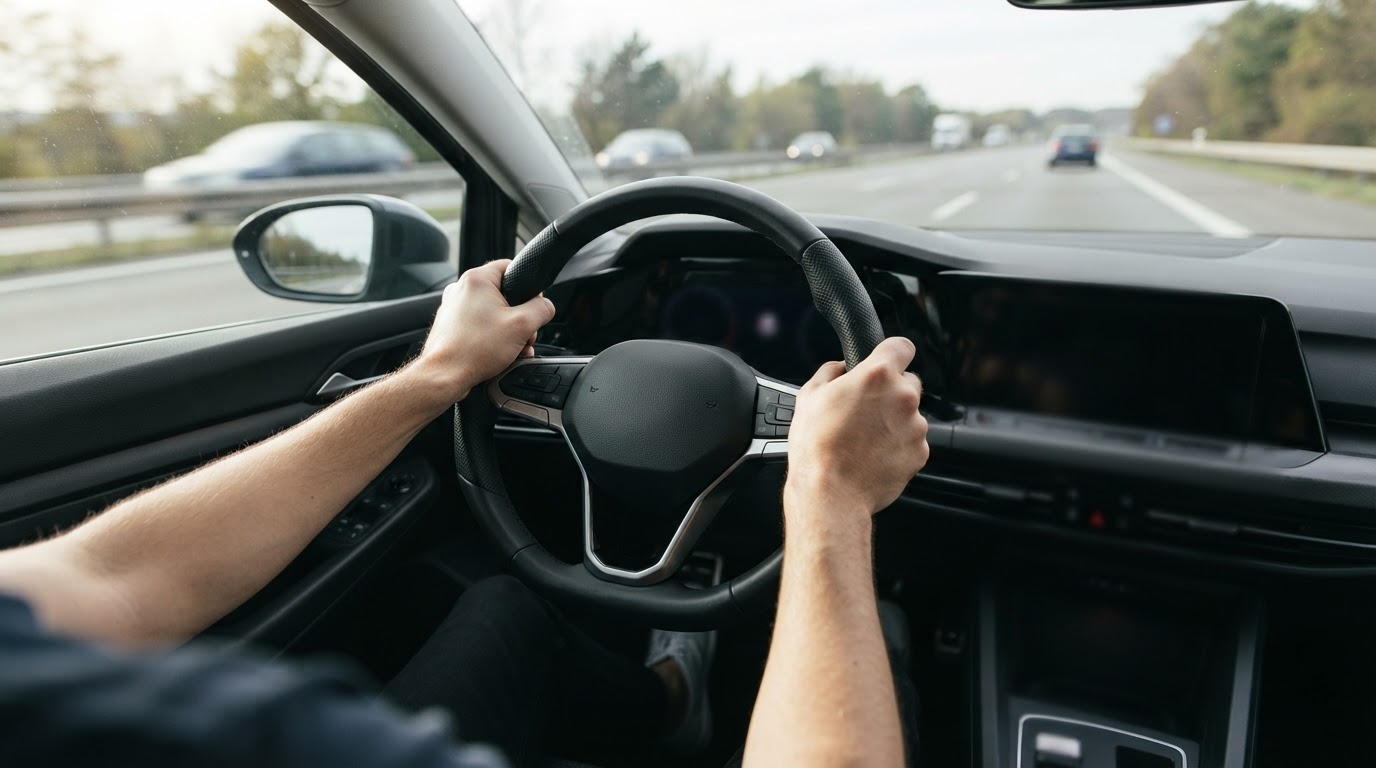
- Grip the wheel with both hands and hold the car straight. A front blowout pulls hard toward the failed tire; a rear blowout makes the tail sway back and forth, per AAA. Resist the pull with firm, controlled steering, and do not yank.
- Ease off the accelerator. Do not brake. AAA says to maintain speed if it is safely possible, then slowly release the gas. Braking early pitches the car's weight forward and can turn a straight stop into a spin.
- Steer where you want to go. Look at the lane you want, not at the failed tire or the shoulder.
- Brake gently once you have slowed. AAA's guidance: after you have control and have coasted down to about 20 to 25 mph, apply the brakes lightly and pull off the road.
Get clear of traffic, then decide what comes next
Stop as far off the road as you can, set the parking brake, and turn on your hazards, per AAA. AAA also suggests leaving at least 5 feet of clearance between the car and the roadway when possible, and getting everyone out on the side away from traffic.
If you cannot get the car fully clear, AAA's advice for breakdowns in traffic is to stay buckled with the hazards on and wait for help rather than standing in a live lane. Never stand between your car and moving traffic, day or night.
Then assess. If the tire is shredded, a shoulder change on a busy road is a tow, not a project. If you are somewhere genuinely safe, the flat-tire guide covers the swap step by step, including jack points and the star-pattern torque order. Either way, a tire that came apart usually cannot be driven on again.
Why tires fail
Underinflation is the slow story behind many sudden failures. NHTSA says poor maintenance, low pressure, and skipped rotations can lead to a flat, a blowout, or tread separation, and it counts 511 deaths in tire-related crashes in 2024. AAA, citing crash data from the National Transportation Safety Board, counts about 33,000 tire-related crashes a year, at least 2,000 of them blowout-related.
What low pressure does is heat. Tire industry guidance is blunt about the mechanism: underinflation causes excessive heat buildup and internal structural damage, which can set up a failure later even if the tire is properly inflated by then. Road hazards do the rest. Potholes, curbs, and debris cut sidewalls, and a bulge or bubble after an impact means internal damage that needs a professional look before the tire fails on its own schedule.
Cold weather makes all of it worse. Tire manufacturers put normal leakage at about 1 psi per month, plus roughly 1 psi for every 10°F of temperature drop. A tire that read fine in September can be meaningfully low after the first cold front, and the dashboard light only fires once a tire is significantly underinflated, per NHTSA. That is why the pressure check moves to the front of the winter car maintenance list every fall.
The monthly checks that prevent most of this
Both checks take minutes, and both want cold tires: the car parked for at least three hours, per NHTSA. Do them monthly and before long trips.
Pressure. Set the tires to the number on the driver's-door placard, not the maximum printed on the sidewall, NHTSA says. A 12-volt inflator like the EPAuto 12V Portable Air Compressor (about $36) reads the pressure and shuts off at the number you set, so checking and topping up is one driveway job.
Tread. NHTSA's line is 2/32 inch: tires worn to that depth are not safe and should be replaced. Check the built-in treadwear indicators, or use the penny test. A color-coded gauge like the LUMITECO 3-Pack Tire Tread Depth Gauge, Color Coded… (about $7 for three) reads each groove in 1/32-inch steps, and AAA's wet-pavement testing found tires at 4/32 inch braked an average of 87 feet longer from highway speed than new ones, so treat 4/32 as the shopping line, not the limit.
Damage. Run a hand over each sidewall while you are down there. Cuts, cracks, and bulges mean a tire needs professional attention, and tire industry guidance adds a pressure tell: a tire that loses more than 2 psi a month may have a leak or damage worth inspecting.
After the blowout: repair or replace
A blowout usually tears the sidewall or shoulder, and tire industry repair standards exclude those zones. Never repair a tire with sidewall or shoulder damage, a puncture larger than a quarter inch, or tread worn to 2/32 inch. The fix is a replacement, or the spare as a trip to the shop.
A small nail in the tread is the different case. A plug kit like the Slime 2040-A Tire Repair Plug Kit (about $8) is an emergency measure to get you to a shop; industry standards call for the tire to come off the rim and get a proper plug-and-patch repair from the inside. Inflate to the door-sticker pressure, and if the tire keeps losing air, stop driving it.
The trunk kit that should already hold your triangle, gloves, and tools is covered in the car emergency kits roundup. And if a blowout ends in contact with a guardrail or another car, the first steps after a crash take priority over everything here.
Frequently asked questions
What should I do if a tire blows out at highway speed?
AAA's four steps, in order: grip the wheel with both hands and keep the car straight, ease off the accelerator without braking, steer where you want the car to go, and once you have control and have slowed to about 20 to 25 mph, brake gently and pull as far off the road as you can. A front blowout pulls toward the failed tire; a rear one makes the tail sway.
Can a tire with a blowout be repaired?
Usually not. Tire industry repair standards exclude sidewall and shoulder damage, punctures larger than a quarter inch, and any tire worn to 2/32 inch of tread. A blowout typically tears the sidewall, so the fix is the spare or a replacement. A small nail puncture in the tread is the different case: that one can be plugged as an emergency measure or properly repaired by a shop.
How do I lower the odds of a blowout?
NHTSA says check pressure at least once a month on cold tires, set to the door-jamb placard rather than the number on the tire sidewall, and check tread at the same time. Tire manufacturers put normal pressure loss at about 1 psi per month, plus roughly 1 psi for every 10°F of temperature drop, which is why the first cold front of fall finds so many tires low.