
Tornado EF Scale Explained: What EF0 to EF5 Really Mean (2026)
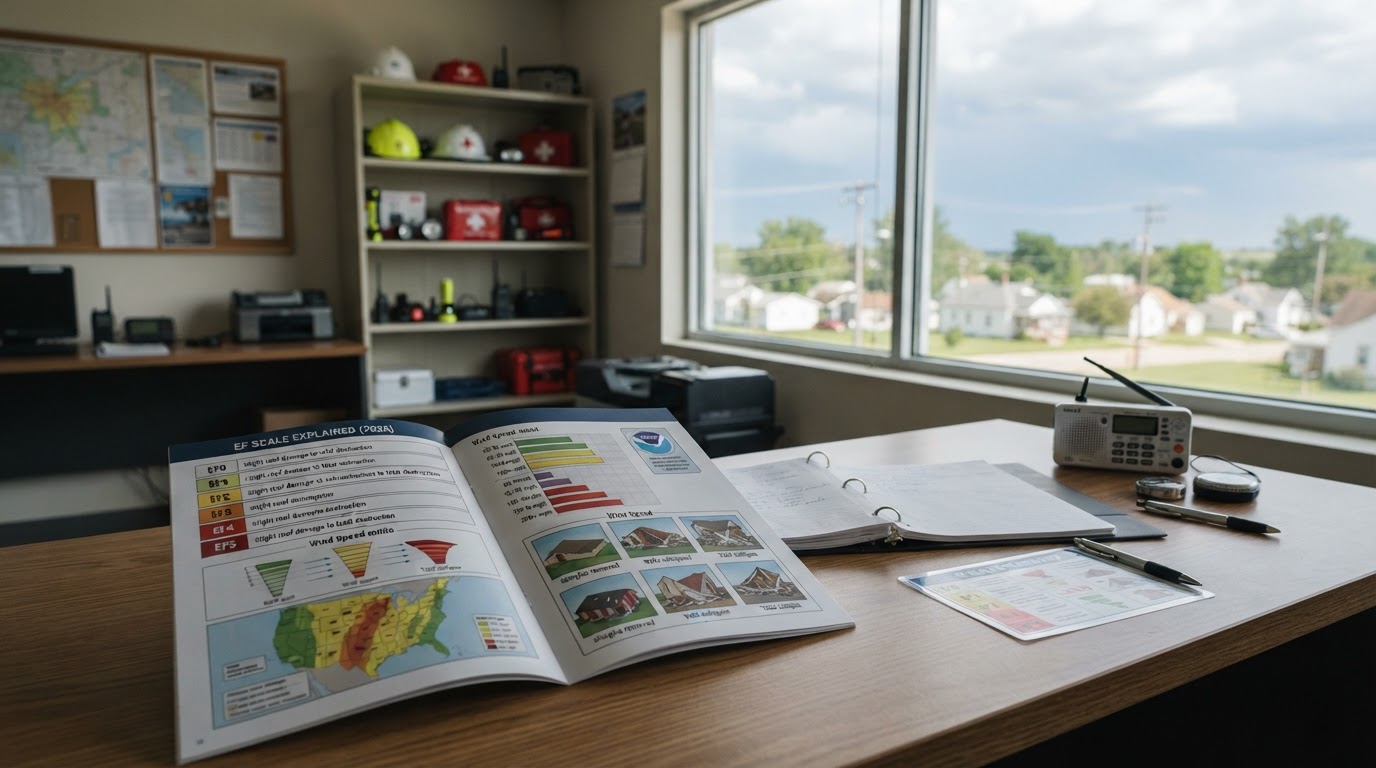
Tornado EF scale explained: what EF0 to EF5 mean, the estimated wind speeds behind each rating, how survey crews assign them, and what it means for your home.
This article contains affiliate links. If you buy through these links, we may earn a small commission at no extra cost to you.
The "EF3" you hear on the news the day after a tornado was not measured while the storm was on the ground. It was assigned later, often days later, by survey crews reading the damage. EF3 is shorthand for "the damage is consistent with winds of roughly 136 to 165 mph": roofs and some walls torn off well-built homes, trains overturned, heavy cars thrown. The entire point of the Enhanced Fujita scale is to turn debris into a wind estimate nobody was around to measure, and knowing what each rating actually describes is what turns a scary headline into something you can plan around.
The EF Scale, EF0 to EF5
The National Weather Service rates tornadoes on the Enhanced Fujita scale, from EF0 to EF5, plus EFU for "unknown". The wind numbers are estimated 3-second gusts:
| Rating | Estimated winds | Typical damage |
|---|---|---|
| EFU | Unknown | Not enough damage to rate. A tornado that stays over open fields gets EFU, not a low number. |
| EF0 | 65-85 mph | Light. Shingles peeled, gutters and chimney caps damaged, small branches snapped. |
| EF1 | 86-110 mph | Moderate. Roofs severely stripped, exterior doors blown in or out, windows broken, mobile homes flipped or badly damaged. |
| EF2 | 111-135 mph | Considerable. Roofs torn off well-built homes, mobile homes destroyed, boxcars pushed over, large trees snapped or uprooted. |
| EF3 | 136-165 mph | Severe. Roofs and some walls torn off well-built homes, trains overturned, heavy cars lifted and thrown. |
| EF4 | 166-200 mph | Devastating. Well-built homes leveled, cars thrown, large debris missiles generated. |
| EF5 | Over 200 mph | Incredible. Strong frame homes swept from their foundations, automobile-sized missiles thrown hundreds of yards. |
Two details worth knowing before you quote a number to a neighbor. First, the scale is damage-based end to end: EFU exists because a tornado that never hits anything cannot be rated. Second, the scale tops out at EF5 because beyond roughly 200 mph there is nothing left standing to compare against, the same reason the hurricane categories stop at 5.
Where the Rating Comes From (and Why It Lags)
Ratings are assigned after the storm, not during it. National Weather Service meteorologists walk the damage path and match what they see against a standardized list of damage indicators: one- and two-story homes, apartment buildings, strip malls, garages, trees, and similar structures. Each indicator has defined degrees of damage, and each degree maps to a wind range.
The first rating published is preliminary. It can be upgraded or downgraded as more of the path gets surveyed, so a Monday night "EF2" can become a Wednesday "EF3". Treat the first number you hear as a starting point, not a verdict, and let recovery decisions wait for the confirmations.
The Wind Estimate Is Not a Measurement
Only a tiny handful of tornadoes have ever been measured directly. Mobile Doppler radars clocked the 1999 Moore, Oklahoma tornado at about 300 mph, the strongest gust ever captured, but that was research equipment that happened to be in the right place. The EF rating is an estimate built from damage, which means it describes what happened to buildings, not what an anemometer read. Two tornadoes can both rate EF2 with genuinely different wind speeds; they share a damage class, not a wind reading.
That distinction matters for how you read the news. "EF3 tornado hits town" is a statement about the destruction, not about the wind that crossed your street. A house can suffer EF3-level damage in a tornado rated lower overall, because the survey rates the whole path, and your block can get the worst of it.
EF Ratings Are Not Hurricane Categories
The Saffir-Simpson scale for hurricanes is assigned from measured sustained winds at landfall. EF ratings come from post-storm damage surveys and describe 3-second gusts. The two numbers sound similar and are not comparable: a "Category 3 hurricane" and an "EF3 tornado" share a digit and nothing else. Our hurricane categories explained guide covers the wind scale on the storm side.
What the Rating Means for Your Home
The useful part of the scale is what it tells you about the size of your recovery job:
- EF0 and EF1 strip the roof. Shingle and sheathing loss means water finds the gaps, and the next rain does more damage than the tornado did. If your roof took EF1 damage, tarp it before the forecast rain: a Tarp 12x16 ft Heavy Duty 12-mil Waterproof covers a whole compromised section in one wrap when it is secured under intact shingles with furring strips.
- EF2 takes roofs off well-built homes. Your debris field is nails, sheet metal, and glass. If you are going out to photograph damage for insurance (photograph before you touch anything), put on a Pyramex SL Series Hard Hat (HP14010): ANSI Z89.1 rated, about $11, and it also lives on the safe-room hook for the next storm.
- EF3 and up means you are recovering, not repairing. Walls gone, homes swept, crews working the whole county. That is the long phase: sorting salvage, waiting on adjusters, power out for days to weeks. A EcoFlow RIVER 3 Portable Power Station (245 Wh) keeps phones and a CPAP running while the grid is down, and a Midland ER310 Emergency Radio keeps NOAA alerts and county damage reports coming when cell service is unavailable. The tornado aftermath cleanup guide is the full method for that phase.
What the Scale Does Not Do
The EF rating is history about one storm. It does not predict the next tornado, and a shiny number does not mean the danger has passed. The forecast you act on is the watch and the warning: our tornado safety guide covers where to shelter when the sirens sound, and watch vs warning covers which alert demands what. And do not drive toward the damage to see the rating in person. You are in the way of the crews, and the debris field is exactly where the injuries happen.
The EF scale is a damage diary, not a forecast. Read it for what it tells you, the size of the cleanup and the shape of the weeks ahead, and keep your warning systems charged for the part it cannot tell you, which is the next storm. The number on the news explains the past. The radio in your kitchen handles the future.