
Tornado Safety in a Mobile Home: Your Real Options (NWS Guidance, 2026)
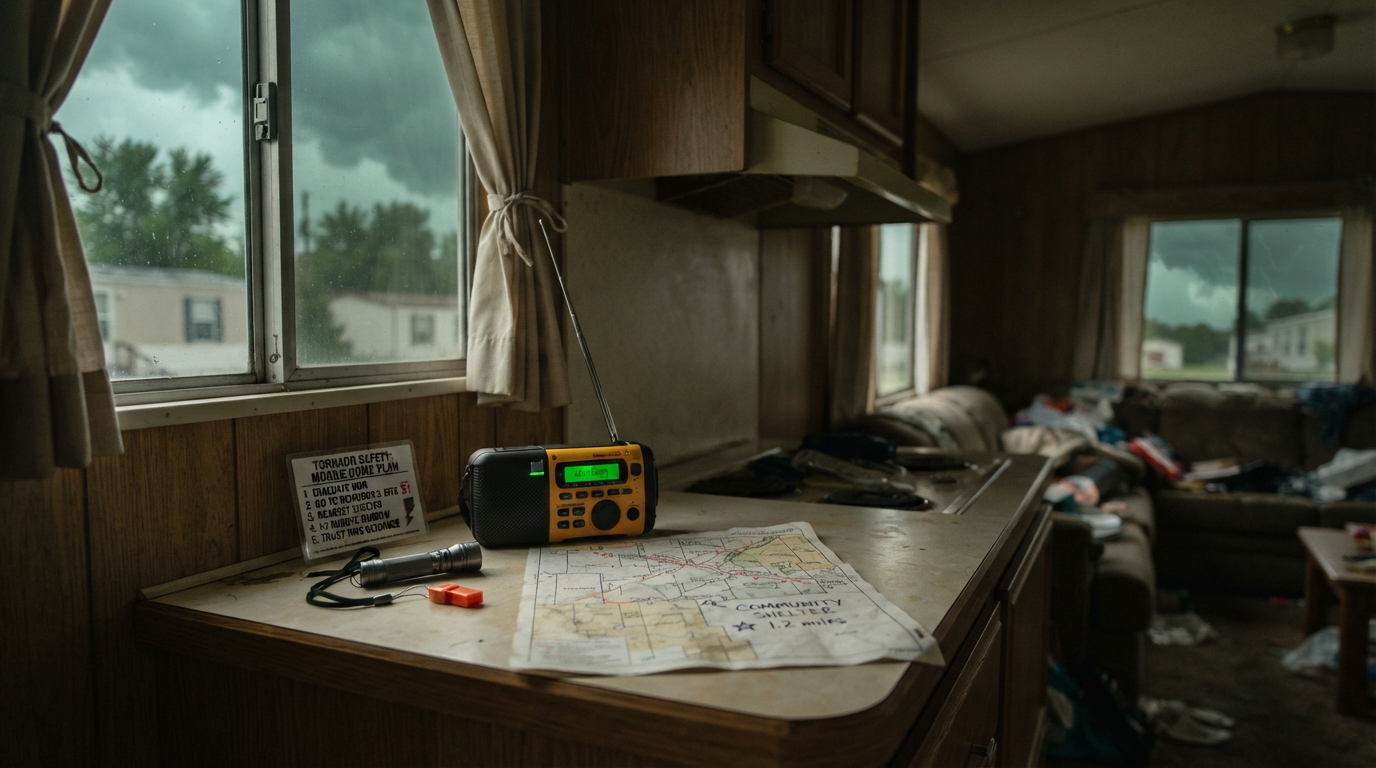
Mobile homes are unsafe in tornadoes, including weak ones. Compare community shelters, neighbor plans, warning timing, and current NWS guidance for 2026.
This article contains affiliate links. If you buy through these links, we may earn a small commission at no extra cost to you.
The rule comes first: no part of a mobile or manufactured home, even anchored and tied down, provides meaningful tornado protection. The National Weather Service says mobile homes are unsafe even in weak tornadoes. NWS offices report that nearly 40% of tornado deaths involve mobile-home residents, far above their share of the housing stock.
If you live in one, the standard advice to use an interior room on the lowest floor does not apply. Choose a sturdy shelter before severe weather arrives, learn the route, and leave while there is still time.
Why Mobile Homes Fail in Tornadoes
It's not about quality or age. A site-built house has a foundation, wall sheathing, and roof structure tied together into one system that resists uplift. A manufactured home is a light box set on piers or tie-downs, engineered for transport, not for 150 mph wind pressures that lift and roll entire structures. Studies after major outbreaks consistently find manufactured homes destroyed while neighboring site-built homes lose only shingles.
The corollary matters just as much: your bathroom or closet doesn't become safer because it's interior. When the whole box fails, every room inside fails with it. That's why "shelter deep inside your mobile home" is the single most dangerous tornado advice still circulating.
Option 1: A Community Storm Shelter
Some mobile-home parks have community storm shelters, but many do not, and requirements vary by state and locality. Do not assume the office or clubhouse is reinforced. Ask the park manager directly:
- Where is the shelter, exactly? Get the door location, not just "by the office."
- Is it unlocked 24/7, or keyed to residents?
- What's its rated capacity versus the park's population?
Do this today, not during a warning. Walk the route once and time it. If your park lacks a shelter, ask anyway; parks have added them after resident requests, and knowing it doesn't exist pushes you to option 2 sooner.
Option 2: A Sturdy Neighbor or Nearby Building
If there is no community shelter, identify a site-built structure you can reach in under five minutes: a neighbor's house, church, business, library, or school. Ask the owner in calm weather, write the address into your plan, and walk the route once. Do not assume you will remember it mid-warning.
Option 3: A Personal Storm Shelter
If you own the land, an underground or above-ground residential shelter gives you an on-site option. FEMA P-361 and ICC 500 set the relevant design criteria; use a qualified local installer and get more than one quote because site work and shelter type drive the cost. Renters usually cannot build one, but some parks approve a shared shelter. After a federal disaster declaration, our FEMA disaster assistance guide explains how to document damage and apply for help.
What About Driving Away During the Warning?
NWS guidance is to leave for sturdy shelter before severe weather arrives, often during a tornado watch when storms are moving toward your area. A warning may arrive too late for the route you planned.
Use this rule:
- During a watch: move to your chosen sturdy shelter if storms are headed your way. Bring the pets and tell a family contact where you are going.
- If a warning arrives before you leave: go at once to the nearest sturdy structure if it is immediately reachable by the route you already planned. Do not start a long drive or try to outrun the storm.
- If no sturdy structure is reachable: a protected low spot outside, away from vehicles, trees, debris, and flooding, is a last resort. Get low and cover your head and neck.
Do Not Plan Around an Average Warning Time
Some warnings provide several minutes; others provide little or none. Your plan should already be in motion during the watch. Once a warning includes your location, act immediately:
- Shoes on everyone (glass and nails come later, but you may crawl now).
- Bike or work helmets on heads, head injuries dominate tornado fatalities. A CPSC-certified bike helmet like the Bell Adult Reflex Bike Helmet runs about $14 and fits an adult head with a rear dial.
- Go immediately to the shelter you chose in calm weather. No gathering belongings, no opening windows (an old myth, it wastes your minutes and changes nothing).
- One person checks the radio (Midland ER310 Emergency Radio NOAA radio) for local warning updates if time allows; Midland lists NOAA Weather Radio alerts, up to 45 hours of normal battery use, and an SOS flashlight. Everyone else is already moving. Do not wait for a second update before leaving. Stage helmets, shoes, and the radio in a single bin by the door tonight. The safe-room stock list applies to whatever shelter you've chosen.
After the warning, the same bin has to work in the dark. A Energizer HC-550 Magnetic Flashlight (AA) gives 500 lumens from AA batteries, and its magnetic base can stick to a metal surface. An Anker Power Bank 10,000mAh USB-C can give many phones one substantial recharge, keeping the alert line and call home available. These are companion tools, not a substitute for sturdy shelter.
After the Storm
Expect downed power lines, gas odors, and nails everywhere. Shoes stay on. Photograph damage for insurance before touching anything, check on neighbors by voice before entering damaged structures, and treat generators as outdoor-only equipment, post-tornado carbon monoxide poisoning is a recurring killer in manufactured-home communities. Our tornado aftermath cleanup guide covers the full recovery sequence.
Frequently asked questions
Where do you go in a tornado if you live in a mobile home?
Not inside it. Go to a community storm shelter, a site-built neighbor's interior room, or another sturdy building within about five minutes. If none is reachable and the storm is close, lie flat in a low ditch covering your head.
Is a bathtub safe in a mobile home during a tornado?
No. Interior rooms help in site-built houses because the structure can shield you from debris. Manufactured homes can fail entirely in weak tornadoes, taking every interior room with them. NWS guidance is to leave for sturdy shelter, not hide in the tub.
Should I drive away from a tornado in my mobile home park?
Relocate during a watch when storms are headed your way. If a warning arrives first, go only to the nearest sturdy structure on the route you already planned; do not begin a long drive or try to outrun the storm. A protected low spot outside is a last resort when no sturdy shelter is reachable.