
After the Tornado: Safe Debris Cleanup and Recovery (2026)
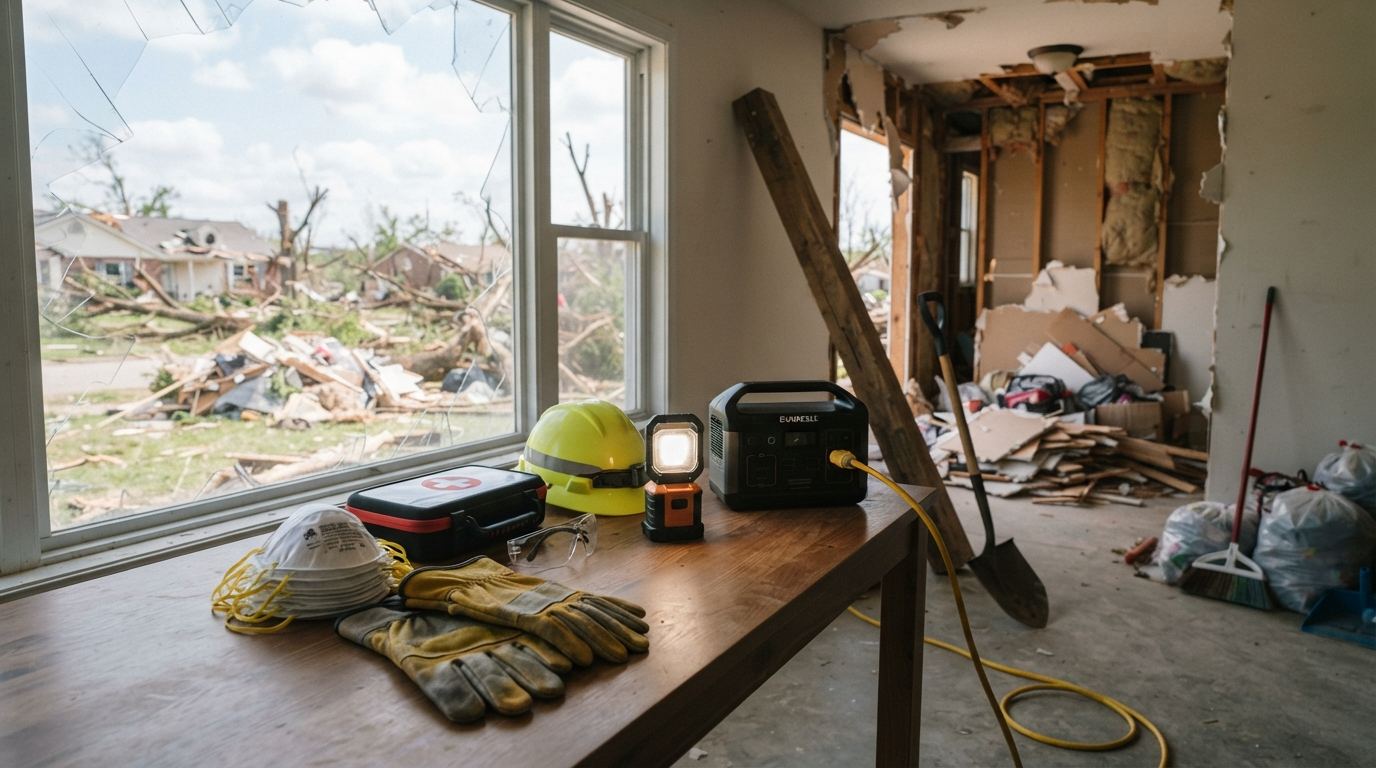
After the tornado passes: how to clean up safely, avoid hidden hazards, handle debris, and recover your home — with the right protective gear and power setup.
This article contains affiliate links. If you buy through these links, we may earn a small commission at no extra cost to you.
A tornado tears through in minutes. The cleanup takes weeks, and more people are hurt during the aftermath than during the storm itself. Nails, downed wires, unstable structures, and exhaustion turn a debris field into a second emergency.
The existing tornado coverage on this site gets you into the safe room and through the warning, but doesn't teach the recovery. The tornado safety guide closes with a short "danger doesn't end" list, and the safe-room guide stocks helmets and water for the shelter itself. This is the cleanup method.
The short answer: wait for the all-clear, assume every wire is live, document damage before you touch it, and work in the right gear: hard hat, sturdy closed shoes, gloves, and eye protection. Keep a charged radio nearby.
The first hour: don't rush back in
- Wait for the official all-clear. The National Weather Service cancels the warning when radar shows the threat has passed. Sirens don't signal the all-clear, check your Midland ER310 Emergency Radio or phone alerts.
- Smell for gas, listen for hissing. If you smell rotten eggs or hear a hiss near the meter, leave immediately and call 911 from outside. Don't flip switches or start a generator.
- Assume every downed wire is live. Stay at least 35 feet away and report it to the utility. Never clear branches that touch a line.
- Photograph before you pick up. Insurers want untouched damage: roof, walls, vehicles, contents inside. Walk the perimeter, shoot wide and close, and back the photos up before debris shifts.
- Check the structure before you enter. Look for bowed walls, sagging ceilings, shifted foundations, or gas odors. If doors stick, the frame has moved; stay outside and call for an inspection.
Gear up before you touch debris
Tornado debris mixes the sharp (nails, sheet metal, glass) with the heavy (branches, shingles, siding) and the hidden (live wires under limbs). Cleanup wants all-day head protection plus the rest of the system.
- Hard hat: A Pyramex SL Series Hard Hat (HP14010) (ANSI Z89.1 Type I Class E, ~$11) is cheap insurance when you're under a damaged eave or tossing branches.
- Eyes and hands: Safety glasses plus heavy work gloves. Cut-resistant gloves beat knit garden gloves when sheet metal is everywhere; the Ironclad 360 Cut Work Gloves (Large) is the pair we'd grab. On the eyes, the Pyramex I-Force Anti-Fog Safety Goggle (ANSI Z87.1, dual-pane anti-fog, ~$20) keeps drywall dust out.
- Feet: Closed, sturdy shoes or boots with thick soles. Puncture-resistant soles matter more than steel toes. If your everyday pair is sneakers, a leather work boot like the Timberland PRO Pit Boss 6-Inch Steel-Toe Work Boot (~$110) is the dedicated pair for the debris field.
- Breathing: A 3M Aura N95 Particulate Respirator 9205+ handles drywall dust and mold spores.
That kit lives in the garage; pull it out only when the storm has passed and you're switching from sheltering to clearing.
How to clear debris in the right order
Work outside-in and big-to-small. Heat and fatigue cause most aftermath injuries.
- Mark hazards first. Flag holes, exposed rebar, sharp metal, and any line or pipe you can't identify.
- Separate the piles. Keep three: vegetative, construction debris, and household items you may salvage. Your county sets where each goes.
- Cut, don't pull. Use a handsaw for limbs under tension. The Fiskars 10-Inch Folding Pruning Saw locks open in two positions and folds into its own handle. A branch pinned under debris snaps back when freed, so cut in short sections and clear from the safe side.
- Lift with legs. Tornado debris is waterlogged and heavier than it looks. Team-lift anything over 50 pounds.
- Tarp the roof before the next rain. A blue tarp over compromised roofing saves more property than a week of hauling. Secure it under intact shingles with furring strips. A 12x16 Tarp 12x16 ft Heavy Duty 12-mil Waterproof is thick enough to stay put across a ridge and wide enough to cover a whole compromised section. For ground-level tarps, an 8-pack of 12-inch steel stakes like Heavy Duty Tent Stakes 12 inch Steel Pegs 8-Pack (~$16) drives through the grommets and holds where lighter pegs pull out.
Power and light when the grid stays down
Tornado outbreaks in late summer often knock out power for days across several counties, exactly when you need light to work safely and power to call adjusters.
- Radio: Keep your Midland ER310 Emergency Radio charged and near the work area. County updates, curfews, and debris-drop schedules come over NOAA, not social media.
- Power station: A EcoFlow RIVER 3 Portable Power Station (245 Wh; about $249 at the current listing) runs phones, a small fan, LED work lights, and a CPAP overnight when the home circuit is out. Recharge it from the wall before you lose it, or from the car once you have it.
A work light earns its place on this list. Different from a headlamp, you aim it at the work and keep both hands free. After a tornado the grid is off for days, and you're holding a flashlight in your teeth to see under the eave. A magnetic LED work light like the Coquimbo Rechargeable LED Work Light, 2 Pack (~$10 for two, 4 lighting modes, IP65) sticks to the breaker panel or any metal surface and recharges from USB-C, so the EcoFlow RIVER 3 Portable Power Station keeps it lit all night.
A radio plus a modest power station beats a generator you can't fuel in a county-wide blackout.
What not to do
- Don't enter an attic or crawl a roof alone, have a spotter and a charged phone.
- Don't burn debris. Pressure-treated lumber and painted siding release toxins, and burn bans often follow outbreaks.
- Don't hire the first door-knocker offering "FEMA help." Verify contractors through the state licensing board; real FEMA help never solicits at the door. If a federal disaster is declared, the legitimate path is registering with FEMA yourself; the apply-and-document walkthrough is in our FEMA guide.
Quick checklist: the first 24 hours after
- Official all-clear received and gas leak check done
- Photos taken, backed up; insurer notified
- Hard hat, gloves, glasses, boots, N95 on before debris
- Power/water status checked; radio and power station charged
- Hazards flagged; three debris piles started
- Roof tarped if compromised
- Vulnerable neighbors checked
Quick recommendations
- Head protection: Pyramex SL Series Hard Hat (HP14010), ~$11, ANSI-rated, the first thing to put on
- Air protection: 3M Aura N95 Particulate Respirator 9205+, for dust and mold during interior work
- Stay informed: Midland ER310 Emergency Radio, 72+ hour battery, NOAA SAME alerts, hand crank
- Stay powered: EcoFlow RIVER 3 Portable Power Station, 245 Wh for phones, lights, and medical devices
Next steps: revisit where to go inside your home to confirm your safe room still works, and tighten the room itself with tornado safe room upgrades.
Sources: FEMA P-361, National Weather Service, Ready.gov checklists (2024–2026). Check your county's debris plan for curbside rules.