
How to Build a Tornado Safe Room (and What to Keep In It)
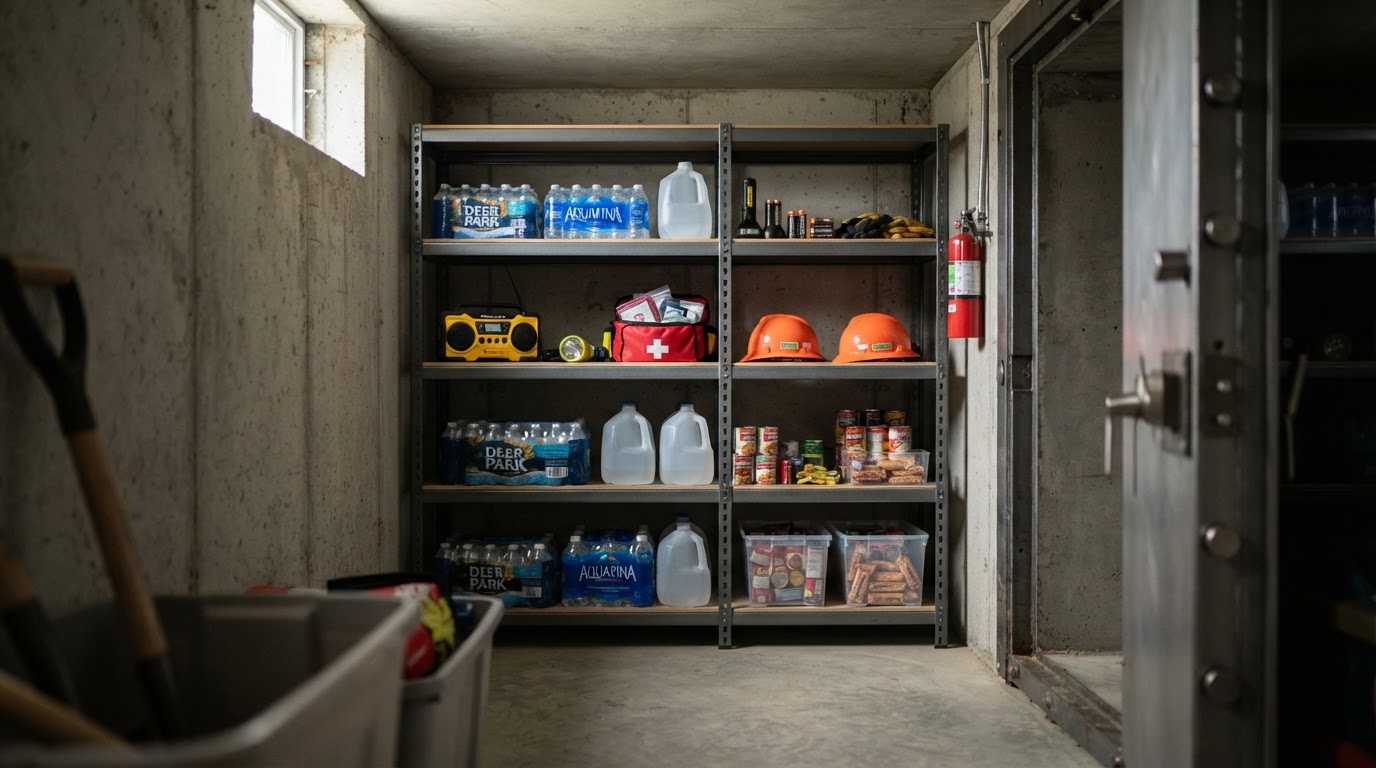
Learn how to build a tornado safe room and what to stock inside it — radios, helmets, first aid, and water. FEMA-informed guidance for EF4 and EF5 winds.
This article contains affiliate links. If you buy through these links, we may earn a small commission at no extra cost to you.
2026 has been a record year for tornadoes in places that used to be safe. Illinois has confirmed more than 220 tornadoes, a state record per National Weather Service surveys, as Tornado Alley shifts east across the Mississippi River into states that rarely needed basements. Wisconsin's governor declared a state of emergency in late July after an EF3 tornado tore through the Fox Cities.
The good news: you don't need a basement to survive an EF4 or EF5. FEMA's P-361 standard exists because above-ground shelters can be engineered for near-absolute protection in extreme wind; a reinforced interior room borrows the same logic. This guide covers choosing your safe room, retrofitting on a budget, and stocking it so you actually want to shelter there.
One caveat: the National Weather Service says mobile and manufactured homes are not safe in a tornado, so if that's where you live, start with our mobile home tornado safety guide instead.
The Best Tornado Safe Room in Your House
That standard is written for contractors, but the homeowner version boils down to four rules. Pick a room that checks all of them:
- Lowest floor, basement first, then ground floor of a multi-story home.
- No exterior walls, nothing with outside exposure should touch the space.
- No windows, glass becomes a projectile in tornado winds.
- Interior, short span, a small room with lots of walls around it holds up better than a big open space.
Basement vs. Interior Closet vs. Hallway
| Shelter spot | Protection | Caveats |
|---|---|---|
| Basement | Best | Stay under a sturdy table; avoid the garage side and exterior walls |
| Interior closet | Excellent | Under stairs is a bonus; must be windowless and fully interior |
| Interior hallway | Good | Only if it has interior walls on both sides; a last resort |
| Exterior hallway | Poor | Exterior walls fail first, keep moving |
| Garage | Never | Wide span, big doors, cars, worst place |
A basement is the gold standard, but FEMA notes that in homes with poorly built basements, a ground-floor interior room can be safer. What matters is what's between you and the wind.
No Basement? Use an Interior Bathroom
Plumbing walls double as dead weight: packed with pipes, they resist flexing. An interior bathroom on the ground floor is often the strongest room in a slab house. Add these upgrades:
- Helmets for everyone, head injuries are a common cause of tornado deaths, per the CDC. Bike, skate, or hard hats all work.
- Mattress over your head, lie flat in the tub and pull a mattress over you to deflect falling debris.
- Keep the door closed, it stays between you and the wind, even in the tub.
- Anchor the tub if you can, a flexing tub is just a projectile.
Retrofitting Basics on a Budget
You don't need a certified safe room to improve your odds. Do these in order of cost:
- Clear the room, move heavy furniture out; the room is the shield, not what's in it.
- Anchor the big things, strap your water heater and heavy furniture; a toppled water heater can block the only door.
- Add a storm door, a solid-core door with a deadbolt beats the hollow interior door. The door is usually the weak point.
- Fix the walls, attach plywood or a steel plate to the wall behind the door frame if it's the only interior option.
- Skip the window "protection", boarding keeps rain out but won't stop tornado-driven debris.
What to Keep in Your Safe Room
A safe room is only as good as what's in it. Stock it now; between a warning and a strike, you won't be packing:
| Item | Why it's in there |
|---|---|
| NOAA weather radio (RunningSnail MD-090 Emergency Radio) | Alerts and updates when power is out or cell service fails |
| Flashlight + headlamp (Energizer HC-550 Magnetic Flashlight (AA)) | Hands-free light for a collapsed or dark space |
| Helmets for everyone (Pyramex SL Series Hard Hat (HP14010)) | Head protection from debris, a common cause of tornado deaths (CDC) |
| Spare shoes | Walk out over broken glass and nails |
| First aid kit | Cuts, lacerations, and scrapes from the debris field |
| Water (1 gallon/person/day, per the CDC) | You may shelter for hours, or crawl out the next morning |
| Phone power bank (Anker Power Bank 10,000mAh USB-C) | Calling for help and checking alerts after it passes |
| Copies of IDs and insurance | Proof of who you are and what you owned, if the house goes |
Choosing the Gear
Radio. Your phone may lose service when towers are damaged. A Midland ER310 Emergency Radio gives you NOAA alerts, 72+ hours of published battery life, and a hand crank, the same pick we recommend in our emergency radio guide. Keep it plugged in beside the safe room so it stays charged. Our tornado watch vs warning guide covers what each alert means and when to act.
Power. A EcoFlow RIVER 3 Portable Power Station is a 245Wh power station that recharges from the wall or your car. It keeps your phone topped up for days and runs a small fan or CPAP. For most families, it's a better buy than a generator you'll never fuel.
First aid. You want bandages and trauma gear, not a novelty kit. The First Aid Only 298-Piece All-Purpose Kit covers cuts, burns, and sprains for the whole family, cheap enough to keep a second one in the car. For deeper coverage, see our roundup of the best first aid kits.
The rest. Pack two days of water per person, one pair of sturdy shoes per person, a headlamp plus a backup flashlight, and a zippered pouch with copies of IDs, insurance, and a phone list. Use our budget bug-out bag as the template, then park a mini version in the safe room.
Make It a Habit
A safe room you never use is a closet. Run a drill twice a year (tornado season runs spring and fall), keep the door clear, and replace stored water every six months, per ready.gov. Read our full tornado safety guide before the sirens go off. If a major tornado triggers a federal disaster declaration, FEMA's Individuals and Households Program may cover temporary housing, repair, and replacement essentials; the apply-and-document walkthrough is in our FEMA disaster assistance guide.
Quick Recommendations
- Strongest cheap option: an interior bathroom with helmets, a mattress, and a Midland ER310 Emergency Radio, under $100 for the gear
- Best power backup: EcoFlow RIVER 3 Portable Power Station for phones and medical devices through multi-day outages
- Best first aid: First Aid Only 298-Piece All-Purpose Kit as the base, upgraded with tourniquets and gauze
- Best upgrade order: clear the room, anchor the water heater, storm door, documented stock list
The wind is moving east. Get your safe room ready.