
What to Do If You Smell Gas in Your Home (2026)
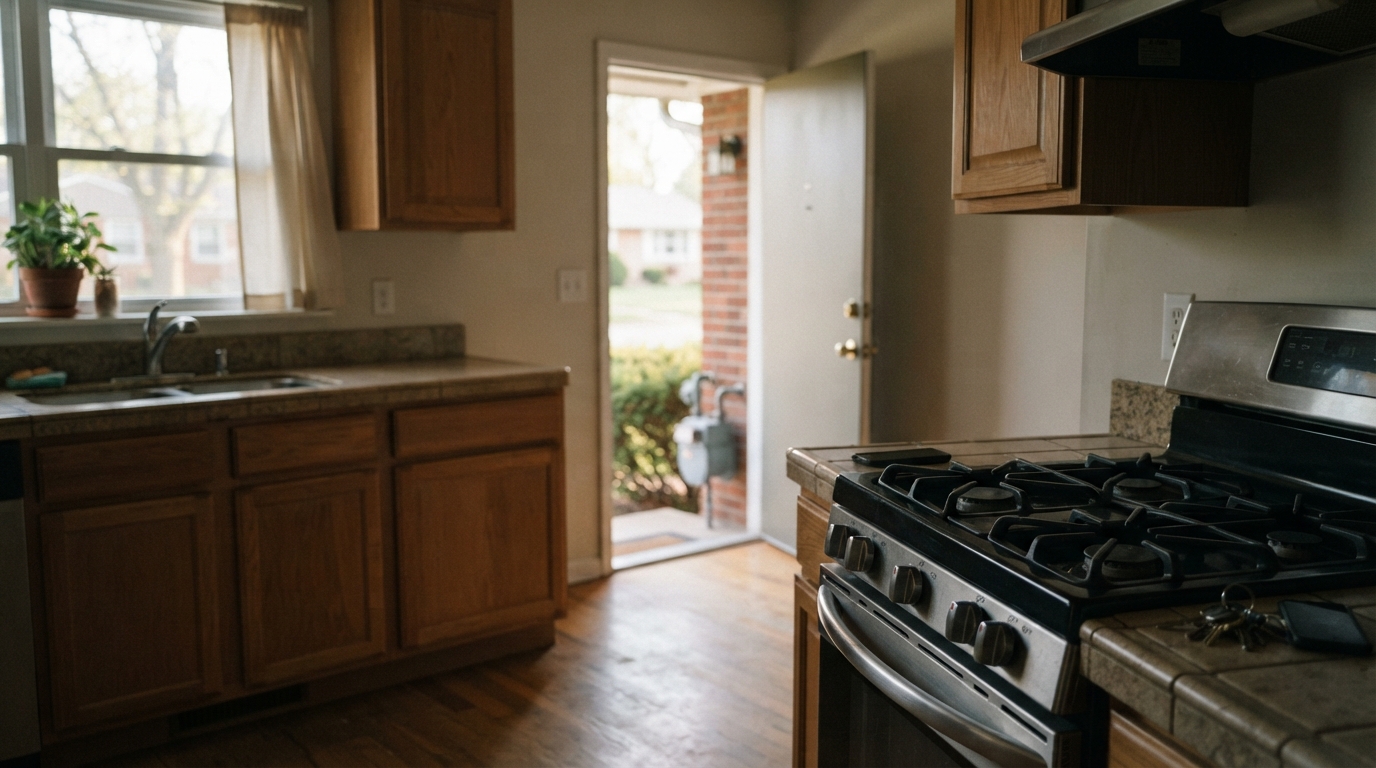
Smell gas at home? Get out first, avoid sparks and switches, shut the meter only if you know how, and call 911 and your utility from outside. No relighting.
This article contains affiliate links. If you buy through these links, we may earn a small commission at no extra cost to you.
Natural gas has no smell on its own. What you smell is mercaptan, a sulfur chemical added so a leak announces itself as rotten eggs. If that odor is strong in your home, the right sequence is simple: get everyone out, avoid anything that can spark, and call for help from outside.
The short answer: if you smell gas, get people and pets out through the nearest exit without touching switches or using phones inside. Once outside and upwind, call 911 and your gas utility. Shut the meter valve only if you know where it is, can reach it without staying inside, and the odor points to the meter or one appliance.
That line is the whole plan. Everything below is how to make it work when your brain wants to do the opposite.
Why you smell it at all
Utilities add mercaptan at about 1 part per million because methane is invisible and odorless. The smell can fade if you stay in it, if you have a cold, or with age, and some leaks in walls or soil lose odor outdoors. Treat any sulfur smell near a gas appliance, meter, or pipe as a leak until a tech clears it.
This is different from carbon monoxide. CO is the odorless byproduct of incomplete burning. A Kidde Battery-Powered Carbon Monoxide Detector alarms for CO, not raw natural gas. If you heat with gas, you want both. The Kidde Plug-In Explosive Gas & Carbon Monoxide Alarm plugs into a wall outlet, alarms for propane, natural gas, methane, and CO, and has a 9-volt backup that keeps it awake when the power is out, when quake-damaged pipes make leaks more likely.
For the quake-triggered version of this decision, see when and how to shut off gas after an earthquake, which covers the quarter-turn, when NOT to shut off, and why a needless shutoff leaves you waiting days for a relight.
This guide is for a leak inside your home. When a chemical release happens outdoors (a tanker spill, a train derailment, a cloud drifting over the neighborhood) and officials tell people to shelter or evacuate, the response is different. The chemical emergency guide covers the sealed-room version.
The first 60 seconds: leave and do not spark
Gas needs an ignition source, not just a flame. A light switch, a garage door opener, a phone ringing in a pocket, static from a sweater can be enough at the right mix.
- Get everyone out now. Use the nearest door. Grab no bags.
- Do not create sparks inside. No switches, no unplugging, no phone or flashlight until outside.
- Count at the meeting point. The spot your family chose for fire or gas, from your family emergency plan. Pets too.
- Call from outside and upwind. 911 first if the odor is strong. Then your gas utility, on your bill or the meter sticker.
If you are in an apartment or condo, knock as you go, and tell neighbors to leave without using elevators. Many buildings share a gas manifold, so cutting one unit does not isolate the building. Let the utility make that call.
Should you shut the meter yourself?
The valve at the meter is a flat rectangular bar on the pipe before the dial. Along the pipe is on, across the pipe is off, one quarter turn with a fitted wrench.
Shut it if all three are true: you know where the meter is, can reach it without going back inside, and the odor points to the meter or one appliance valve. A Prime-Line PH 17106 Gas Shut-Off Wrench zip tied to the meter pipe means you are not hunting a toolbox in the dark. A pack of black, UV-resistant 12-inch ties like Karoka Zip Ties 12-Inch (100 Pack) runs about $6 for a hundred, and one tie is enough to strap the wrench where a flashlight beam lands. The plastic will outlive the wrench on an outdoor meter.
Do not shut it if: the odor is strong throughout the house, you would have to search for the meter, the meter is in a basement you must reenter, or you feel lightheaded. Get out and let the crew isolate the building.
Who to call and what happens next
You will usually talk to two parties. The fire department checks the building and the air, the gas utility locates the leak and decides whether to lock the meter.
Do not confuse the call tree with a CO alarm. If a Kidde Battery-Powered Carbon Monoxide Detector is sounding but you do not smell gas, treat it as CO: get out, call 911, do not ventilate with an electric opener or fan. If you smell rotten eggs and no CO alarm is sounding, treat it as a gas leak.
Relight rules
Once any valve is shut, only the utility or a licensed tech restores gas. They purge air from the line, check each appliance for leaks, and relight pilots in order. Doing it yourself can push gas into a room you already cleared. Expect to wait. After a widespread event where many homes shut off unnecessarily, relights run days, which is why the quake guide says leave it on unless you have evidence.
While gas is off, the house still needs light and water. A headlamp beats a candle, and a stored water jug covers the day without hot water. Details for that in-place routine are in what to do when the power grid goes down.
Common mistakes
- Hunting with matches, lighters, or soapy water inside. Leave first.
- Flipping a switch to turn on a vent fan. The spark at the switch is the hazard.
- Using a phone, flashlight, or garage opener inside. Use them only from outside.
- Rounding the meter bar with pliers. A fitted wrench costs roughly $6 and lives on the pipe.
- Going back in for a pet or a phone. Call from a neighbor's line.
- Assuming the CO alarm will warn for gas. It will not.
Build the habit before you need it
Walk out tonight with no leak present and find the meter. Fit the Prime-Line PH 17106 Gas Shut-Off Wrench on the bar, picture the quarter turn to crosswise, then hang the wrench back. Show the other adults in the house the same 60 second rehearsal and put a Kidde Battery-Powered Carbon Monoxide Detector on each floor, tested monthly. That is the whole skill, and it works for any Tuesday night, not just after a quake.
Quick recommendations
- Know the odor: mercaptan added to odorless gas smells like rotten eggs.
- Leave without sparks: no switches, no phones inside, no car in an attached garage.
- Call from outside: 911 and your gas utility, from upwind.
- Meter valve last: a Prime-Line PH 17106 Gas Shut-Off Wrench on the pipe for the ten seconds that matter.
- CO is separate: a Kidde Battery-Powered Carbon Monoxide Detector guards odorless carbon monoxide, not raw gas.
Sources: Pipeline and Hazardous Materials Safety Administration leak guidance, Ready.gov utility shutoff, major gas utility emergency instructions 2024 to 2026, National Fire Protection Association gas leak response. Check your local utility card for its exact emergency number and valve shape, since details vary by region.
Frequently asked questions
What does a natural gas leak smell like?
Like rotten eggs or sulfur. Utilities add mercaptan so odorless natural gas has a sharp warning smell you can catch at very low concentrations.
Should I shut off the gas myself if I smell it?
Only if you know where the meter valve is, can reach it safely without lingering, and the smell is clearly at the meter or a single appliance. Otherwise leave, call from outside, and let the utility decide.
Is a carbon monoxide alarm the same as a gas leak detector?
No. A CO alarm detects odorless carbon monoxide from incomplete burning. It will not alert for a raw natural gas leak, which you detect by smell and a dedicated combustible-gas detector. Keep both if you have gas appliances.