
What to Do When the Power Grid Goes Down: First Hours to Week One (2026)
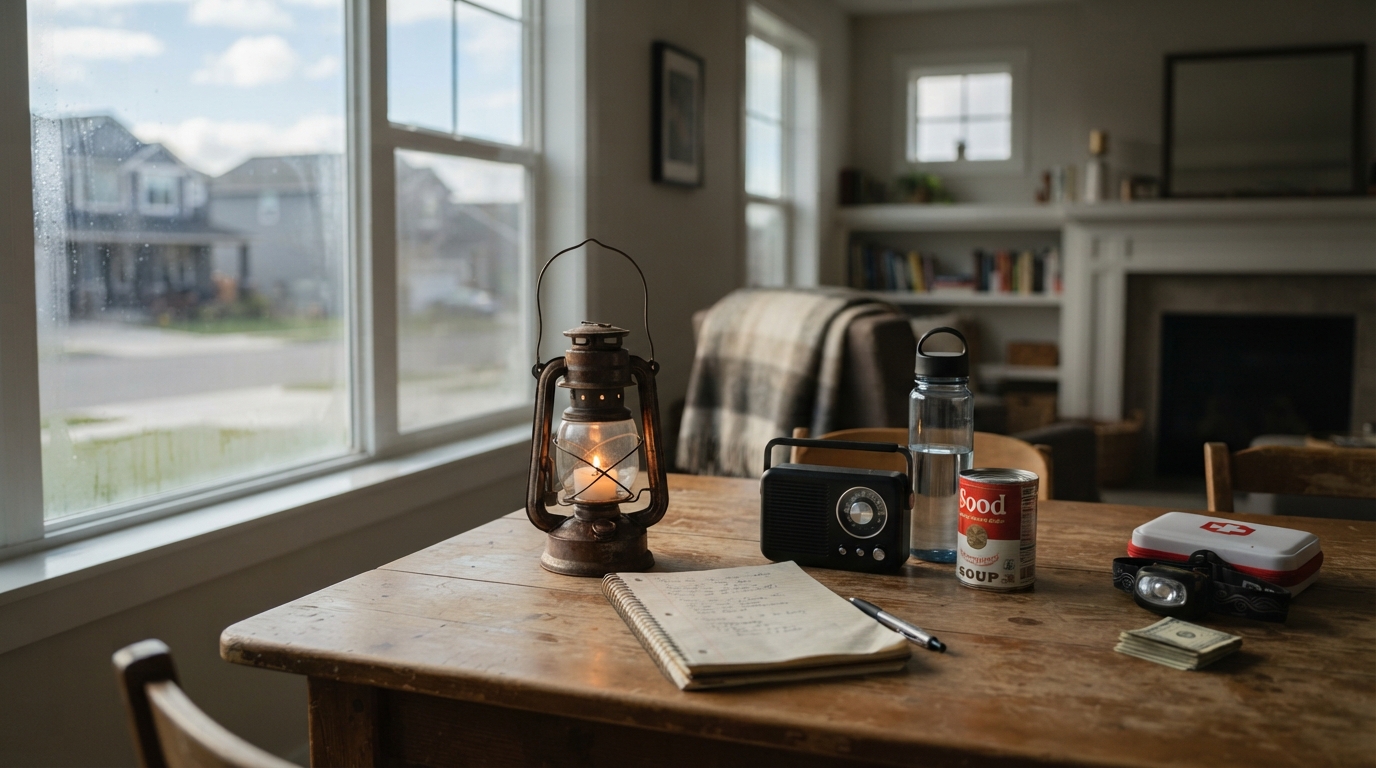
What to do when the power grid goes down: the first-hour checklist, the day-one assessment, and the week-one routine that keeps your household running.
This article contains affiliate links. If you buy through these links, we may earn a small commission at no extra cost to you.
A blown transformer gives you a dark evening. A regional grid failure gives you something else entirely: a week where every system you ignore on a normal day (water pressure, refrigeration, fuel pumps, cell towers, payment terminals) degrades on its own schedule. The households that manage well aren't the ones with the most gear; they're the ones with a sequence. This is that sequence, from the first ten minutes through the end of week one.
Hour One: Stabilize
- Confirm scope. Check whether neighbors are dark (breaker panel first, it's embarrassing and common). One look at a RunningSnail MD-090 Emergency Radio hand-crank radio or a phone on low-data mode tells you if this is one street or one state.
- Protect the electronics. Surge damage happens at restoration, not outage, flip breakers off for big appliances or unplug them, keep one light switched on so you know when power returns. For the gear you can't unplug, a surge strip like the Tripp Lite TLP808B Surge Protector absorbs that spike: 1,440 joules, 8 outlets, about $35, which is less than the router it protects.
- Light the workspace, not the house. One lantern per occupied room; headlamps for tasks. Candles cause more outage-house-fires than anything else.
- Start the food clock. Note the time. Fridge: 4 hours closed. Freezer: 48 hours full. From now on, everything runs against those numbers (full food timeline).
Rest of Day One: Assess and Position
- Water: if you're on municipal supply, fill the bathtub and every container now: pump stations can lose pressure hours after the blackout starts. Draw the water heater's 30–50 gallons into rotation.
- Cooking: plan tonight's meal around perishables, eat what dies first. If you cook outdoors (grill, Gas One GS-3400P Dual Fuel Portable Stove butane stove), do it outside only, away from doors and windows.
- Climate: in winter, pick one room to heat and seal the rest; in summer, move downstairs and run battery fans at dusk. Close blinds against sun.
- Communication: send the family text ("we're fine, staying put, radio on") per your communication plan, then go radio-silent except scheduled check-ins. Congested networks reward brevity.
Days 2–3: The Systems Take Over
This is where the organized pull ahead:
- Food discipline: freezer meals move to the fridge to thaw-and-eat; the fridge gets opened once per meal prep session, planned in advance. Cook on day 3 what thaws on day 3.
- Sanitation: set up the twin-bucket toilet system before anyone asks why the bathroom smells: day 3 smells are preventable, day 5 smells are not.
- Power budgeting: if you have a station like the EcoFlow RIVER 3 Portable Power Station, assign it loads in priority order: phones → radio → medical devices → one light. It is a budget, not an outlet.
- Information cadence: radio twice a day, fifteen minutes. Constant monitoring feels productive and produces nothing but anxiety.
Days 4–7: The Long Game
- Fuel thinking: gas stations need electricity to pump. If you must drive, top up at whatever station works the moment you see it. Queues form behind every working pump.
- Cash economy: card terminals stay down longest of all. Small bills buy groceries, batteries, and help.
- Community trade: by day 5 your neighbors know who has what. Trading a stove-cooked pot of coffee for ice runs both ways; being visibly prepared and quietly generous is the single best security upgrade in a grid-down week.
- Water treatment: if pressure fluctuated at all, treat everything: boil, filter, or chemical; the water stack rules apply until officials clear the supply.
The Week-One Lesson
A grid-down week often has this shape: hour one rewards speed, day one rewards positioning, and days 2–7 reward routine: food clocks, sanitation schedules, radio windows, power budgets. Households that improvise each day make worse decisions than households that wrote the sequence down beforehand.
Build the kit in that order too: light and radio first (emergency lighting guide), then food and water buffers, then cooking and power stations. Our 8-pack ladder sequences exactly this, one capability at a time. When it's time to pick gear, our Power Outage Survival Guide covers food safety, water storage, and power stations vs generators in depth.
Frequently asked questions
What should I do first when the power grid goes down?
Confirm scope (your breaker vs. the neighborhood), protect electronics from restoration surge by unplugging large appliances, set out lighting, and start the food clock: 4 hours for the fridge, 48 for a full freezer.
How long should I expect a grid-down situation to last?
Most outages end within 24 hours. Regional grid failures typically restore in phases over 1–7 days; utilities prioritize hospitals, water plants, and communications first. Plan your supplies for a week, celebrate any early return.
Should I leave town during a prolonged blackout?
Only if your home can't meet heat, water, or medical needs, or authorities call an evacuation. Otherwise staying put conserves fuel, avoids gridlocked roads and sold-out hotels, and keeps you near your own supplies.