
When to Leave: Evacuating During Civil Unrest or Conflict (2026)
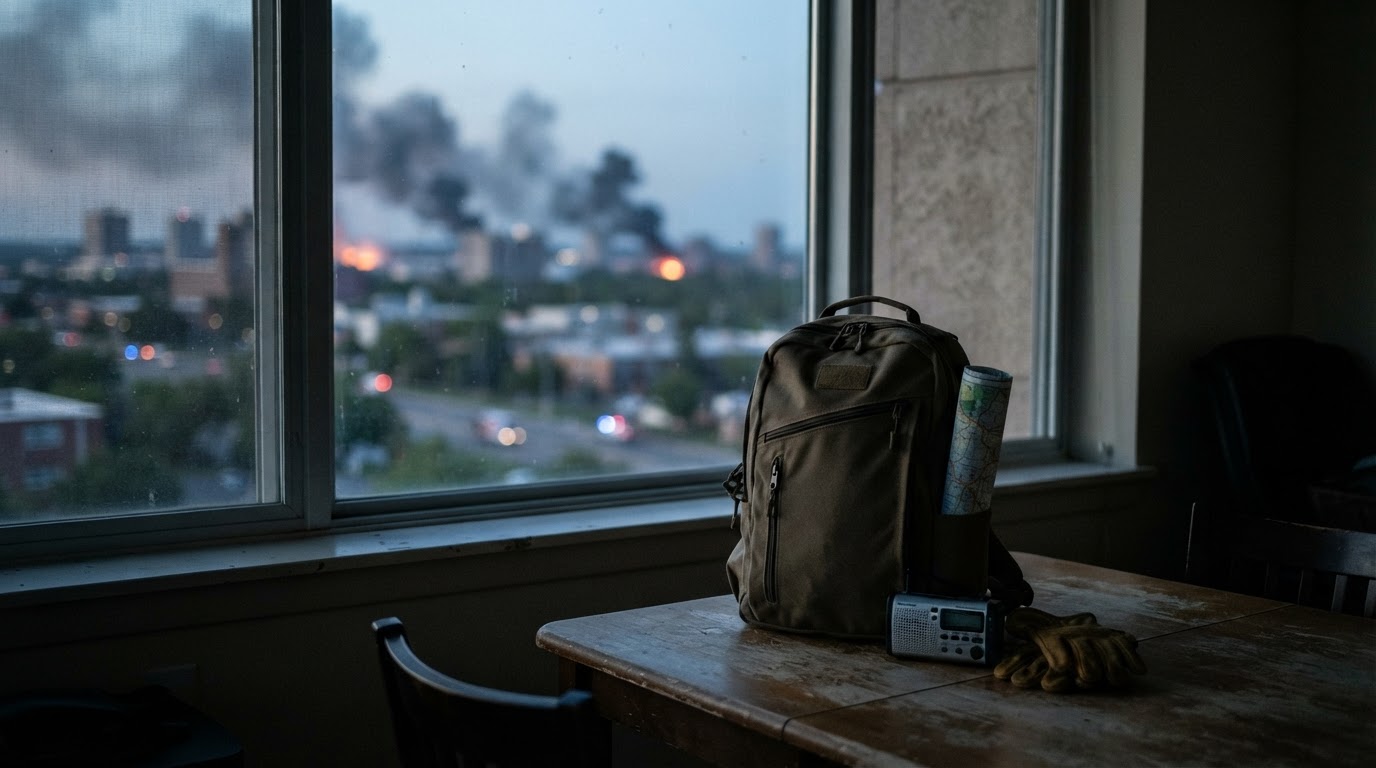
When to evacuate during civil unrest or conflict: leave-early triggers, staging the car, exit routes, checkpoint rules, and what to pack before the order.
This article contains affiliate links. If you buy through these links, we may earn a small commission at no extra cost to you.
The short answer: leave before the order, not after it. Unrest is most dangerous in its first hours at flashpoints, and roads fill fast once an order is announced. If you live or work within blocks of a flashpoint, or your home has been identified as a target, go when tension is rising, not when the sirens start.
That is the leave-early principle: decide your triggers now, stage the car now, and treat the first credible warning as your start line, not your deadline.
The Leave-Early Decision
Evacuating during unrest is unlike a hurricane or wildfire: no storm track, the danger is crowds, and crowds are unpredictable. Write your triggers down now and agree that any one of them means "load the car, be ready to go in the hour":
- An official evacuation order or shelter advisory for your area. This is the non-negotiable one; treat it as mandatory even where technically voluntary.
- Unrest reaches your neighborhood. If crowds, roadblocks, or fires are within blocks of your home, you are too close to evacuate calmly later.
- Your home or business is specifically threatened. Vandalism, targeting graffiti, or a credible warning that your block has been singled out.
- A curfew is announced. Curfews mean authorities expect things to worsen and they restrict when you may move. Leave before one starts, or wait it out.
Also set the reverse trigger: if none fire, staying is usually better. Most unrest is localized and passes in days. Evacuating for nothing means chokepoints, unfamiliar hotels, and being away when it calms down. Our shelter-in-place guide covers the stay option properly.
Stage the Car Before There Is a Reason To
The car is your evacuation vehicle, and it should be ready before anyone is chanting in the street.
- Fuel: keep the tank above half and top it off at the first sign of tension. Stations close early, run dry, or sit inside crowd zones.
- Route plan: pick three exits from your neighborhood, not one. The obvious main road is where everyone goes and it may be blocked by a barricade. Drive the alternates once so they are not a gamble at night.
- Load the trunk now: a go bag, a gallon of water, a first aid kit, and a jacket each. Our ultimate bug out bag checklist itemizes the rest.
- Phone power: a charged power bank in the cabin; the Anker Power Bank 10,000mAh USB-C takes a dead phone to about 80 percent once. An emergency radio rides inside, not the trunk: the RunningSnail MD-090 Emergency Radio adds AM/FM/NOAA, a hand crank, and a flashlight for about $32.
What to Pack When You Go
The evacuation bag is the go bag with documents added. Grab it on the way out, don't pack it then.
- Documents and cash: passports, ID, insurance papers, and two to three weeks of cash in small bills, because card networks degrade first.
- Medications: a week of every prescription in a labeled pouch, plus OTC pain relievers and antihistamines. Pharmacies inside unrest zones close first.
- First aid: a kit with trauma supplies, not just bandages. The First Aid Only 298-Piece All-Purpose Kit covers cuts, burns, and sprains for about $18 and fits the trunk corner.
- Water: the trunk gallon is the start; add a filter so any tap works, the Sawyer Squeeze Water Filtration System screws onto standard bottles and filters 100,000+ gallons for about $31. Hotels have water, but you may not be staying at one.
- Important papers on you: a printed card with your out-of-area contact, insurance numbers, and meeting points. Phones die and pockets get picked.
Checkpoints and Barricades
Expect checkpoints; authorities set them up fast, and they move. A few rules keep you out of trouble:
- Treat every checkpoint as official until proven otherwise. Stop when signaled, follow instructions, and never run one; it turns a calm exit into a worse day fast.
- Keep hands visible and movements slow. Roll the window down a few inches, turn on the dome light at night, and keep ID and registration within reach.
- Don't stop to argue. Told to turn around? Turn around; you have other routes. If a crowd surrounds the car, see our driving through civil unrest guide for the escape sequence.
- Avoid the flashpoint entirely. Don't drive "past to see." Curiosity costs fuel, time, and sometimes a window.
Where to Go and How to Tell Them
Pick the destination the same day you set the triggers. Options in order of preference:
- Friends or family outside the affected area. Fastest evacuation, least friction, and they know you are coming.
- A hotel far from the flashpoint, booked early. Book the moment you decide to go; unrest fills nearby hotels in hours.
- A public shelter as a last resort. They are crowded and meant for people with nowhere else.
Tell your out-of-area contact where you are going and when to expect you, then send a second message on arrival. Your family communication plan should already name that contact and the meeting points; if not, that is this weekend's project.
When You Should NOT Leave
Leaving is not always right. Hold position when:
- The unrest is elsewhere. If the flashpoint is across town and officials are not advising movement, staying beats driving toward a crowd.
- It is after curfew. Moving at night during a curfew gets you stopped or worse. If you missed the window, shelter in place until it lifts.
- You have no safe destination. Evacuating to a parking lot or a friend's house in a worse area is not an evacuation, it is a relocation.
The honest version: most households should never evacuate for unrest. The ones who should are in the flashpoint zone, have targeted homes, or didn't leave early enough. Decide your triggers now so you know which one you are.
The 60-Second Final Checklist
- Fuel at half tank or above
- Three exit routes known
- Go bag, water, first aid, jackets in trunk
- Documents, cash, meds in the bag
- Radio and power bank charged, in the cabin
- Destination chosen and booked if needed
- Triggers written down and agreed with the household
The window to evacuate calmly closes faster during unrest than during a storm, because the roads fill with people who also waited. Stage the car on a normal day, and the decision you make under stress is a much smaller one. See civil unrest safety for what to do on foot, and the shelter-in-place guide if the call is to stay.