
Home Alone in an Emergency: What School-Age Kids Should Know
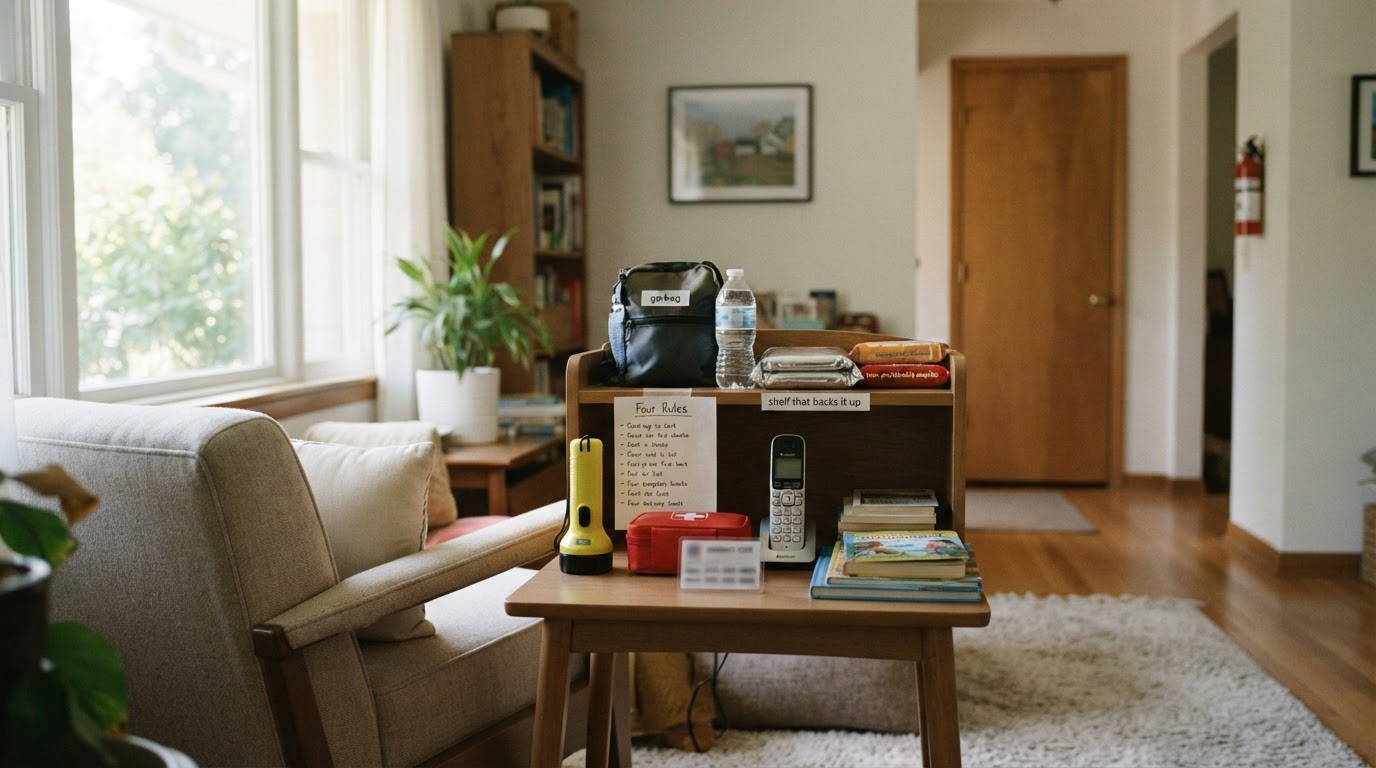
Kids home alone need four rules, not a binder: the door, the fire drill, the outage spot, the call order. The 20-minute drill plus the shelf that backs it up.
This article contains affiliate links. If you buy through these links, we may earn a small commission at no extra cost to you.
Every school year, more kids start letting themselves in after school. A child alone for two hours does not need a go bag. They need four rules they can recite without thinking, one drill they have actually walked, and a shelf where three things live in the same spot every day.
Quick answer: Teach four rules: the door stays shut no matter who knocks, fire means get out and meet at the spot, outages mean flashlight and stay put, and anything scary means 911 first, then the parent. Walk all four once in about 20 minutes, and refresh the drill when the clocks change.
Rule one: the door stays shut
Nobody comes in. Not the delivery driver, not the neighbor, not the utility worker, not their friend from down the street. A visitor is a through-the-door conversation at most, and "my parent cannot come to the door right now" beats "I am home alone" every time. Rehearse that sentence until it sounds bored, because a bored voice ends the conversation and an uncertain one invites follow-up questions.
Put hardware behind the rule. The locked deadbolt is the rule itself. A EMDMAK Door Stop Alarm with 120 dB Siren… (about $10 for two) is the backup: the wedge goes under the door every afternoon, and if anyone pushes against it, the 120-decibel siren does the shouting the child should not have to do. A kid who follows the step does not have to be brave. They just have to follow the step.
Rule two: fire means out, never hidden
Scared children hide: closets, under beds, bathrooms with the door locked. Every fire drill has to overwrite that instinct with a louder one. Smoke alarm beeps, feet on the floor, out by either of the two ways you practiced, meet at the spot, never go back in. Working smoke alarms cut the risk of dying in a home fire roughly in half, per NFPA research, but the alarm only buys the minute. The feet have to know where they go.
Name the meeting spot from your home fire escape plan and make the child say it out loud until it is automatic. For a second-floor bedroom, a First Alert Two-Story Fire Escape Ladder (about $58) hangs on a standard sill in seconds with no tools. Unbox it together, hang it once with an adult holding the ladder, then roll it back up. The first touch should never happen during a fire.
Rule three: outages mean flashlight, fridge shut, stay put
A dark house is only scary when nobody knows where the light is. The flashlight lives in exactly one spot, always: a Energizer HC-550 Magnetic Flashlight (AA) (about $19) stuck to the fridge with its magnetic base, batteries included, water resistant if small hands drop it in the sink. No candles, ever; an open flame in a dark house with a nervous child is a second emergency stacked on the first.
Two more outage rules. The fridge and freezer stay shut, a closed fridge keeps food safe about four hours, and the full timing is in our food outage guide. And if a storm caused the outage, the drill moves to the interior room away from windows until the warning clears. The lighting side of this plan, lanterns, headlamps, and what not to burn indoors, is our emergency lighting guide.
Rule four: 911 first, then the parent
Fire, a break-in, serious bleeding, trouble breathing: 911 first, then the parent. Everything else, a dead outlet, a strange noise, the power going out: the parent first. Teach them to say the street address before anything else on a 911 call. Dispatchers need the location to send help, and a scared child who forgets where they live slows down the response.
The memory aid is a card on the fridge: the street address, the parent's cell, one nearby neighbor, and one out-of-town contact, in print large enough to read through tears. That card is the junior version of the family communication plan, and a child who cannot remember a number under stress can still read one.
The age question, answered honestly
There is no national age, and the birthday matters less than the behavior. Before the first solo afternoon, confirm the child can recite all four rules without prompting, lock and unlock every door, use the phone to reach you and 911, and tell you about something that went wrong instead of hiding it. The American Red Cross opens its babysitter training at age 11, which works as a maturity benchmark even though it answers a different question. Some states set their own minimum age for leaving children unsupervised, so check your state rule before you decide, and start with short trial runs, thirty minutes while you are reachable and close, before full afternoons.
The 20-minute drill that makes it stick
Rules read aloud evaporate. Walk them on a Sunday afternoon:
- The door script. Knock from outside. Let the child answer through the locked door with the bored sentence. Swap roles once so they hear what it sounds like done right.
- Both fire routes. Walk each one to the meeting spot, then walk the backup. Time it; the family target is under two minutes.
- The dark grab. Kill the lights, have them fetch the flashlight from its spot and bring it to you. If it takes more than thirty seconds, the spot is wrong.
- The card read. Have them read the fridge card aloud, address first, exactly as they would to a dispatcher.
Refresh the drill when the clocks change, the same session where you test the smoke alarms. If your household reunites somewhere other than home after a big event, the reunification plan covers the school handoff side.
The kid shelf
One shelf or drawer, same spot, three things: the flashlight, the door wedge, and a printed copy of the fridge card for the backpack. Add the ACEP First Aid Manual (DK, 5th Edition) (about $17) to the shelf for the family, not the child: when they call about a bloody nose, you both open the same page instead of you guessing from memory.
Quick recommendations
- Four rules recited, not read. The door, the fire route, the flashlight spot, the call order.
- Drill walked once, refreshed at clock changes. Twenty minutes, all four stations, timed fire route.
- Shelf stocked in one spot. Flashlight, door wedge, backpack card; First Alert Two-Story Fire Escape Ladder practiced once with an adult.
- Card on the fridge. Address, parent, neighbor, out-of-town contact, large print.
- Trial runs before full afternoons. Thirty minutes, reachable and close, then longer.
Frequently asked questions
At what age can kids stay home alone?
There is no single national age, and maturity matters more than the birthday. A working test: the child can recite the four rules below, work the locks and the phone, and stay calm when something unexpected happens. The American Red Cross opens its babysitter training at age 11, which is a reasonable maturity benchmark, not a permission slip. Some states set their own minimums, so check your state rule before you decide.
Should kids call 911 or a parent first?
Fire, a break-in, serious bleeding, or trouble breathing means 911 first, then the parent. Everything else, a dead outlet, a strange noise outside, the power going out, means the parent first. Teach them to say the street address before anything else on a 911 call, because a scared child who forgets where they live slows down the response.
What if the power goes out while kids are home alone?
Flashlight from its one spot, fridge and freezer stay shut, no candles, and wait it out. A closed fridge keeps food safe about four hours; the full timing is in our food-safety guide. If a storm is the cause, they move to the interior room away from windows and stay there until the warning clears.