
How Long Does Food Last Without Power? Fridge, Freezer, and Safe List
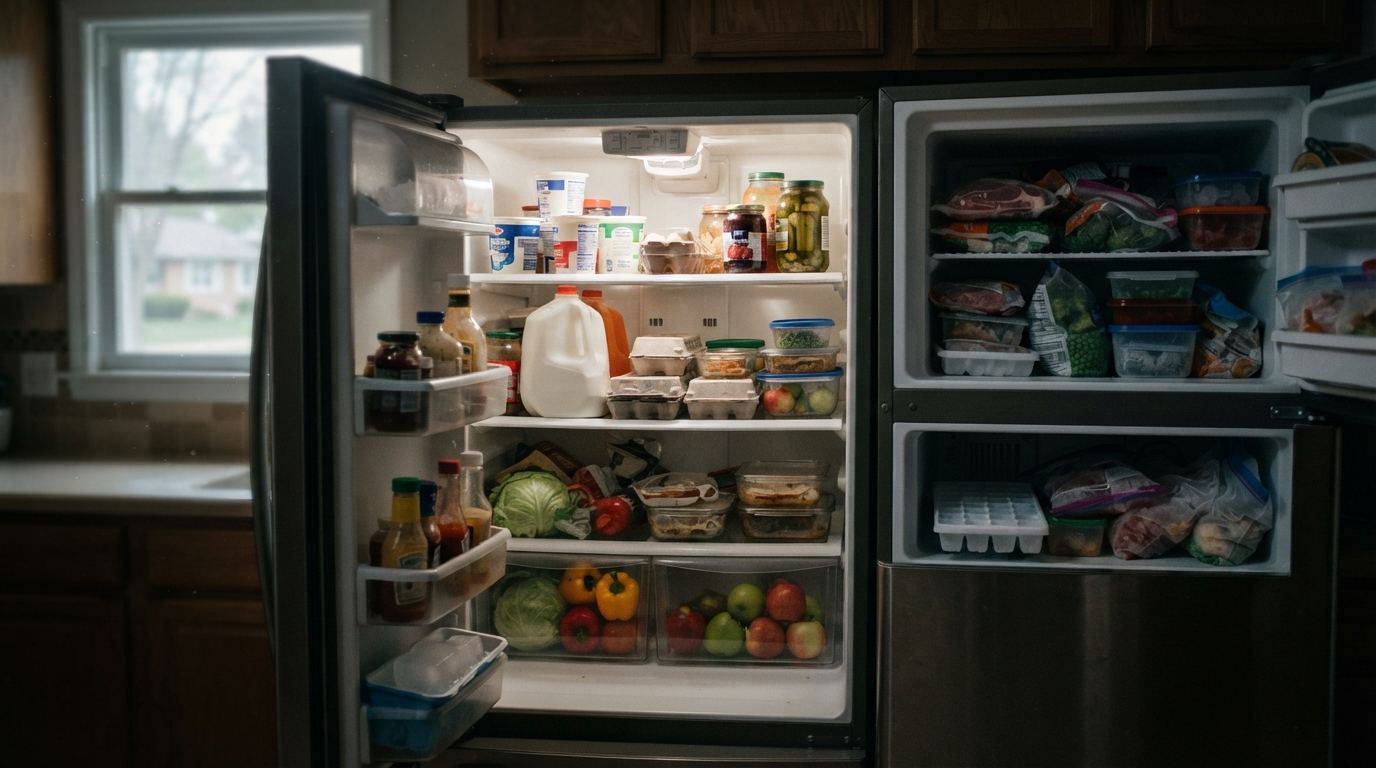
How long does food last in a fridge without power? Around 4 hours unopened; a full freezer holds 48. The 40°F rule, what stays safe, and what to toss.
This article contains affiliate links. If you buy through these links, we may earn a small commission at no extra cost to you.
The US has now suffered a major power outage in every month of 2026, according to Electrek's review of this year's outages. August storms knocked out power in New Jersey; a July outage left more than 22,500 customers dark in south Orange County. When the grid goes down, your fridge turns into a liability. The direct answer: food in a fridge is safe for about 4 hours; a full freezer holds for 48 hours; a half-full freezer for 24 hours; and any perishable that sits above 40°F for 2+ hours should be thrown out. Here's exactly how to count the clock and save what you can. If the outage proves long, the grid-down playbook covers heat, light, and water once the food is handled.
How Long Does Food Last in the Fridge and Freezer Without Power?
The numbers come from USDA food safety guidelines and assume the fridge stays closed, every door opening dumps cold air and shortens the clock.
| Where the food is | Safe window | Why |
|---|---|---|
| Refrigerator (closed) | 4 hours | Fridge air warms quickly once the compressor stops |
| Full freezer (closed) | 48 hours | Frozen food acts as a giant ice block that keeps the box cold |
| Half-full freezer (closed) | 24 hours | Less frozen mass means less thermal ballast |
| Above 40°F for 2+ hours | Toss it | Bacteria double every 20 minutes in the danger zone |
The 40°F Rule: The Only Number That Matters
Temperature, not time, is the real test. The danger zone is 40–140°F, where bacteria like Salmonella, E. coli, and Listeria multiply rapidly; USDA's Food Safety and Inspection Service puts the doubling time at as little as 20 minutes. The rule: once perishable food sits above 40°F for more than 2 hours (cumulative, not all at once), it is unsafe and must be thrown out.
This is why you need a dedicated fridge thermometer inside, the built-in dial only shows a setting, not the real air temperature. A wireless unit with an audible alarm such as the AcuRite Wireless Fridge and Freezer Thermometer… tells you the instant the fridge crosses 40°F, so you do not have to open the door to check.
What to Eat First vs. What to Toss
Not all fridge food fails at the same rate, prioritize the most perishable items first.
| Eat first (highest risk) | Can wait a few hours | Toss at the 4-hour mark |
|---|---|---|
| Raw meat, poultry, fish | Eggs (with shell) | Milk, cream, yogurt |
| Deli meats, hot dogs | Hard cheese (block) | Soft cheese, cottage cheese |
| Cooked leftovers | Butter | Cut fruits and vegetables |
| Sushi, seafood | Fresh bread | Cooked pasta, rice, potatoes |
| Baby formula (breast milk) | Mustard, ketchup | Gravy, broths, sauces |
Condiment rule: high-acid, high-sugar items like mustard, ketchup, and jam survive unrefrigerated for days. Cream-based dressings, mayo salads, and anything with egg or dairy do not.
How to Check Temperature During the Outage
- Keep a thermometer in the fridge and freezer at all times, the AcuRite Wireless Fridge and Freezer Thermometer… sits on the shelf while the wireless display stays outside, so you can read the temperature without opening the door.
- Set the alarm before the outage: program the high alarm to 40°F. When the fridge crosses it you will hear the beep and know the 2-hour clock has started, even at night.
- If the fridge reads 40°F or below, food is still safe; keep the door shut.
- If it reads above 40°F for 2+ hours, throw out the perishables, whole fruit, unopened canned goods, and hard cheeses can stay. Use the max/min memory to see how high it actually got while you were away.
- Freezer items with ice crystals left can be refrozen; fully thawed, warmed food is done.
When in Doubt, Throw It Out
Food poisoning during a power outage is the last thing you need. The USDA's line is the right one: when in doubt, throw it out. Spoiled food doesn't always smell or look bad, so if you're unsure how long something sat above 40°F, treat it as unsafe. A lost container of yogurt is cheaper than a hospital visit. Don't throw out everything, though, unopened shelf-stable canned goods, peanut butter, whole produce, and sealed condiments are fine.
Keeping the Cold Chain During a Long Outage
The 4-hour and 24/48-hour windows assume the power stays off. If you expect a longer outage, you need a plan:
- Move food to a cooler: move fridge perishables to a hard cooler like the Coleman Xtreme 50QT Rolling Cooler with ice or frozen gel packs in the shade, that's a full day of cold chain. For the packs, Cooler Shock Reusable Ice Packs, Gray, 2 Pack (about $27 for two) fill with water once, freeze, and stay frozen 24 to 48 hours per use, each doing the work of up to seven pounds of loose ice without the melt mess. Coleman's 5-day ice claim assumes a cooler that's barely opened; budget a day or two with real family traffic.
- Skip dry ice (dangerous to handle); use a cooler instead.
- Pack the freezer full: frozen food is thermal mass. If yours is half-empty, fill gaps with jugs of water now, they also give you drinking water later.
- Have backup power: a small battery station like the EcoFlow RIVER 3 Portable Power Station can run a fridge in 30-to-45-minute bursts for about one careful day (our fridge runtime worksheet shows the math), and it recharges from solar or your car.
- Light the room first: every visit to the fridge costs cold air, so fumbling in the dark makes you waste the clock. Set up lighting before you start, our guide to lighting your home without power covers battery-station and radio-lights with no open flames near the food.
Not prepped yet? Our power outage survival guide for 2026 covers the full outage playbook, and our food and water storage guide for 2026 shows you how to build a pantry that doesn't need a fridge at all.
Quick Recommendations
- Fridge food: safe 4 hours; full freezer 48 hours; half-full 24 hours.
- Check with a thermometer, not your nose, the AcuRite Wireless Fridge and Freezer Thermometer… alarms at 40°F and logs the max/min so you know how warm the fridge actually got.
- Eat the most perishable first (meat, dairy, leftovers); hard cheese, bread, and condiments last.
- When in doubt, throw it out, no meal is worth food poisoning during an outage.
- For multi-day outages: transfer to a cooler with ice, or keep the fridge cycling on backup power (a small station like the EcoFlow RIVER 3 recharges from solar or your car).
Close the door, check the thermometer, and eat the good stuff first.
Frequently asked questions
How long does food last in the fridge without power?
About 4 hours with the door kept shut. A full freezer holds a safe temperature for 48 hours, 24 hours if half full. After that, anything above 40°F for more than 2 hours should be discarded.
What food is safe to eat after a power outage?
Shelf-stable foods: canned goods (discard any bulging or rusted cans), peanut butter, crackers, dried fruit, hard cheeses, and whole fresh fruit. When in doubt about any perishable, throw it out, food poisoning on top of an outage is a hospital trip you do not need.
How can I make fridge food last longer during an outage?
Keep doors closed, group food together in the freezer to form an ice block, move items you plan to eat soon into a cooler with ice, and use an appliance thermometer to check, the 40°F rule beats guessing.