
When Thunder Roars, Go Indoors: A Practical Lightning Safety Guide
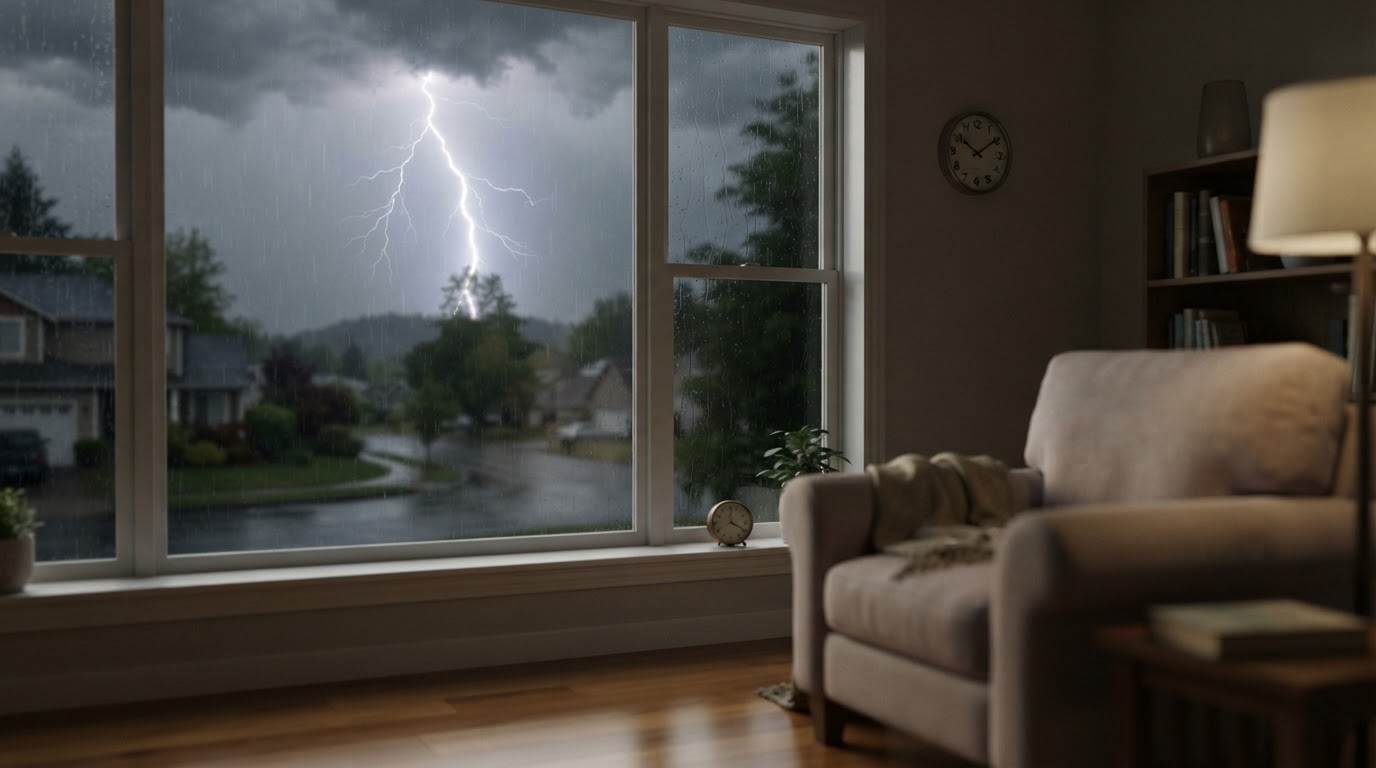
Lightning kills about 20 Americans a year, most before or after the storm peaks. Rules that work: go inside at the first rumble, wait 30 minutes, unplug early.
This article contains affiliate links. If you buy through these links, we may earn a small commission at no extra cost to you.
Hear thunder, get inside. That is the whole plan in one sentence, and it comes straight from the National Weather Service: when thunder roars, go indoors. Lightning kills an average of 20 to 30 Americans a year and injures hundreds more, per NOAA, and studies of strike victims show most are hit before the storm peaks or after it passes, not in the middle of the downpour. The danger window is wider than the rain. Act on the first rumble, not the first close strike.
Thunder Means You Are in Range
Lightning can strike more than 10 miles from where rain is falling, according to the National Weather Service, which is why distant thunder is already your warning. If you can hear it, you are within striking distance. Do not wait for rain, do not finish the hike, the round, or the mowing. Decide where your shelter is before you go out: a substantial building, or a hard-topped metal vehicle with the windows up.
About 25 million cloud-to-ground flashes hit the United States each year, per the National Weather Service, with roughly 300 people struck. Most of those tragedies were preventable, and the pattern repeats: victims waited too long to seek shelter, or went back outside too soon. Planning the destination in advance is what separates a close call from a statistic, so make it part of any outdoor plan the way you would pack water. Our family emergency communication plan covers how the group regroups when weather scatters a day outdoors.
Where Counts as Shelter
A fully enclosed building with wiring and plumbing is best: the wiring and pipes give a strike a path to ground that skips you. A hard-topped metal vehicle works the same way. What does not count, per the National Weather Service, is a shed, a picnic shelter, a tent, a carport, or a covered porch. Those keep you dry while leaving you exposed, which is exactly the wrong trade.
A Midland ER310 Emergency Radio weather radio (about $80) earns its place here: NOAA Weather Radio alerts warn of the severe thunderstorm before the sky turns, with a 72-hour-plus battery so the warning still arrives when the power is already out. Set it to alert mode on storm-forecast days instead of checking your phone every twenty minutes.
The 30-Minute Rule
Stay inside until 30 minutes after the last thunder you hear. That half hour feels excessive, and it is the rule victims most often broke: some were struck going back out minutes after the rain stopped, while the storm's electrical activity was still overhead. If thunder interrupts the wait, the clock restarts. This applies to the game, the job site, and the yard alike, no matter how clear the sky looks.
Caught Outside With No Shelter
No place outside is safe when lightning is in the area. That is the honest baseline, and everything below is damage control for when shelter truly cannot be reached, not an alternative to going inside.
Get off high ground, away from open fields, hilltops, isolated trees, and water. Do not be the tallest object around. Spread the group out by 20 or 30 feet so one strike cannot injure everyone. If your hair stands on end or metal objects hum, a strike may be imminent: the National Weather Service advises making yourself small, crouching with only the balls of your feet touching the ground, covering your ears, and never lying flat. Then get to real shelter the moment you can.
Inside the House: Water, Wires, and the Unplug Run
Some victims are struck indoors, and every one of those cases involved contact with something that conducts: a corded phone, plumbing, wiring, a concrete floor or wall with metal rebar. While thunder is audible, the National Weather Service says to avoid corded phones except in an emergency (cordless and cell phones are safe), stay away from sinks, tubs, and electrical equipment, and keep off concrete floors and walls.
Do the unplug run before the storm arrives, not during it. Lightning commonly reaches electronics by traveling in on power and utility lines, so a strike miles away can still kill a TV, a PC, or a well pump through the wires. The National Weather Service advises unplugging sensitive electronics ahead of the storm. For the strikes nobody sees coming, layer the defenses: a Tripp Lite TLP808B Surge Protector point-of-use strip (about $30, 1440 joules, 8 outlets) at the desk and entertainment center absorbs the spikes that ride in when power flickers back, while an Eaton CHSPT2SURGE Whole Home Surge Protector whole-home protector (about $62, installed at the service panel by an electrician) covers the hardwired appliances a strip cannot reach, like the HVAC and oven. A CyberPower ST425 Standby UPS Battery Backup standby unit (about $60) rides the router and modem through the brownout flickers that accompany most storms, so the radar stays up while you wait out the 30 minutes. The full electronics playbook, including what actually dies in a surge and what survives, is in our surge and brownout guide.
If Someone Is Struck
Call 911 first. Lightning victims carry no electrical charge, so touching them is safe, and cardiac arrest is the immediate cause of death, which means fast action matters more than perfect technique. Move the victim to a safer place if another strike is possible, since lightning can hit the same spot twice. Begin CPR immediately if you are trained, and use an AED if one is available. Our CPR and choking guide walks through the technique to learn before you ever need it.
Quick Recommendations
- Storm alerts when the grid is down: Midland ER310 Emergency Radio
- Point-of-use surge strip for desk and TV: Tripp Lite TLP808B Surge Protector
- Whole-home layer at the panel: Eaton CHSPT2SURGE Whole Home Surge Protector
- Router and modem through the flickers: CyberPower ST425 Standby UPS Battery Backup
First rumble, go in. Last rumble, wait thirty minutes. Unplug before, not during. Everything else is detail.
Frequently asked questions
How long should I wait after thunder before going back outside?
Thirty minutes after the last clap of thunder, according to the National Weather Service. Most lightning victims are struck before the storm peaks or after it passes, not during the heaviest rain, so going back out early is the most common mistake.
Is a car safe during lightning?
A hard-topped metal vehicle with the windows closed is a safe shelter, according to the National Weather Service, because the metal frame carries the current around you. Golf carts, convertibles, and open tractors do not count. Do not touch the steering wheel, radio, or door handles during the strike risk.
Should I unplug electronics during a thunderstorm?
Yes. The National Weather Service advises unplugging sensitive electronics before the storm arrives, since lightning routinely reaches devices through power and utility lines rather than a direct hit. A point-of-use surge strip and a whole-home protector add layers for the strikes you do not see coming.
Can you touch someone who was just struck by lightning?
Yes, immediately. Lightning victims carry no electrical charge, according to the National Weather Service. Call 911, move them to a safer spot if another strike is possible, and start CPR right away if you are trained. An AED saves lives here when one is nearby.