
Practical Holiday Gifts for Preparedness-Minded People (2026)
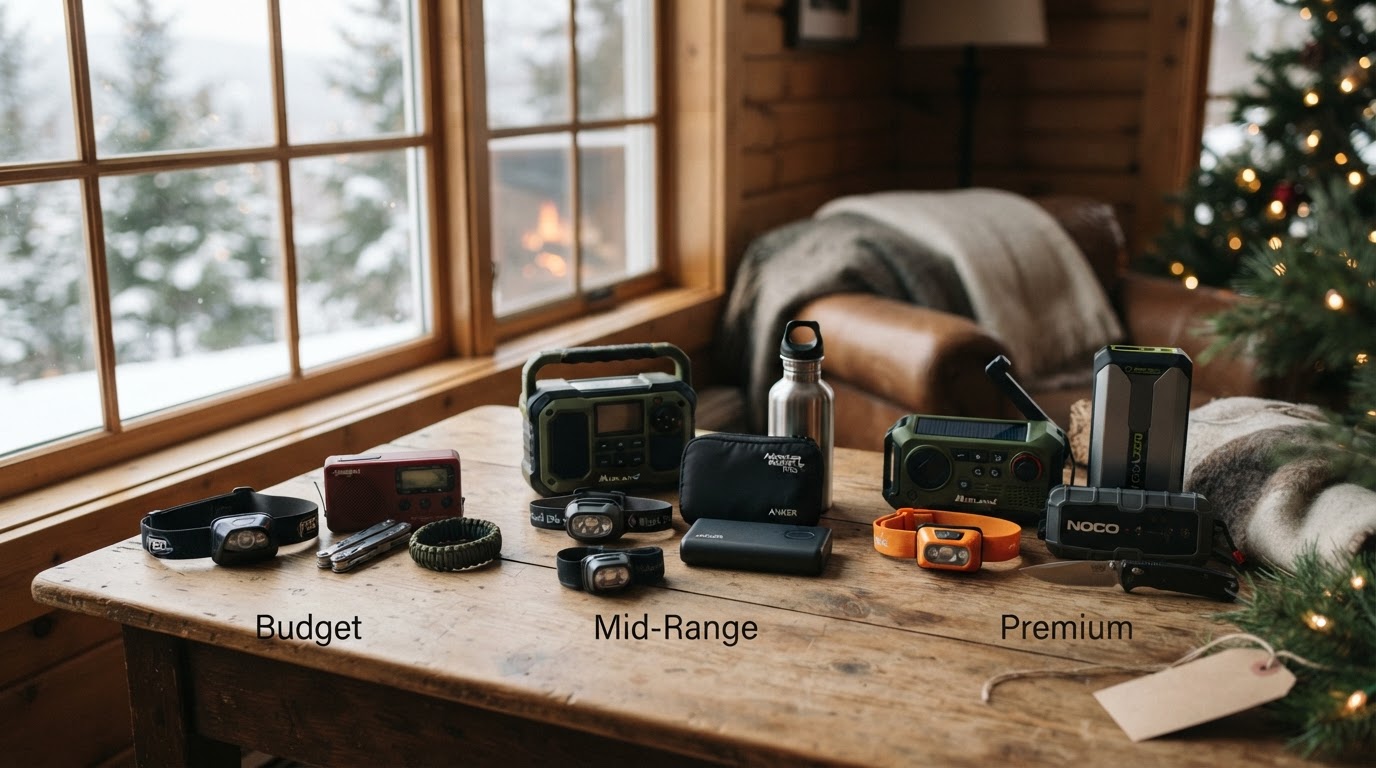
Nine holiday gifts people actually use: headlamps, radios, power banks and car-kit gear in three budget tiers, each with a real price and who it suits.
This article contains affiliate links. If you buy through these links, we may earn a small commission at no extra cost to you.
Most preparedness gear fails as a gift for one reason: it sits in a closet until the day it matters, which reads as clutter the other 364 days. The nine picks below clear a harder bar. Each one gets used in ordinary life, costs what it says here, and happens to be exactly the thing you want nearby when the power drops or the car quits. Every product is already in our catalog with a live listing, and prices are the current ones. What did not make the list matters too: no novelty gadgets, no knives for people who never asked for one, nothing that needs a weekend course before it works.
Stocking stuffers under $20
The HotHands Hand Warmers Value Pack, 10 Pairs 10-pair box runs about $7, and it is the rare gift that disappears on purpose. Toss pairs into every car door pocket, coat, and go bag. They throw heat for 10-plus hours, need no charging, and expire slowly enough that next winter's box still works. Who it suits: commuters, kids waiting at bus stops, anyone who runs cold.
The RESQME Original Emergency Keychain Car Escape Tool is about $11 and rides on a keychain, which solves the real problem with car escape tools: the one in the glove box is never within reach when the belt jams. One end breaks a side window, the cap hides a seatbelt blade. Who it suits: new drivers first, then everyone else on the list. Our car kit guide puts it at the top of the small-gear list for the same reason.
The Nalgene 32 oz Wide Mouth Water Bottle costs about $16 and is close to indestructible. Wide mouth takes ice cubes and a filter cartridge, the cap lashing survives years of drops, and at a liter it is the default size for a day bag. Who it suits: hikers, gym bags, the teenager whose disposable bottle habit you are tired of funding.
The Petzl Tikkina Headlamp (300 Lumens) is about $20 and the single most-used item on this list. Cooking during an outage, checking a breaker, walking the dog, working under a sink: hands-free light beats a phone flashlight every time, and 300 lumens is plenty for all of it. Who it suits: literally anyone, which is why it leads the list. Buy one per person rather than one to share.
Solid gifts from $20 to $60
The Anker Power Bank 10,000mAh USB-C runs about $26 and covers the modern outage: the lights are out but the phone still matters. Ten thousand milliamp-hours refills most phones twice, USB-C handles current devices, and the size fits a jacket pocket or a get-home bag. Who it suits: travelers, students, the relative whose phone is always at 4 percent.
The Adventure Medical Kits Mountain Series Hiker… hiker kit is about $34 for 66 pieces in labeled pockets, with a wilderness first aid guide inside. A kit this organized actually gets carried, which is the whole ballgame with first aid. Who it suits: hikers, new parents building a home kit, anyone whose current kit is a sandwich bag of expired bandages. Pair it with our first aid kit guide if they want to go deeper.
The Leatherman Wingman Multi-Tool costs about $50 and packs 14 tools into 7 ounces: pliers, knife, scissors, screwdrivers. Spring-loaded pliers matter more than they sound; they turn the tool from a gadget into the thing that fixes the wobbly handle, cuts the cord, and opens the package. Who it suits: homeowners, campers, the person who borrows your tools and keeps them.
The big box: over $60
The Midland GXT1000VP4 GMRS Two-Way Radios (pair) pair runs about $90 and answers the question every family hits when cell coverage drops: how do we find each other. Fifty GMRS channels, NOAA weather scan, headsets in the box, and a range that covers a campground or a neighborhood. Who it suits: families that camp or road-trip together, households in rural dead zones. One pair covers two cars or two ends of a trail. Note that GMRS technically requires an FCC license, currently $35 for ten years with no test, covering the whole family; it is the rare piece of paperwork that costs less than the gift.
The NOCO Boost GB40 1000A Jump Starter jump starter is about $100 and earns it by removing the most common car emergency from the calendar. A thousand amps starts most gas engines to 6.0 liters, the clamps are spark-proof and reverse-polarity protected so a nervous teenager cannot hook it up wrong, and the USB port charges a phone off the same brick. Who it suits: any driver, with new drivers and aging-battery cars first in line.
Giving gear well
Three small moves separate a gift from a lecture. First, include working batteries or charge the item before wrapping; a dead headlamp on Christmas morning is a chore, not a present. Second, write one line on the card naming the everyday use, not the disaster: "for the attic and the dog walk" beats "for when the grid fails." Third, resist bundling all nine for one person. One tier-appropriate gift that gets used beats a survival bundle that gets shelved, and the rest of the list keeps for birthdays.
Frequently asked questions
What is a good preparedness gift under $20?
A Petzl Tikkina headlamp (about $20), a Nalgene wide-mouth bottle (about $16), a RESQME car escape tool (about $11), or a 10-pack of HotHands warmers (about $7). All four get used outside emergencies, which is what keeps them out of a drawer.
Are emergency radios and jump starters good gifts?
Yes, when they match the person. A pair of Midland GMRS radios (about $90) suits a family that camps or lives where cell coverage drops. A NOCO GB40 jump starter (about $100) suits any driver, since a dead battery needs no disaster to ruin a morning.
How do you give preparedness gear without sounding alarming?
Frame it around use, not fear: a headlamp for the attic and the dog walk, a power bank for travel days. Charge batteries and include them, so the gift works the minute the wrapping comes off.