
Red Flag Warning: What It Means and What to Do (2026)
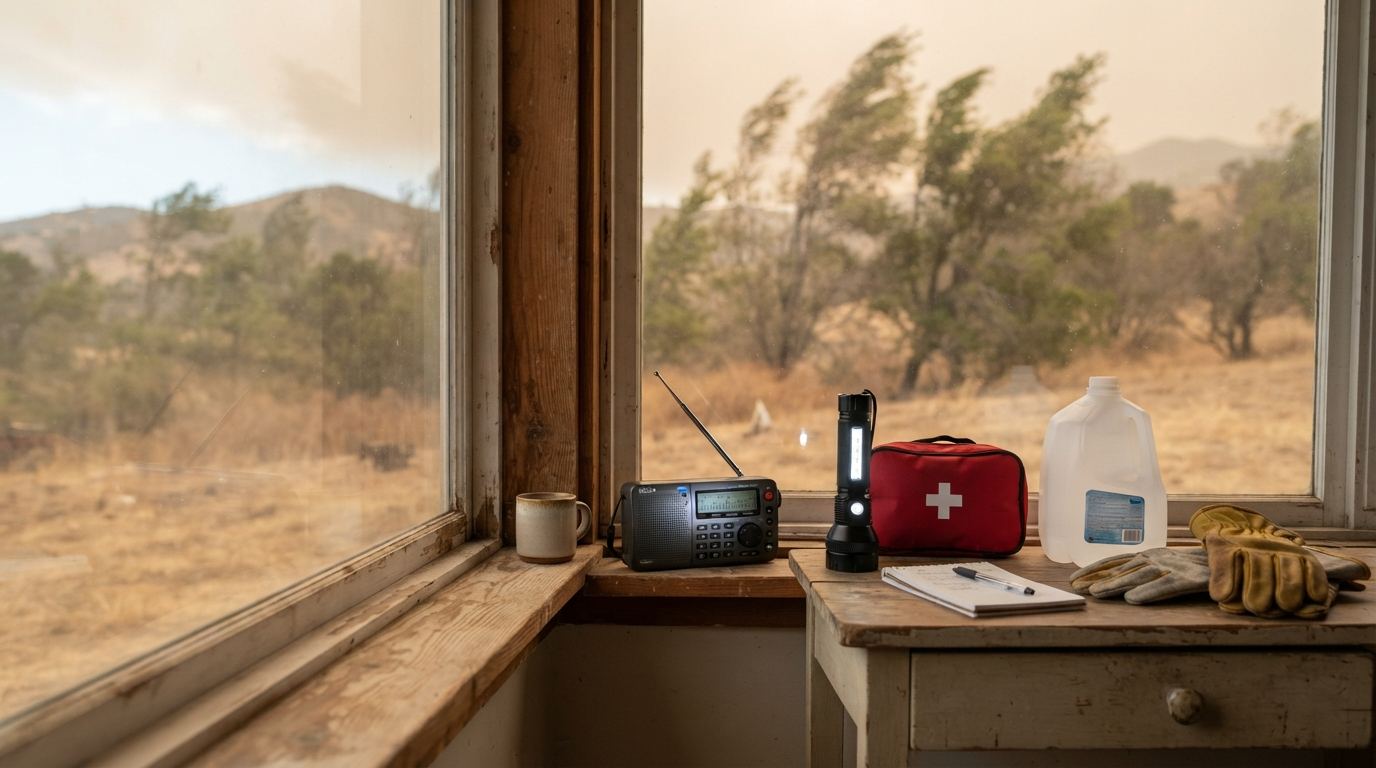
A red flag warning means critical fire weather is near. Learn what to stop, what to do, and how to prepare before wind and dry fuel turn sparks into wildfire.
This article contains affiliate links. If you buy through these links, we may earn a small commission at no extra cost to you.
A Red Flag Warning means the National Weather Service expects weather and fuel conditions that can make a new fire spread quickly. It does not mean your neighborhood is being evacuated, and it does not mean a fire is already burning nearby. It means the window for careless sparks is closed. Stop outdoor ignition sources, confirm local restrictions, and finish your evacuation and smoke plan before conditions peak.
Red Flag Warning: What It Means and What to Do
A Red Flag Warning is a fire-weather alert for weather and fuel conditions that could produce rapid or extreme wildfire growth. Treat it as a preparation deadline, not a signal to wait for visible flames.
| Alert | What it means | What you should do |
|---|---|---|
| Fire Weather Watch | Critical fire weather is possible, often in the next 12 to 72 hours. | Start the checklist and monitor local officials. |
| Red Flag Warning | Critical conditions are occurring or expected soon. | Stop ignition sources and be ready to leave. |
| Evacuation warning or order | Local officials expect danger or direct you to leave. | Follow the instruction. An order overrides your plans. |
Watch and warning timing varies by National Weather Service forecast office. A Red Flag Warning is not a nationwide ban with one universal set of rules, so check the agency that has authority where you live.
What creates red flag conditions
There is no single threshold for every county. Forecast offices set criteria around local climate, terrain, vegetation, and fuel moisture. The common ingredients are:
- Low humidity: Dry air pulls moisture from grass, brush, and timber.
- Strong wind: Wind dries fuels, pushes flames, and carries embers ahead of the fire front.
- Dry fuels: Drought-cured grass, dead brush, and forest litter give an ignition something to burn.
Some offices also consider dry lightning or unstable air. Do not wait to calculate whether your humidity or wind speed is high enough. If your local forecast office issues the warning, use it as the decision point.
What to stop on a red flag day
Check the county or state burn-ban notice before doing outdoor work. Until the local authority says otherwise, assume these activities are off-limits or need special permission:
- Open burning, burn barrels, yard-debris fires, and campfires
- Fireworks, exploding targets, and target shooting that can throw hot fragments
- Chainsaws, grinders, welders, mowers, and other spark-producing equipment
- Charcoal grills and outdoor flames where local rules prohibit them
- Throwing cigarettes or matches onto roadsides, gravel, or dry grass
A vehicle can start a fire too. Park on a driveway or other noncombustible surface, not tall grass, and secure trailer chains so they cannot drag and spark. Postpone cutting, welding, and brush clearing if the work can wait.
Do not assume a propane grill is automatically allowed. Some jurisdictions prohibit all outdoor flame during the highest danger. Use the local rule, not a general internet list.
Use the warning as a preparation deadline
- Turn on the right alerts. Check weather.gov, county emergency management, and your utility. Sign up for text or reverse-911 alerts.
- Make the car easy to leave. Park facing out, keep the tank above half, and write down two routes. Stage medications, identity and insurance documents, cash, chargers, water, and pet supplies. The wildfire evacuation checklist has the Ready, Set, Go load order.
- Remove easy fuel. Bring in patio cushions, doormats, and loose decorations. Move firewood, portable propane, and other combustibles away from the house if safe. The wildfire home hardening guide is for calm weather, not an active warning.
- Prepare for smoke. Close windows before smoke arrives, choose one small clean-air room, and keep a fitted respirator accessible. The wildfire smoke safety guide covers AQI and purifier sizing.
- Expect a power or cell outage. Charge phones, radios, medical devices, and battery packs while the grid works. If your utility uses public safety shutoffs, follow the PSPS preparation checklist.
Three useful products for the warning window
These support alerts, smoke protection, and small electrical loads. None replaces an evacuation order or safe fire behavior.
- A dedicated alert source: The Midland ER310 Emergency Radio was $79.99 at review with a 4.6-star rating. Midland lists up to 45 hours of normal battery use, NOAA Weather Radio alerts, and an SOS flashlight.
- Particle protection: The 3M Aura N95 Particulate Respirator 9205+ was about $15 at review with a 4.5-star rating. It is a NIOSH-approved N95 for smoke and ash particles, but not gases, low-oxygen air, or fire. Adult N95s are not designed to fit children.
- Small-load backup power: The EcoFlow RIVER 3 Portable Power Station is a 245Wh power station for phones, the radio, and other modest loads. It runs about $249 at the current listing. Runtime depends on what you plug in.
If smoke or an evacuation order arrives
Smoke can travel far beyond the flame front. Check AirNow or your local air-quality service, reduce outdoor exertion, and move vulnerable people and pets into cleaner air. If smoke enters despite closed windows and filtration, or someone has breathing trouble, leave for cleaner air when it is safe. AQI does not override an evacuation order.
If officials issue an evacuation warning, use the extra time to leave anyone who needs longer, including children, older adults, pets, and people with mobility limits. If they issue an order, go. Take the official route, keep headlights on in smoke, and never drive through flames or dense smoke. If traffic stops, follow law-enforcement directions and do not return for forgotten gear.
A Red Flag Warning alone does not tell you to evacuate, but it should leave you with nothing important still to organize.
Printable red flag warning checklist
- County burn ban and fire restrictions checked
- Weather, county, utility, and reverse-911 alerts enabled
- Outdoor burning, fireworks, spark work, and risky equipment stopped
- Car parked facing out with fuel, keys, and two routes ready
- Medications, documents, cash, water, and pet supplies staged
- Phones, radio, medical devices, and backup power charged
- N95 respirators and a clean-air room ready
- Early-leave trigger agreed for anyone needing extra time
- Official evacuation route saved and smoke routes avoided
Source notes: National Weather Service fire-weather watch and warning guidance, local NWS forecast-office criteria, CAL FIRE Ready for Wildfire, FEMA evacuation planning, EPA AirNow, and NIOSH respirator guidance.
Frequently asked questions
What does a Red Flag Warning mean?
It is a National Weather Service alert that weather and dry fuels may let a new fire spread quickly. Local thresholds vary. It is a fire weather warning, not an automatic evacuation order.
What should I do during a Red Flag Warning if I live near wildland?
Stop outdoor ignition sources, check local restrictions, stage your car, medications, documents, and pets, charge devices, and decide when you will leave. Follow county evacuation orders immediately.
What is the difference between a Fire Weather Watch and a Red Flag Warning?
A watch means critical fire weather is possible and preparation should start. A Red Flag Warning means the threat is occurring or expected soon. Neither one is an evacuation order by itself.
Should I water my roof during a Red Flag Warning?
No. Spraying a roof is not a substitute for evacuation and can keep you outside in dangerous conditions. Harden the home before fire weather, then follow alerts and leave when officials say.