
Wildfire Evacuation Checklist 2026: Ready, Set, Go
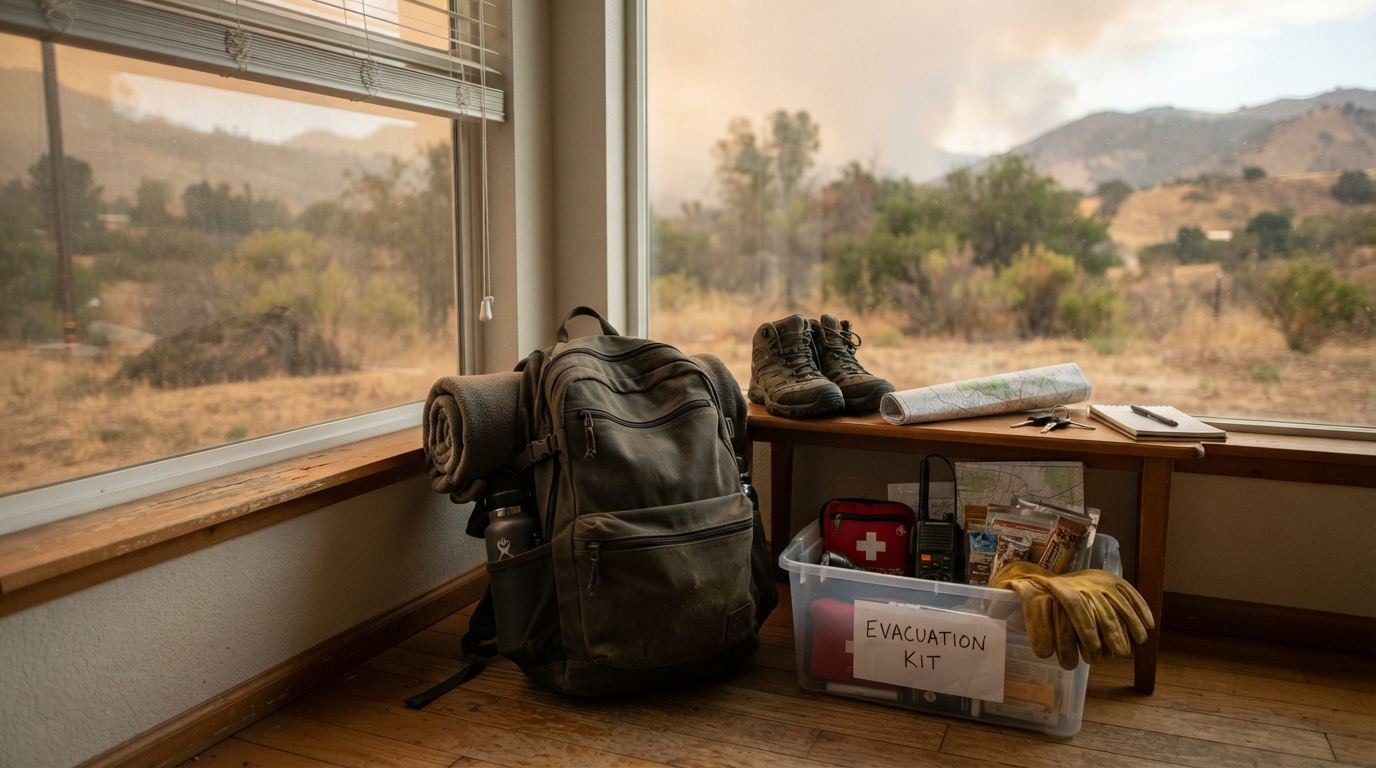
Use this wildfire evacuation checklist to pack at Ready, load at Set, and leave at Go. Cover people, pets, medications, routes, smoke, and gear for 2026.
This article contains affiliate links. If you buy through these links, we may earn a small commission at no extra cost to you.
Pack at Ready, load at Set, and leave at Go. A useful wildfire evacuation checklist is a sequence, not a giant shopping list: protect people and pets first, carry medications and documents, keep smoke protection accessible, and follow official routes before roads clog. Local agencies may use Evacuation Warning and Evacuation Order instead of Ready, Set, Go, so learn the terms your county uses.
Wildfire Evacuation Checklist: Ready, Set, Go
| Alert | What it means | Your action |
|---|---|---|
| Ready | Fire activity may affect your area | Charge devices, fuel the car, gather documents and medications, and monitor official alerts |
| Set | Evacuation may be needed soon | Load the car, bring pets inside, close windows, and prepare to move |
| Go | Leave now, or an evacuation order is active | Take the official route and do not wait for visible flames |
A warning is the preparation window; an order means leave. Anyone needing extra time should go during the warning.
Do these five things first
- Sign up for county alerts and save the local emergency management number.
- Keep documents, medications, water, masks, and chargers by the exit.
- Write down two routes and one out-of-area contact on paper.
- Keep pets loadable in minutes, with carriers and leashes within reach.
- Decide an early-leave trigger for children, pets, older adults, and mobility needs.
Build a 15-minute departure plan
Start with people, not gear. Keep several days of essential medication ready when allowed. Add identification, insurance information, cash, keys, and irreplaceable-photo backups.
Assign jobs before fire weather: one adult loads people and medications, another handles pets, and another checks the house only if safe. Keep sturdy shoes, a charged phone, and a half-full tank ready. Save two routes and follow emergency directions, not an unverified shortcut through smoke.
A Set alert is not the time for a home-hardening project. If safe, move patio cushions, doormats, firewood, and portable propane away from the house, but do not delay to clean gutters or wet a roof. See the wildfire home hardening guide before fire season.
Pack the wildfire go bag
This is a fire-season departure layer, not a replacement for the ultimate bug out bag checklist. Split the load between adults so one person can still help a child or pet.
- Bag: The Maelstrom 40L Hiking Backpack is about $36 and rated 4.5 stars. Its 40-liter water-resistant ripstop body and stowed rain cover fit clothes, papers, medications, and snacks. It is one adult load, not a family suitcase.
- Alerts: The Midland ER310 Emergency Radio costs about $80 and is rated 4.6 stars. Its 72-plus-hour battery, NOAA reception, and SOS beacon help when cell networks are congested. Keep it with the person monitoring alerts.
- Smoke protection: The 3M Aura N95 Particulate Respirator 9205+ costs about $15 and is rated 4.5 stars. These individually wrapped, NIOSH-approved respirators filter fine particles during travel, but not gases or low oxygen. Never drive through fire or dense smoke. Children under 2 should not wear an N95.
- Minor injuries: The First Aid Only 298-Piece All-Purpose Kit costs about $16 and is rated 4.8 stars. Its soft case covers common cuts, burns, sprains, and bites. It is not a substitute for emergency treatment or a serious trauma kit.
Catalog prices checked in September 2026 can change. Keep water, snacks, chargers, glasses, hearing-aid batteries, and spare clothing with these layers.
Load at Ready, then Set
At Ready, stage the document pouch, medications, go bag, pet supplies, and paper route plan by the exit. Charge phones, radios, and medical-device batteries. Put water and food in the car, and tell the out-of-area contact how to identify your household.
At Set, load in this order:
- People who need the most time, then pets in secured carriers.
- Medications, documents, phones, chargers, glasses, and mobility aids.
- Water, food, masks, first-aid supplies, and a change of clothes.
- Radio, route sheet, cash, keys, and the remaining safety gear.
- Comfort items only after the safety load is in the vehicle.
Close windows and doors, follow official utility instructions, and never improvise with gas or electrical equipment. If a shutdown is not safe, leave and tell responders.
When the alert says Go
Leave immediately. Use official routes, keep headlights on in smoke, and never drive toward a fire. Do not drive through flames or dense smoke. If traffic stops, follow law-enforcement directions. If blocked, turn around only where safe; call 911 if trapped and give your location and direction. If the fire closes the road before you can turn around, the car becomes the shelter: park away from vegetation, get below the window line, and stay covered until the front passes. The trapped-in-your-car wildfire guide walks through that sequence step by step.
Text the out-of-area contact rather than making repeated calls. Send your location, destination, and passenger count. The family emergency communication plan covers contact trees, meeting points, and radio backup.
Once you leave, do not return for forgotten items. Follow shelter instructions even if the sky looks clear.
Smoke is not a substitute for an evacuation order
Smoke travels beyond the fire. Check AirNow or local alerts, close windows, and reduce outdoor exertion. The wildfire smoke safety guide covers AQI thresholds, clean-air rooms, respirator fit, and purifier sizing.
Air-quality numbers do not overrule an order. People with asthma, heart or lung disease, infants, older adults, and pets may need to leave earlier. After the order lifts, wait for the official all-clear and use the returning-home wildfire re-entry checklist.
Printable wildfire evacuation checklist
- County alerts enabled and local terms understood
- Two routes and an out-of-area contact on paper
- Medications, documents, keys, and cash staged
- Go bag, radio, masks, water, food, and chargers by the exit
- Pet carriers, leashes, food, records, and photos ready
- Car fueled and parked facing out
- Set load order agreed by every adult
- Go route saved; never drive through smoke or flames
- Re-entry delayed until officials issue an all-clear
The safest evacuation starts while roads are open. Pack at Ready, load at Set, and go without hesitation when the order arrives.
Source notes: CAL FIRE Ready, Set, Go guidance, FEMA evacuation planning, National Weather Service fire-weather alerts, EPA AirNow smoke guidance, and NIOSH respirator guidance.
Frequently asked questions
What should I pack when evacuating a wildfire?
Pack medications, identification and insurance documents, phones and chargers, water, food, smoke-ready masks, sturdy clothes, and pet supplies. Load those before comfort items.
When should I evacuate in a wildfire?
Leave at an evacuation warning if anyone needs extra time, including children, pets, older adults, or people with mobility limits. Otherwise, leave immediately when officials issue an evacuation order.
What do I do with pets during a wildfire evacuation?
Keep carriers, leashes, food, medications, vaccination records, and a recent photo ready. Identify pet-friendly lodging before fire season because many public shelters cannot take animals.