
Returning Home After a Wildfire: Re-entry Safety Checklist
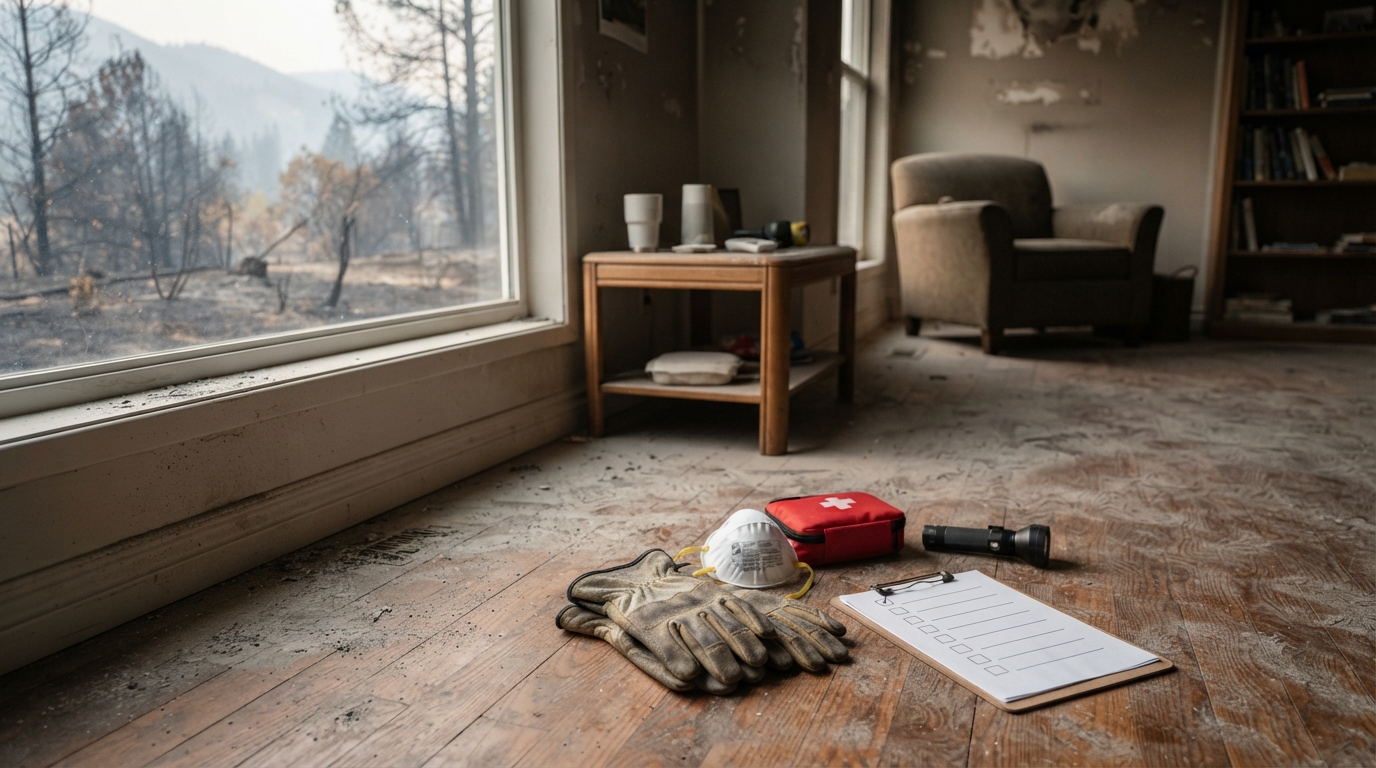
Coming home after a wildfire evacuation? Follow this re-entry checklist to check ash, air, structure, gas and water hazards safely before you move back in.
This article contains affiliate links. If you buy through these links, we may earn a small commission at no extra cost to you.
Do not go home until officials say you can. Evacuation orders lift in stages by zone, and the roadblocks stay up because hazards outlast the flames: hot spots, fallen lines, unstable trees, and fine ash can still hurt you after the fire line moves on.
Once your address is cleared, you will want to rush. Work the checklist instead.
Wait for the all-clear
Re-entry happens zone by zone. Check the same source that ordered you out, the sheriff or emergency management. A neighbor text is not an all-clear.
Pack for a short stay that might turn short again:
- Sturdy shoes, long pants, long sleeves, gloves, and eye protection. Ash is alkaline and debris is sharp.
- An N95 for everyone. A 3M Aura N95 Particulate Respirator 9205+ seals well even folded and filters the fine ash you stir by walking.
- Water, a phone charger, and a small power station if utilities are still down. A EcoFlow RIVER 3 Portable Power Station keeps phones, a purifier, and lights going at 245 watt-hours. It runs about $249 at the current listing.
- A camera or phone with free storage. Photograph everything before you move it.
- A battery radio. Cell service may be among the last services restored, and a Midland ER310 Emergency Radio picks up NOAA at 162.550 MHz and doubles as a flashlight.
Tell someone your route and when you will be back.
Ash is not dust
Ash holds fine particles, char, and whatever burned upwind, including treated wood and household chemicals. You do not need a plume to be breathing it. Keep N95s on outside and in any house that took in smoke.
Do not use a leaf blower or shop vac without a HEPA filter. If you own a wet/dry vac, swap the standard cartridge for the Stanley HEPA Cartridge Filter, 08-2566H… (about $24, fits Stanley's 5-18 gallon vacs) before you run it over ash. Mist lightly, let it settle, then wipe or sweep gently. Wash ash clothes separately. Keep kids and pets off ash ground until damp-wiped.
Inside, air stays hazy even with windows closed. Homes that survived often took in hours of smoke through vents. If the structure is sound, close up and run a true HEPA purifier. The Levoit Core 300 Air Purifier covers bedrooms up to 219 square feet at 141 CFM and runs quiet overnight. About $81. Change the filter after heavy smoke. A loaded one cuts airflow, and the genuine Levoit Core 300-RF Replacement Filter, 1 Pack runs about $26.
Walk the outside before you go inside
Make a full lap before you unlock the door. Look for reasons not to enter yet.
- Look up. Trees leaning, trunks charred through, limbs over the roof or power drop. Stumps hold heat for days.
- Check roof and chimney. No sag, no holes, no lifted flashing. A leaning chimney with new cracks is a no-go until inspected.
- Check walls for heat. Hold the back of your hand near any exterior wall that faced the fire.
- Check utilities at the wall. Gas meter, electrical panel, propane tank. Smell gas, see a bent meter, or find a warm tank: stop and call the utility.
- Watch for ash pits. Soft white ash near decking or fencing can hide hot embers.
Downed wires stay live in ash and chain link. Do not touch or drive over them. Call 911 and the utility.
Gas, power, and water: check in order
Use a flashlight, not flame. Open doors and windows as you go to vent.
Gas. If you shut it off when you left, leave it off until the utility or a licensed tech restores it. If you smell rotten-egg odor or hear hissing now, get out, leave doors open, and call from outside. Do not flip switches.
Electricity. If the panel or any outlet smells burned, looks scorched, or is wet, leave the main off and call an electrician. If you reset, stand to the side. If breakers trip again, stop. Generators run outdoors only, at least 20 feet from doors and windows, as our power outage guide covers.
Water. Systems often issue boil advisories after fires. Private wells are worse. Heat can damage wellheads and ash can wash into shallow systems. Until your provider says water is safe, treat it as unsafe. See our boil water advisory guide, emergency water sources at home, and best water filters for emergencies.
Document before you clean
Insurance and FEMA need proof before you move anything. Work outside to inside.
If the fire prompts a federal disaster declaration, FEMA's Individuals and Households Program can cover temporary housing, repair costs, and replacement of destroyed essentials. The step-by-step apply-and-document process is in our FEMA disaster assistance guide. For the insurance side, our wildfire insurance claims guide covers what the policy pays, the underinsurance math, and the deadlines that decide the claim.
- Photograph the street, yard, and each side of the house before touching debris.
- Shoot each room from the doorway, then each wall close enough to read damage.
- Open cabinets and appliances. Ash inside counts. Photograph serial plates on HVAC, water heater, and large appliances.
- Write the loss list while you look. Save every receipt for tarps, boards, or filters.
Do not throw away damaged items until the adjuster has seen them or you have a photo record. Bag ash in heavy bags and follow county guidance.
Making the house livable again
If structure, gas, and electrical checks passed, the next job is air.
- Keep windows closed while ash blows. Ten minutes with a cross breeze beats an hour of haze.
- Run the HEPA on low for the first few nights, bedroom door closed. Wipe hard surfaces damp, not dry.
- Replace HVAC filters before the system runs again. A MERV-13 in your slot size, like the Filterbuy 20x20x1 MERV 13 Air Filter (2-Pack) (about $34 for two), catches most smoke-size particles; a loaded standard filter just recirculates what it caught. If smoke was heavy, have ducts inspected first.
- Soft goods hold odor. Wash what you can on hot, air out what you cannot.
Food that lost power follows the same clock as any outage. See how long food lasts without power. If ash entered the fridge through the seal, treat the contents as exposed.
A 90-second re-entry check you can print
- All-clear for your zone, route checked, someone knows you are going
- N95s, gloves, glasses, sturdy shoes on
- Lap outside: trees, roof, chimney, walls, gas meter, propane, wires. Any fail means stop
- Entry with flashlight only, vent as you go, smell test for gas
- Utilities: gas off until inspected if in doubt, breaker checked, water unsafe until cleared
- Photos: street to rooms to serial plates, then a written loss list
- Air: HEPA running, damp wipe, HVAC filter swapped, no leaf blowers on ash
Wildfire is why you left. Ash, bad air, and damaged utilities are why coming back is its own task. For the leaving side, see our wildfire evacuation checklist for the Go Now order, and wildfire smoke safety covers smoke without flame. Get in, check hard, document well, and do not rush the part that decides if the house is safe to sleep in.