
6 Sandbag Alternatives and Backup Tools for Flood Protection (2026)
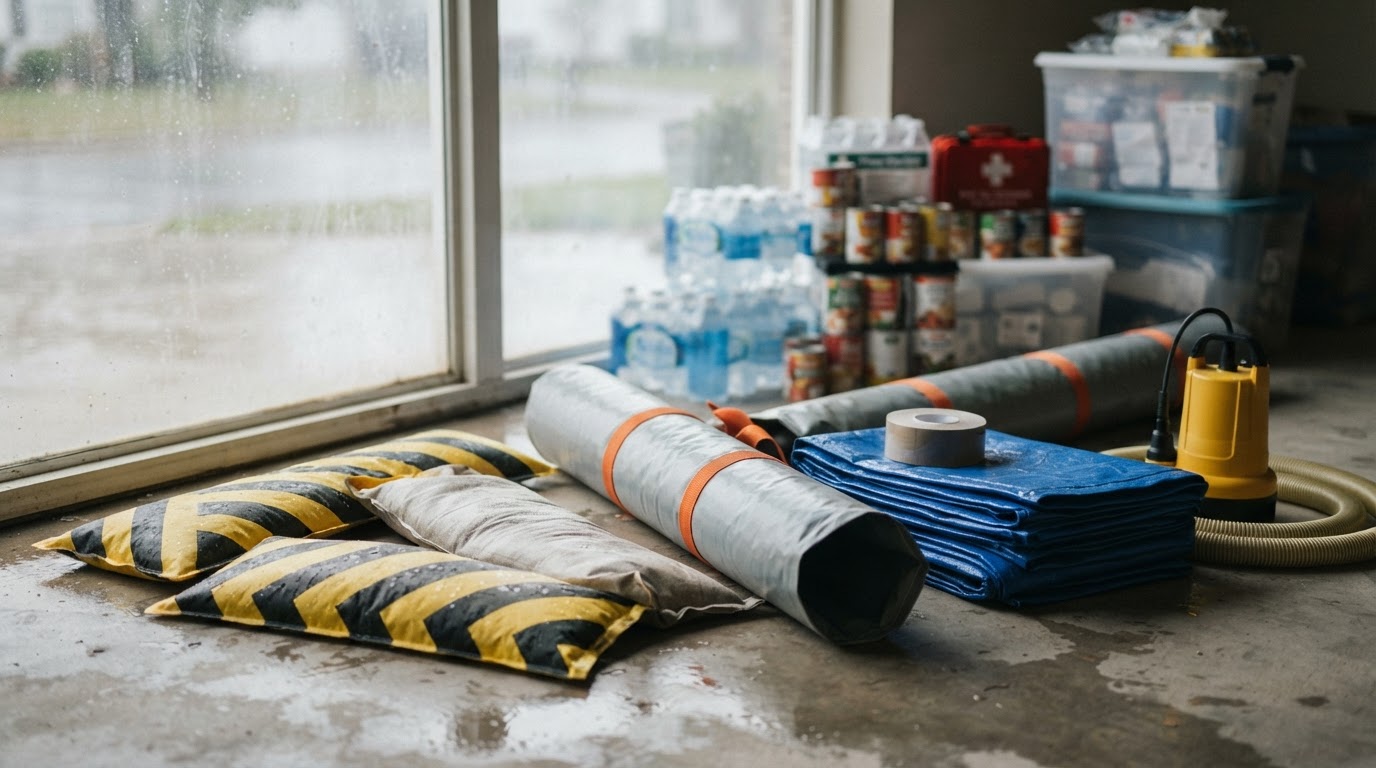
Six flood-control options when sandbags fail: water-activated barriers, fill tubes, barrier liners, pumps, and gear that limits damage when water gets in.
This article contains affiliate links. If you buy through these links, we may earn a small commission at no extra cost to you.
Sandbags take time to fill, seep unless placed correctly, and may need special disposal after contact with contaminated floodwater. The first three options below can replace or reinforce a bag line at a doorway. The pump, wet/dry vacuum, and dry bags handle the water or valuables when a barrier leaks. For shallow, slow water at a door or garage entry, a staged water-activated barrier like the Quick Dam Water Activated Flood Barriers, 5 ft… is the fastest setup: lay it dry before the water arrives and let it swell into a weighted berm.
The basics
- Minutes, not hours: water-activated barriers and pre-filled tubes can be deployed quickly when they are staged before a warning.
- Reusable tubes cost more up front: fill-and-drain models store flat and can return next season.
- No temporary barrier stops fast or deep water. These options are for shallow, slow seepage at openings. Evacuate when officials tell you to leave.
- Plan for leakage: move valuables upstairs or into dry bags and have a safe way to remove seepage.
- Classic bags can still be cheapest per foot, around $19 per fifty empty bags before fill material and labor.
Research method
We compared the options below against published specifications, owner reports, and US Army Corps of Engineers guidance on temporary barriers. Specs that mattered: deployment time, reusability, height of protection, and storage footprint. Prices are current Amazon listings checked September 2026. Nothing here replaces official evacuation orders.
1. Water-activated barriers: fastest deployment
Absorbent socks that swell into a weighted berm on contact with water. Stage them dry across a doorway when the watch is issued; arriving water does the work. A two-pack of 5-ft barriers like the Quick Dam Water Activated Flood Barriers, 5 ft… runs about $22, stacks to add height, and stores in a closet. Trade-off: they need minutes of water contact to reach full size, and they dry out and degrade if left deployed for weeks.
Who it is for: anyone who gets hours of warning, not days. Renters especially: no shovel, no dirt pile, no landlord argument.
2. Reusable water-filled tubes: the multi-season answer
Fill-with-a-hose tubes that empty, fold flat, and come back next season. A 6-foot HydraBarrier Supreme tube like the Watershed Innovations HydraBarrier Supreme Water… stands 20 inches high and runs about $99: tall enough to matter at a doorway or a short run of doors, though a garage-door span takes more than one tube. Each tube can be reused if it is cleaned, inspected, and stored as directed. They cost more per foot than an absorbent sock but avoid fresh fill material every season.
Who it is for: homeowners in repeat-flood zones who are tired of rebuying single-use protection every spring.
3. Plastic sheeting liner: the upgrade bags need anyway
A 12-mil poly tarp on the water side can reduce seepage through a temporary barrier. The Tarp 12x16 ft Heavy Duty 12-mil Waterproof at about $35 covers a two-car garage opening with material left to lap and weight at the edges. Sheeting must be anchored and supported; tape alone will not hold it against rising water, and neither the tarp nor the barrier makes a building watertight.
Who it is for: households using bags or tubes that need a continuous water-side liner.
4. Transfer pump: for the water that gets in anyway
Barriers divert water; they do not waterproof a building. A small electric utility pump like the VIVOSUN 1/10HP Water Transfer Pump with Hose Kit is rated to move up to 330 gallons per hour from window wells, stairwells, and low spots and currently costs about $56. It needs safe electrical power and a discharge route that will not send water back toward the house. Never use powered equipment while standing in water.
Who it is for: homes with below-grade entries, window wells, or a basement that has seeped before and will seep again.
5. Wet/dry vacuum: the morning after
After water recedes and the electrical system is safe, a 6-gallon wet/dry vacuum like the Stanley SL18116P Wet/Dry Vacuum (6 Gallon), about $57, can remove shallow water from hard floors and garages. Do not power it from a wet outlet or stand in water while using it. Flood-soaked carpet, padding, or drywall may need removal rather than vacuuming.
Who it is for: households planning cleanup after shallow seepage, once power and the structure are safe.
6. Dry bags for valuables: assume the line fails
The cheapest flood protection for documents is a waterproof container packed before the warning. A 10-liter roll-top like the Earth Pak Waterproof Dry Bag, 10 Liter currently costs about $20. Papers and passports can go in the DocSafe Fireproof Document Bag, currently about $20, before that bag goes into a truly waterproof outer container.
Who it is for: households keeping paper records, medications, or small electronics below the highest likely flood level.
Sandbag alternatives compared
| Option | Cost | Deploy time | Reusable | Best for |
|---|---|---|---|---|
| Water-activated barriers | ~$22 / doorway | Minutes | No | Warning-hour flooding, renters |
| Water-filled tube | ~$99 / 6-ft tube | ~15 min with hose | Yes, multi-season | Repeat-flood homeowners |
| Plastic sheeting seal | ~$35 | ~30 min | Yes | Every barrier setup |
| Transfer pump | ~$48 | Minutes (needs safe power) | Yes | Below-grade entries, seepage |
| Wet/dry vacuum | ~$57 | After the water | Yes | Cleanup |
| Dry bag + document bag | ~$20 + ~$20 | Pack once | Yes | Valuables and records |
Classic filled sandbags still win one category: cost per foot on very long perimeters, at about $19 per fifty empties plus an afternoon of labor. Our sandbag barrier guide covers building them right: half full, staggered like brickwork, always lined with sheeting.
Quick recommendations
- Least-money starting point: the ~$35 sheeting (Tarp 12x16 ft Heavy Duty 12-mil Waterproof) plus one ~$20 dry bag (Earth Pak Waterproof Dry Bag, 10 Liter) comes to about $55.
- One purchase for the front door: use the water-filled tube if you expect to deploy it over several seasons.
- Warning just issued: stage water-activated barriers across ground-level openings before water arrives.
- Basement or window wells: add a transfer pump only when you have safe power and a suitable discharge route.
Flood-season checklist
- Barriers staged dry across garage, doors, and walk-outs
- Sheeting cut to size for vents and basement windows
- Valuables, meds, and documents in dry bags upstairs
- Pump tested with clean water; cord, hose, and discharge route checked
- Wet/dry vacuum configured for wet pickup according to its manual
- No barrier blocks the household's safe exit route
- Radio on for alerts; the flood safety guide covers when leaving beats building
- Flood emergency kit packed and by the door
Frequently asked questions
What works better than sandbags for flood protection?
Water-activated barriers deploy in minutes with no shoveling, while reusable water-filled tubes can be drained and stored for another season. Both suit doorways and garage entries; traditional sandbags may still cost less for a long perimeter.
Do water-activated flood barriers really work?
They can help divert shallow, slow water at doorways and garage entries when placed before water arrives. The absorbent core swells into a weighted berm, but placement and surface gaps matter. They cannot stop fast or deep water.
How do I protect my home from flooding without sandbags?
Stage a water-activated barrier or filled tube across each ground-level opening before water arrives, use supported sheeting as a water-side liner, move valuables upstairs in dry bags, and keep a transfer pump ready for seepage. If officials issue evacuation orders, leave; no barrier replaces leaving.