
How to Build a Sandbag Flood Barrier That Works (2026)
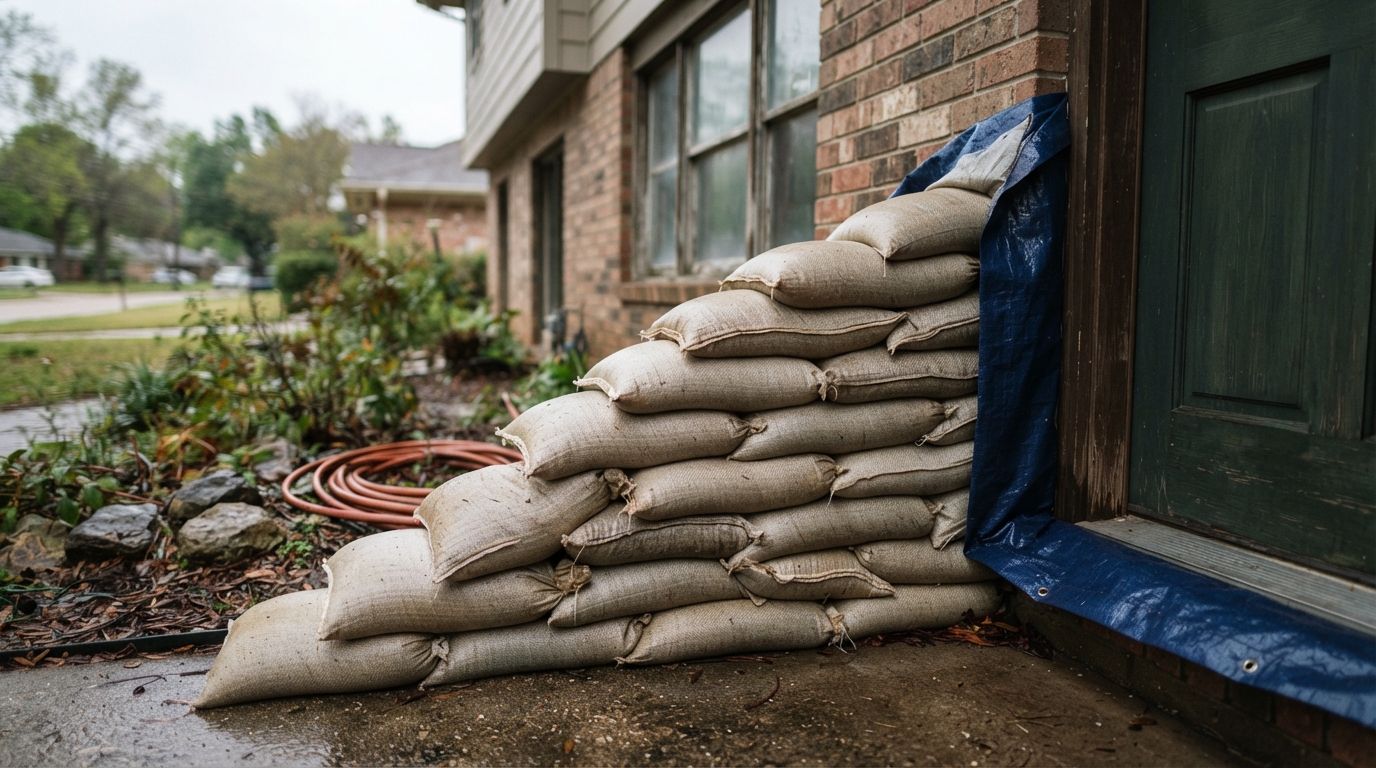
How to build a sandbag flood barrier that works: fill bags half full, stack them like brickwork, line them with a tarp, and know when sandbags are useless.
This article contains affiliate links. If you buy through these links, we may earn a small commission at no extra cost to you.
A sandbag barrier that works is built from bags filled half full, laid untied and flat, stacked with staggered joints like brickwork, and lined with plastic sheeting on the water side. Built any other way, it seeps, slumps, or wastes the hours you spent filling it. And even a perfect wall has one job: diverting shallow, slow-moving water away from doors and garage entries. It will not hold back a flash flood.
If you are reading this as water is already rising, skip the shovel. Water-activated barriers like the Quick Dam Water Activated Flood Barriers, 5 ft… stage dry across a doorway in minutes and swell into a weighted berm on their own. Sandbags are the tool for the flood you can see coming days out, which is most riverine and storm-surge flooding. For the full rundown of faster and reusable options, see our sandbag alternatives guide.
What sandbags can and cannot do
Sandbags fail when people ask them to do a dam's job. Know the limits before you order empties like the Empty Sandbags 14x26 in Woven Poly with Ties, 50…, a tied and UV-stable woven poly pack of fifty that runs about $19:
| Water condition | Will sandbags help? | Why |
|---|---|---|
| Shallow flow, under ~1 ft, moving slowly | Yes | They divert flow around doors and garages |
| Ponding rainwater looking for a way in | Yes | Cheap, effective seepage reduction with a tarp liner |
| Fast-moving water, any depth | No | Bags wash out; moving water is a life threat first |
| Flash flood in progress | No | You cannot fill bags faster than water rises |
More than half of flood deaths happen in vehicles, and standing in a flooded yard filling bags puts you in the same math. If local warnings say the water will arrive fast, protecting property stops being worth your time. Evacuate. Our flood safety guide covers the calls that matter more than any barrier.
Filling bags the right way
The fill is where most DIY barriers go wrong. Three rules cover it.
Fill each bag half full. Overfilled bags turn into rigid logs that leave triangular gaps at every joint. Underfilled ones wander under pressure. Half full lets each bag deform against its neighbors and seal the row.
Leave them untied for placement. An untied bag lies flat, stacks tighter, and its open end tucks under itself as you lay it. Tie bags only if you are filling at a pit far from where they will go and need to haul them.
Wear real protection. You may be shoveling soil wet from rain that is already sewage-adjacent. Waterproof boots and gloves are not optional. Over-the-shoe PVC boots like the CLC Climate Gear R230 Over-The-Sock PVC Rain Boot slip on over whatever you are wearing, hose clean afterward, and cost about $25, which is less than the copay on the infection you avoid.
Any local fill works: sand, garden soil, sandy clay. Do not strip sand from creeks or dunes mid-storm; that material is what keeps water moving and banks stable.
Stacking: brickwork, tuck, tamp
Placement is simple and physical:
- Clear leaves and debris off the line where the wall sits, or the first row bridges over them and leaks underneath.
- Lay the first course parallel to the expected water flow, bags lengthwise with the flow, open ends facing downstream and tucked under.
- Walk each bag into place and tamp the finished row flat before starting the next one.
- Stagger every joint, exactly like brickwork. Lined-up joints are straight seepage channels.
- Keep the wall under knee height unless you widen the base to at least double the height. Tall, narrow walls slump forward.
Then add the step almost everyone skips: lay plastic sheeting on the water side. A 12-mil poly tarp like the Tarp 12x16 ft Heavy Duty 12-mil Waterproof draped against the wall and held down by a second row of bags converts a leaky pile into an actual seal. Bags alone always seep. Sheeting is the difference between damp and dry behind the line.
Where barriers earn their keep
Work the perimeter in this order:
- Garage doors first. They are the widest, weakest opening on most homes and the reason so many flooded houses lose everything stored inside.
- Entry doors and any door below street grade next.
- Drains and vents last: backflow through floor drains and dryer vents floods homes that had perfectly sealed doors.
Divert, do not dam. A wall that pins water against your siding forces it down into the foundation. Angle barriers so water runs around the house, not into it. And keep one exit path unbarriered until the last minute, then go. While you work outside, a radio like the Midland ER310 Emergency Radio on the porch keeps watch alerts and the forecast in your ears, because the sky can change faster than your wall rises.
A typical single doorway takes dozens of filled bags, and a two-person shovel crew fills them slowly. Budget an afternoon for a real perimeter, which is exactly why the decision belongs in flood-season prep, not warning hour. The full playbook lives in our before-during-after guide.
After the water: throw them out
Assume every bag touched floodwater, and floodwater carries sewage, fuel, and farm runoff. Do not cut bags open onto gardens, sandboxes, or play areas. Stack them curbside per local guidance; many municipalities collect sandbags separately after a declared flood. Gloves and boots get hosed off and dried; the boots rinse clean, the gloves are cheap enough to replace.
The honest bottom line
Sandbags are cheap, slow, and effective against exactly one problem: shallow, slow water finding its way through openings. Fill half full, stack staggered and untied, line with sheeting, protect your hands and feet, and start days before the warning. For everything bigger than that, the right gear is a packed flood emergency kit and an early exit. Check your local emergency management guidance for sandbag distribution points; most floodplain cities hand out free empties ahead of the season.
Frequently asked questions
How full should you fill a sandbag for flood protection?
About half full. An overfilled bag turns rigid, stacks badly, and leaves gaps at the joints; an underfilled one shifts under pressure. Half-full bags conform to each other and lock together when you tamp the row down.
How high can you safely stack a sandbag wall?
Keep an unreinforced wall around knee height. Above that, widen the base to at least twice the wall height or the whole thing can slump forward under load. Sandbags divert shallow, slow water; they are not a dam.
Do sandbags actually stop water from getting into a house?
They reduce it, they do not stop it. Seepage through and under a sandbag wall is normal, which is why a plastic tarp on the water side matters so much. Against flash floods or fast-moving water deeper than a foot, sandbags are the wrong tool.