
Flood Emergency Kit: The 2026 Checklist for Stocking Before the Water Rises
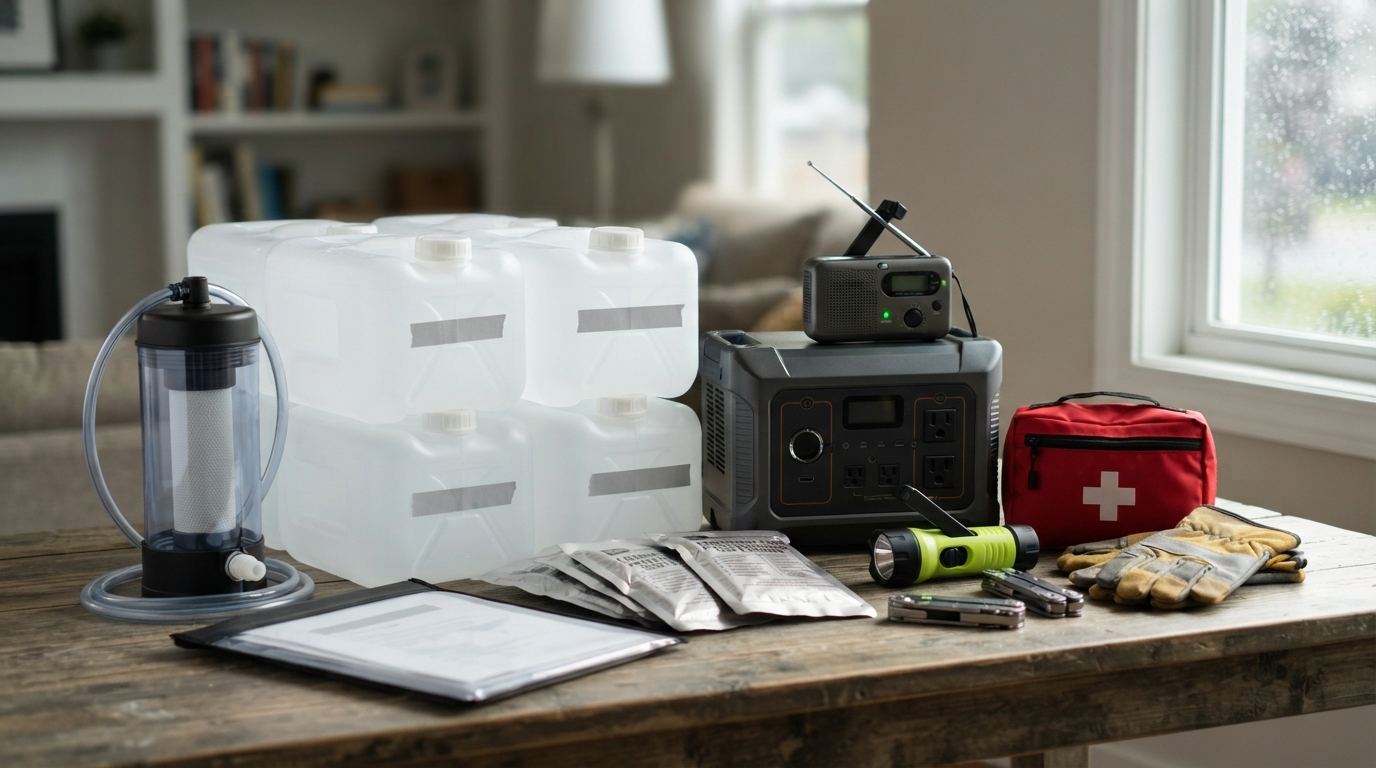
Floodwater is sewage and floods kill the grid. Build your complete 2026 flood emergency kit: stored water, a bacteria filter, backup power, and NOAA alerts.
This article contains affiliate links. If you buy through these links, we may earn a small commission at no extra cost to you.
The direct answer: a flood emergency kit is four layers, stocked in this order: clean water, a filter to make more, backup power, and early warning. Ours fits in one 18-gallon tub you can grab on the way out the door. That means 7 gallons of stored water in a Reliance Aqua-Tainer 7 Gallon Water Container…, a Sawyer Squeeze Water Filtration System to treat flood-compromised tap water, an EcoFlow RIVER 3 Portable Power Station to keep phones and the radio alive when the grid goes dark, and a Midland ER310 Emergency Radio to catch the flash flood warning that arrives with minutes of lead time. A flood kit is different from every other kit you own, because floods attack the things you normally take for granted all at once.
Here is what each layer does.
Why a flood kit is not your other kit
Floodwater is contaminated. It carries sewage, chemicals, fuel, and debris. In 2026 alone, Texas Hill Country floods hit the same communities two years running, the Hudson Valley flooded for days, and New Jersey took heavy rain early in August. Floods now rank behind only extreme heat as the deadliest US weather hazard, according to NOAA's weather fatality statistics, and the CDC reports that more than half of flood-related drownings happen when a vehicle is driven into floodwater. Most of those deaths were people caught moving, not people who stayed home.
Flash floods give you minutes, not hours. Six inches of fast-moving water can knock an adult off their feet, and twelve inches can carry away a car, according to National Weather Service flood-safety guidance. The kit has to exist before the flood does; you cannot pack one during that window. Our full flood safety guide covers the before, during, and after decisions; this guide is the shopping and packing part.
Layer 1: Water you can drink
FEMA's minimum is 1 gallon per person per day, for at least three days, more in flood country because tap water stays compromised after the flood. A Reliance Aqua-Tainer 7 Gallon Water Container… is a 7-gallon BPA-free jug with a spigot on top, so you can fill it from the tub without lifting it, and 7 gallons covers two people for three days with a little left over for rinsing. Fill it from your tap now, before the storm, and stash a second jug if your household is bigger or you have pets. If a flood escalates into a federal disaster declaration, FEMA's Individuals and Households Program may help replace destroyed essentials beyond what flood insurance covers; the apply-and-document walkthrough is in our FEMA disaster assistance guide.
If you need more than the jugs hold, your water heater tank is already holding 40 to 80 gallons of clean water as a backup. See our emergency water sources guide for how to tap it without contaminating it.
Layer 2: A filter for flood-compromised water
Floodwater turns wells and municipal supplies unreliable, and boil advisories can run for days to weeks. The Sawyer Squeeze Water Filtration System is a hollow-fiber filter that removes bacteria and protozoa down to 0.1 micron, rated for 100,000 gallons, and it works with a dirty water bag during cleanup. One honest limitation: like most squeeze filters, it does not remove viruses, so boil water for drinking, and use the filter when boiling is not practical. Our boil water advisory guide covers how long to boil, and the water filter roundup compares it against purifiers like the Grayl and MSR Guardian if you want virus coverage in one device.
Layer 3: Power when the grid drowns
Flooding takes down the grid, and recovery runs days to weeks, not hours. The EcoFlow RIVER 3 Portable Power Station holds 245Wh, recharges from wall, car, or solar, and runs the layers of your kit that matter in a flood: phones, the alert radio, a CPAP, and battery lamps. Run the math honestly: a fridge draws about 150W and a 1/3-horsepower sump pump spikes near 1,000W, so 245Wh does not run either for long. Use the power station for communication, lighting, and medical devices, and let it stretch a phone charge across a multi-day outage. That is where it earns its space in the tub.
Layer 4: Warnings that arrive before the water does
Most flood deaths are people who did not get the warning in time, and sirens and smartphone alerts can fail when power is out or networks are damaged. A Midland ER310 Emergency Radio runs 72+ hours on a charge, receives NOAA all-hazards alerts with SAME county codes, and has a loud alert tone. It is the layer you may never use and should keep ready for an overnight flash flood.
Comparison table
| Gear | Flood job | Price (approx) | Place in the kit |
|---|---|---|---|
| Reliance Aqua-Tainer 7 Gallon Water Container… | 7 gallons of clean stored water | ~$52 | Water before the flood |
| Sawyer Squeeze Water Filtration System | Filters bacteria and protozoa from compromised tap water | ~$46 | Water after the flood |
| EcoFlow RIVER 3 Portable Power Station | Keeps phones, radio, and CPAP charged when the grid dies | ~$249 | Power layer |
| Midland ER310 Emergency Radio | NOAA flash flood alerts and a loud alert tone | ~$80 | Warning layer |
The rest of the kit needs no new gear
The four layers above are the flood-specific core. Everything else comes from what you already own, packed into the same tub:
- Cash in small bills. Card readers go down with the power; flood recovery often needs cash.
- Medications and a printed list of prescriptions, plus copies of ID cards and insurance papers in a waterproof bag. A roll-top Earth Pak Waterproof Dry Bag, 10 Liter keeps paper and electronics dry if the tub gets submerged; a second one holds phones and battery banks.
- Battery lamps and a spare phone battery. No candles or open flames around floodwater vapors.
- Three days of no-cook food and a manual can opener.
- A first aid kit, and make sure your tetanus booster is current (the CDC recommends a booster every 10 years). Floodwater exposure is exactly what tetanus is for.
- Boots or water shoes for the walk out, and N95 masks for the mold and contaminated dust that show up during cleanup.
Where to keep it, and how to keep it honest
One tub, dry, by the door or in the garage, lid labeled. Flood season is spring and the late-summer hurricane band, so restock the water and rotate the food every six months, and test the radio monthly. A kit you forgot about is a bin of expired gear, not a plan.
The 15-minute assembly
If you are reading this during a flood watch: fill every water jug, charge every phone and the power station, and set the radio to your county's NOAA channel. If officials order an evacuation, take the tub. If you stay, it sits on the highest floor, not the basement. Stack these layers once while the water is still a warning, and the kit does its job before the water arrives.