
Active Shooter Response: Run, Hide, Fight, and Stop the Bleed (2026)
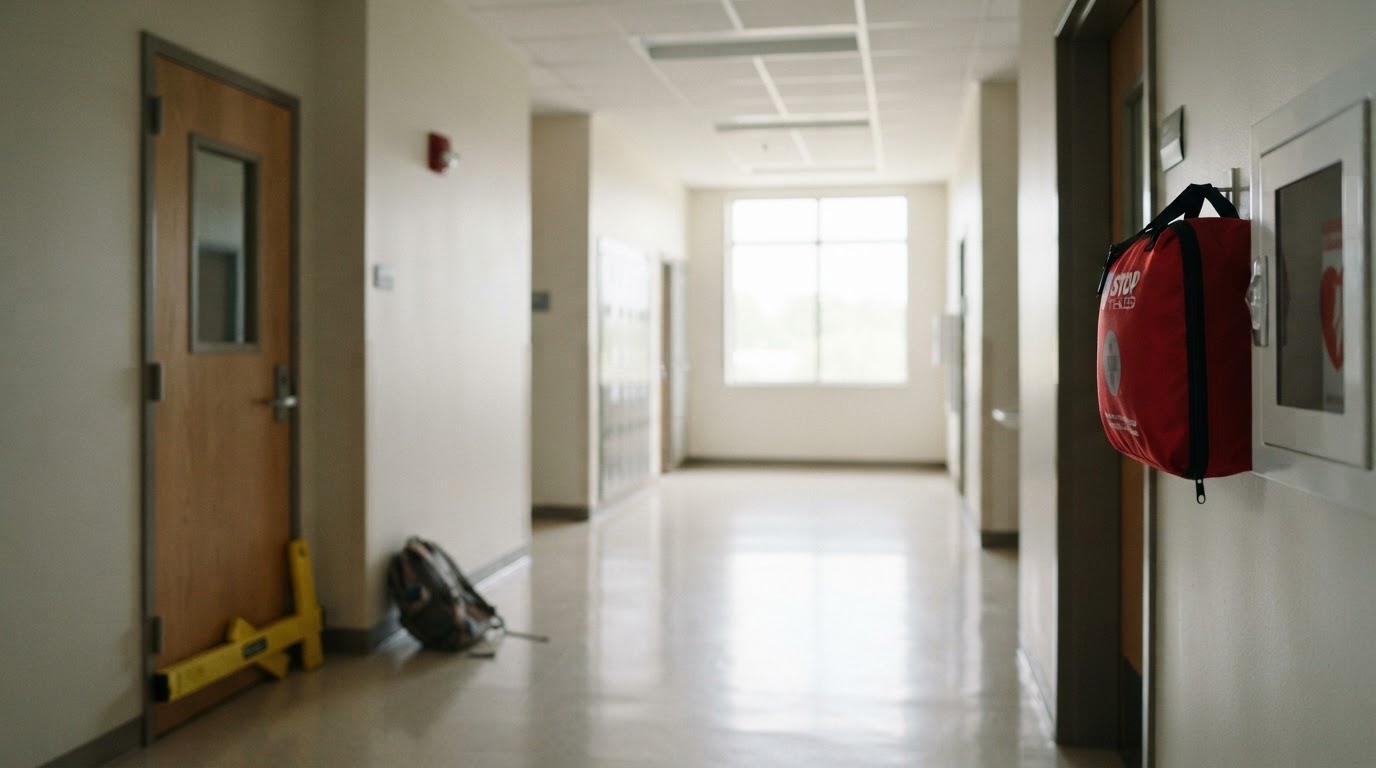
Active shooter response in clear steps: when to run, how to hide and barricade, fighting only as a last resort, police arrival, and life-threatening bleeding.
This article contains affiliate links. If you buy through these links, we may earn a small commission at no extra cost to you.
If a shooting starts where you are, run if there is a safe escape path. If there is not, hide and barricade. Fight only as a last resort when life is in immediate danger. Once the threat has moved or stopped and the scene is safe enough to help, control life-threatening bleeding while someone calls 911.
Why the three-step response exists
The FBI defines an active shooter as someone actively killing or trying to kill people in a populated area. Ready.gov teaches Run, Hide, Fight. ALERRT training used by many police departments calls the same choices Avoid, Deny, Defend. Both prioritize a safe escape, then denying access to your location, with physical defense reserved for immediate danger.
Step 1: Run
If there is a safe path away from the danger, take it immediately.
- Leave your belongings. Nothing in your bag is worth a second.
- Keep your hands visible and empty, and follow officers' commands.
- Encourage others to leave if you can do so safely, but do not wait for someone who refuses.
- Don't stop to film. Call 911 once you're moving, and keep moving once you've called.
- Outside, keep going away from the building and follow police commands. Don't gather in the parking lot. Responders need the area clear.
Step 2: Hide
If you can't get out, deny access to where you are.
- Lock the door and barricade it with heavy furniture if you can do so quickly.
- Turn off the lights. Silence your phone completely, vibration off.
- Get low and out of sight, away from doors and windows. If substantial cover is available, use it. Ordinary desks and drywall may conceal you without stopping gunfire.
- Do not cluster at the doorway. Spread out only if you can do so without crossing an exposed area.
- Keep quiet. If you use your phone, text with the ringer off.
- If you're in an open area when it starts, get into the nearest room with a door you can lock. Don't settle for a hiding spot out in the open.
Step 3: Fight
Fight only as a last resort when your life is in immediate danger. Ready.gov advises acting as aggressively as you can and committing to the action until you have a way out.
- Use an improvised weapon such as a chair or fire extinguisher.
- Throw objects and yell to disrupt the attacker's focus.
- If other people are with you, act together rather than one at a time.
- Stop as soon as you have a safe route out.
The goal is to create a chance to escape, not to chase or restrain the attacker.
When police arrive
Officers may not know who the attacker is when they arrive. Make yourself easy to identify as unarmed:
- Drop what you're carrying.
- Keep hands visible and empty, fingers spread.
- No sudden movements. No running toward officers. No reaching for anything.
- Follow shouted commands even when they seem odd.
- Don't grab, hug, or cling to an officer. They will keep moving past you toward the threat.
Step 4: Stop the bleeding
Severe bleeding can kill in under five minutes. For life-threatening bleeding from an arm or leg, apply a commercial tourniquet promptly. The North American Rescue C-A-T Tourniquet (Gen 7) can be routed for one-handed use, which matters if the injured arm is your own. Place it 2 to 3 inches above the wound, between the wound and the heart, and never directly over a joint. Tighten until the bleeding stops, secure the windlass, and record the application time on the tourniquet's TIME strap. Pain is expected, but stopped bleeding is the check that matters. The full application details are in our stop the bleeding guide.
Use a permanent marker to record that time and tell EMS when the tourniquet went on. A Sharpie Permanent Markers Fine Point, Black, 5-Pack costs about $4.39, enough to keep one beside each home, desk, or car kit. It can also date the kit label so expired supplies are easier to catch.
For bleeding that is not life-threatening, apply direct pressure and bandage the wound. Do not stop to flush a wound that is still bleeding. Once a minor wound is controlled, Saljet Wound Rinse Single-Use Sterile Saline, 12… pods provide single-use sterile saline before dressing it. The Adventure Medical Kits Mountain Series Hiker… fits in a daypack and includes wound-care supplies plus a field manual; a First Aid Only 298-Piece All-Purpose Kit is a less expensive desk-drawer kit. Practice with a training tourniquet before an emergency, not for the first time during one.
If someone stops breathing while you wait, start CPR. Our CPR and choking guide has the steps.
Prepare before it matters
- Know two exits from anywhere you spend time: office, school, mall, or place of worship. Also notice where you could barricade if both routes are cut off.
- Take workplace safety and bleeding-control training when it is offered.
- Keep a small kit at your desk, not in your car: tourniquet, a box of MedPride Powder-Free Nitrile Exam Gloves, Medium…, permanent marker, and a Energizer HC-550 Magnetic Flashlight (AA).
- Report a specific threat through workplace or school channels, or call 911 if danger is immediate. Describe what you observed instead of trying to investigate it yourself.
- An intruder at your own front door is a different scenario. Our home defense guide covers that one.
Walk the exits at places you visit often and decide where you would barricade. In an emergency, run, hide, fight only as a last resort, then control life-threatening bleeding when the scene is safe.