
How Long Does a Generator Run on a Tank of Gas? Fuel Math and Runtimes
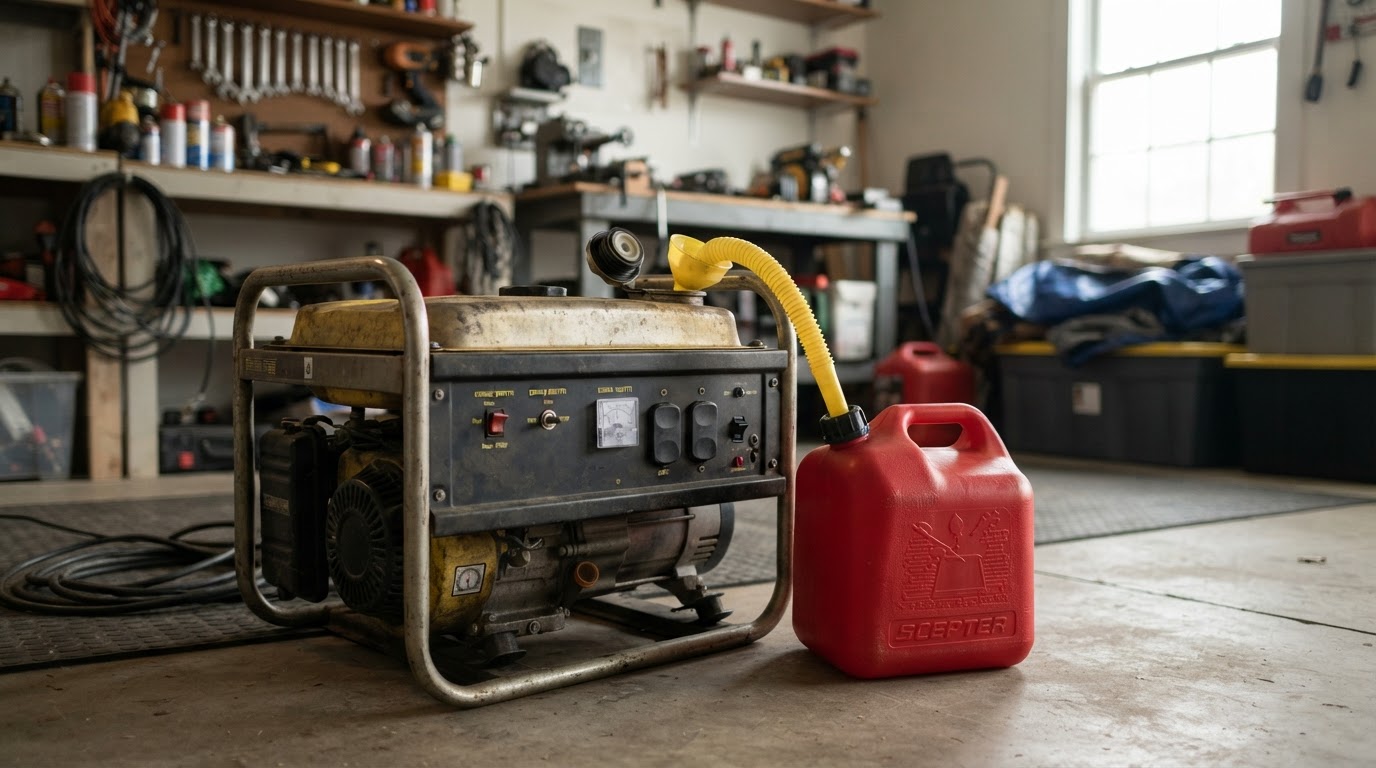
How long does a generator run on a tank of gas? Most portables last 5 to 12 hours at half load. Burn-rate math, real runtimes, and how to stretch a tank.
This article contains affiliate links. If you buy through these links, we may earn a small commission at no extra cost to you.
A generator's runtime comes down to two numbers: how big the tank is and how fast the engine burns through it. Most portable generators land between 5 and 12 hours on a full tank at half load, from about 5 hours for a small inverter with a 1.6-gallon tank to 12 for a 9,500-watt open-frame unit with a 6.6-gallon tank. Both of those are the makers' own published figures. Your real number will sit somewhere in that range, and the math to pin it down takes about a minute.
How long does a generator run on a tank of gas?
Short answer: 5 to 12 hours for most portable generators at half load, and the load is half the answer. Published runtimes assume the generator is carrying roughly half its running watts, so a "12-hour" unit is a 12-hour unit only while you stay near that load. Pull a well pump and a space heater and the same tank empties in a fraction of the time.
| Generator | Tank | Published runtime | What it tells you |
|---|---|---|---|
| Small inverter (2,900 running watts) | 1.6 gallons | Up to 5 hours at half load | Light loads, quick refills |
| Open-frame (9,500 running watts) | 6.6 gallons | Up to 12 hours on gasoline | About 0.55 gallons per hour at that load |
| Same open-frame unit on propane | 20-pound tank | Up to 7 hours at half load | Propane burns cleaner, stores for years |
The 1.6-gallon and 5-hour figures are the WEN 56360i 3600-Watt Portable Inverter Generator spec. The 6.6-gallon, 12-hour gasoline and 7-hour propane figures are Westinghouse's ratings for the Westinghouse WGen9500DFc 12500W Dual Fuel Generator. Divide the tank by the runtime and you get the burn rate that matters: about 0.32 gallons per hour for the small inverter, about 0.55 for the big open-frame unit.
The burn-rate math you can do in your head
Runtime in hours is tank capacity in gallons divided by burn rate in gallons per hour. If your manual lists a burn rate, you already have the answer. If it lists runtime at half load the way the specs above do, divide and you have the rate.
Lowe's publishes the yardstick worth memorizing: a 7,500-running-watt gasoline generator burns about 1/2 to 3/4 of a gallon per hour at 50 percent load, and a 6,750-watt propane unit burns 2 to 3 pounds per hour. That is the difference between a tank that lasts an evening and one that lasts a day.
Load drives the burn, and the size of "half load" surprises people. Half of a 2,900-watt inverter is about 1,450 watts, which covers a full-size refrigerator (about 700 running watts per our home generator sizing guide), lights, a modem, and phone chargers. Half of a 9,500-watt unit is a different world: fridge, freezer, well pump, furnace blower, and a window AC at once.
Inverter generators throttle the engine to match the load, so a light load burns far less than the half-load rate. Open-frame units hold a constant engine speed, so they burn near their full rate even with one lamp running.
How to get your generator's real number
- Read the manual. Every manual prints a runtime or burn-rate table by load. That table beats any number on a box or a blog.
- Measure your load instead of guessing. A plug-in meter like the P3 P4400 Kill A Watt Electricity Usage Monitor (about $31) reads true watts, so you know what your fridge, freezer, and furnace blower draw. Compare that to the manual's load tiers.
- Time a tank once. Fill it, run your normal outage load, and note the hours until it sputters. That one data point beats every estimate.
How to stretch a tank
- Electric heat is the first thing to cut. A 1,500-watt space heater is more than half of a small inverter's capacity and drains a tank faster than anything else in the house. Warm a room with a fuel-burning heater used per its manual; our winter heating safety guide covers the CO rules.
- Run heavy loads in blocks, not all day. The fridge and freezer hold temperature for hours when the door stays shut. Two or three 90-minute charging blocks a day covers a normal outage.
- Save the night shift for a battery. Charging a power station during the day lets it carry phones, a CPAP, and lights overnight without idling the generator. Our power station runtime guide has the capacity math.
- Keep it maintained. Old oil, a clogged air filter, and stale fuel all cost you efficiency. The manual's service schedule is a fuel-saving document as much as a maintenance one.
Fuel math for the outage itself
Plan fuel the same way you plan the tank. A 5-gallon can is about 9 hours of half-load running on the open-frame class above (5 divided by 0.55), and roughly 15 hours on the small inverter (5 divided by 0.32). Two cans plus a full tank is a realistic day of generator time, which is why the storage routine matters as much as the runtime: treat cans with stabilizer at fill-up, rotate them through your car twice a year, and keep them in a detached shed. The full routine is in our gasoline storage guide, and a CARB-compliant pair like the Midwest Can 5610 5-Gallon Gas Can, 2-Pack covers the starter stock (check the current offer before budgeting).
Two rules ride along with every refill. Shut the generator down and let it cool before you pour; a hot muffler is an ignition source. And run the generator outside only, at least 20 feet from any door, window, or vent, per CPSC guidance, with a battery CO alarm inside. Our generator carbon monoxide guide covers placement and symptoms, and that part is not optional.
Quick recommendations
- Fridge, lights, and phones: a small inverter with a 1.6-gallon tank gives about 5 hours per fill. Keep two stabilized 5-gallon cans and refill around meals.
- Whole house minus central AC: the 9,500-watt dual-fuel class gives up to 12 hours on gasoline or about 7 on a 20-pound propane tank. Start outage season with both topped off.
- Apartment or no safe fuel storage: skip the fuel math entirely and run a battery-first plan. The power outage survival guide covers that setup.
Know your tank and your burn rate, and you know how long the lights stay on.
Frequently asked questions
How long will a generator run on a full tank of gas?
Most portable generators run 5 to 12 hours on a full tank at half load. A small inverter with a 1.6-gallon tank runs about 5 hours, and a 9,500-watt open-frame unit with a 6.6-gallon tank up to 12, per the makers' published figures. Heavier loads shorten every one of those numbers.
How much gas does a generator burn per hour?
Load decides it. Published guidance puts a 7,500-watt gasoline generator at about 1/2 to 3/4 of a gallon per hour at 50 percent load, and a small inverter near a third of a gallon at the same load. Cut the load and the burn drops with it, which is why running one heavy appliance at a time stretches a tank.
Can I refuel a generator while it is running?
No. Shut the generator down and let it cool before refueling. Gasoline spilled or vaporized onto a hot muffler or exhaust can ignite, and a running unit also draws fuel past a hot engine. Refuel outside, and keep cans away from the generator while it runs.