
Power Outage with a Baby: Formula, Warming, Diapers, and Sleep Safety
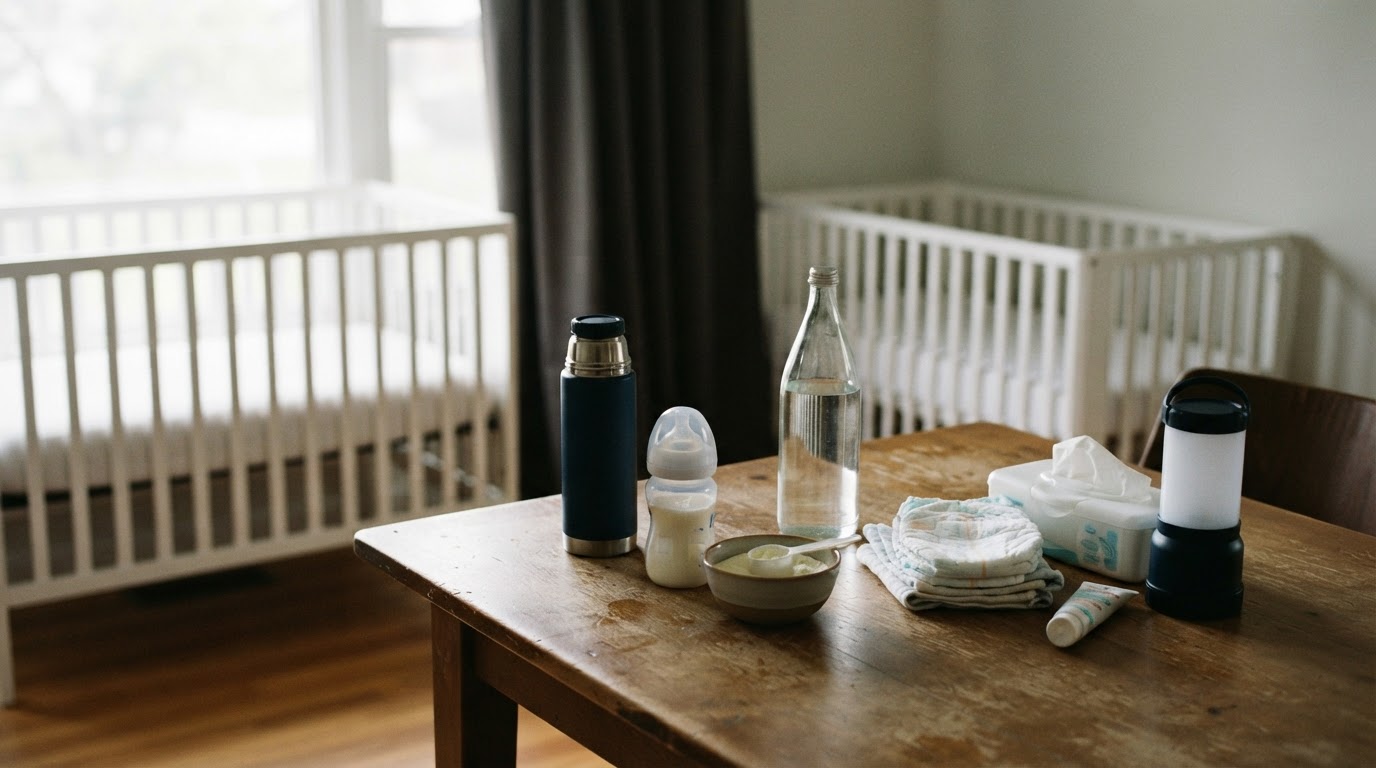
A power outage with a baby: how to mix formula safely, warm bottles without power, change diapers in the dark, and keep safe sleep rules exactly as they are.
This article contains affiliate links. If you buy through these links, we may earn a small commission at no extra cost to you.
A power outage with a baby is mostly a feeding, light, and sleep problem. Mix formula with water you trust, warm the bottle in a bowl of warm water instead of a microwave, put a battery lantern next to the changing pad, and keep the safe sleep rules exactly as they are. The things that genuinely need electricity, a bottle warmer, a white noise machine, a night light, all have battery or no-power replacements. The rest is planning you can do this week.
Formula safety comes before everything else
Powdered formula has to be mixed with water you trust. If the tap is under a boil water advisory, or you are not sure it is safe, use bottled water or water you brought to a rolling boil for one minute (three minutes above 6,500 feet) and cooled, which is the CDC's standard. Ready-to-feed liquid formula skips the water question entirely. Never dilute formula to stretch it. Watering it down can unbalance a baby's electrolytes, and that turns an inconvenience into a hospital visit.
Prepared formula is good for two hours at room temperature, and one hour from the moment a feeding starts, per CDC guidance. In a hot house, mix small batches and dump what is left rather than stretching the window. A sealed tub like Enfamil NeuroPro Infant Formula 20.7 oz (about $38) keeps for months and rotates through normal feedings, which is why the food storage plan treats it like any other staple.
If you are pumping, freshly expressed breast milk holds about four hours at room temperature (CDC), which buys you time to find ice or a cooler. After that it has to get cold, so freeze water bottles ahead of storm season.
Warming a bottle without power
You do not need a warmer. Babies will drink formula at room temperature, and AAP guidance treats warming as a preference, not a requirement. If your baby insists on warm, the outage-safe method is a bowl of warm water: stand the bottle in it for a few minutes, swirl, and test a few drops on the inside of your wrist before feeding.
To make the warm water itself, a thermos filled before the storm stays hot for hours. If you have a battery station, a small kettle is one of the lightest loads you can put on it. The EcoFlow RIVER 3 Portable Power Station (245Wh) runs a mini kettle, recharges phones, and keeps a night light on; it runs about $249 at the current listing.
Two heating mistakes to avoid: never run a camp stove or generator indoors for hot water (generator placement rules here), and never microwave a bottle.
Diapers in the dark
Changing a diaper by lantern light is easy once the gear lives in one place. Stage a caddy or tote with diapers, wipes, cream, and a spare onesie before the storm, so a 2 a.m. change does not need a flashlight in your teeth. The BioLite Luci Emergency Lantern is a rechargeable lantern that runs about 24 hours on low and charges in the sun, which is more useful on a changing table than raw brightness. A headlamp works too, worn on your head so both hands stay free.
Diaper math for the kit: the AAP's newborn range is 8 to 12 diapers a day, so a 72-hour supply is roughly 30, plus a full pack if the outage might run longer. A box like the Pampers Pure Baby Diapers, Size 0 (76 Count) (76 size-0 diapers, about $30) covers that three-day supply two and a half times over, so the outage kit and the changing table draw from the same box. Wipes get cold fast in an unheated house, so warm the pack against your body before a change and keep the changing spot out of drafts. A box like Huggies Skin Essentials Baby Wipes, 99% Water, 10… (560 wipes across 10 packs, about $31) covers the caddy and the outage kit from the same supply, and it is fragrance-free and 99% water, the safer default for newborn skin. Bag and seal soiled diapers if the plumbing is out, and keep the bin away from the sleep area.
Sleep rules do not change with the lights
The AAP's safe sleep rules survive an outage intact: baby on the back, on a firm flat surface, in their own sleep space, with nothing soft added. What changes is the scenery, not the checklist. A white noise machine is a comfort tool, not equipment. A phone playing rain sounds on a power station works, but so does silence.
Temperature is the part worth managing. Dress the baby in one more layer than you are wearing, use a sleep sack instead of loose blankets, and check the back of the neck to judge warmth. A hot, sweaty baby is overdressed, not cozy, and AAP lists overheating as a SIDS risk factor, so resist the urge to pile on blankets in a cold house. Skip hats indoors, and use battery light only near the sleep area. Candles and a sleep-deprived adult are a bad combination at 3 a.m.
The baby 72-hour kit
Build this once and check it every fall:
- Formula: three days minimum, a month if you have room. Ready-to-feed cartons if water is a question mark.
- Bottles and nipples: two or three, washed by hand in bottled water if the dishwasher is out. A four-pack like Dr. Brown's Anti-Colic Options+ Narrow Baby Bottle… (about $25, Level 1 slow-flow nipples) covers the rotation with a spare left over.
- Water: one gallon per person per day (Ready.gov), plus what you need for mixing.
- Diapers: about 30 for three days for a newborn, plus wipes and diaper cream.
- Light: a rechargeable lantern or headlamp that lives with the kit.
- Warmth: a sleep sack, one extra onesie, and a hat for outdoor trips only.
- Health: a thermometer, and any medication your pediatrician has already approved, with dosing instructions from them, not a label guess.
- Paperwork: insurance card copies and the pediatrician's number, because phones die first in an outage.
When the outage outlasts the plan
Most outages end in hours. When one stretches past a day, keep the feed, sleep, and diaper loop boring and watch for the two things that change the math: fever and supply.
For a baby under 3 months, a rectal temperature of 100.4°F (38°C) or higher means call for medical advice right away, per AAP guidance, and our symptom red-flag guide covers the rest. If you are running low on formula, diapers, or a medication, ask before it is urgent: a neighbor with power, a shelter, or your county's non-emergency line. The power outage survival guide covers the rest of the household plan, and if someone in the house depends on refrigerated medication, the medication stockpile guide covers the cold-chain rules.
Feed, light, warmth, sleep. Get those four in place before the storm arrives, and an outage turns into a quiet weekend instead of a crisis.
Frequently asked questions
Can I warm a bottle in the microwave during an outage?
No. Microwaves heat milk unevenly and can leave scalding pockets inside a bottle that feels cool on the outside, which is why the AAP advises against it. Stand the bottle in a bowl of warm water for a few minutes, swirl it, and test a few drops on your wrist.
Is room-temperature formula okay for a baby?
Yes. Temperature is a preference, not a safety rule. As long as the formula is mixed correctly with safe water and used within the CDC window (two hours at room temperature, one hour once a feeding starts), serving it cool or at room temperature is fine.
What do I mix formula with during a boil water advisory?
Use bottled water, or tap water brought to a rolling boil for one minute (three minutes above 6,500 feet) and then cooled. Ready-to-feed liquid formula needs no water at all, which makes it the simplest outage option. Never dilute formula to stretch it.