
How to Start a Fire in an Emergency: Ferro Rods and Matches That Work When Wet (2026)
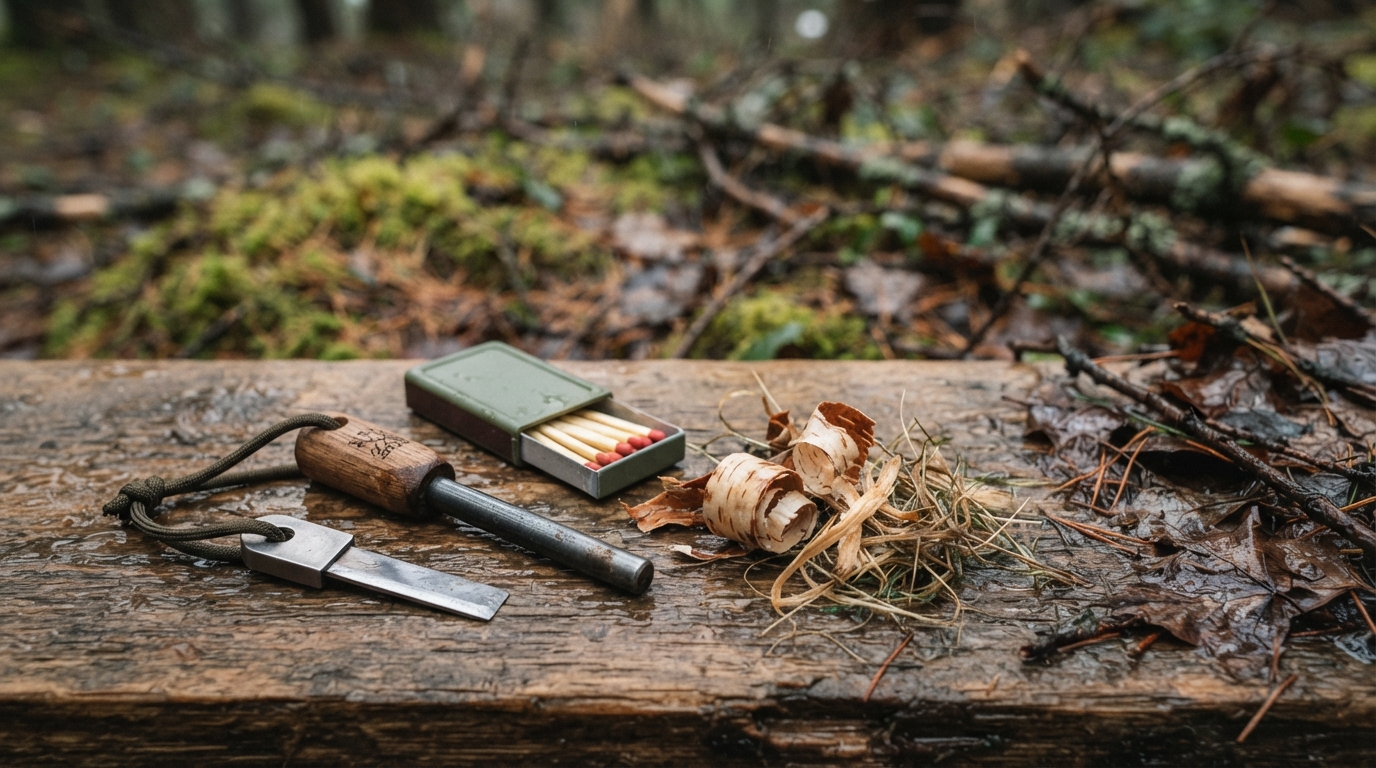
Start a fire when everything is wet: which ferro rod and waterproof matches actually work, how to prep tinder, and the step-by-step method that works cold.
This article contains affiliate links. If you buy through these links, we may earn a small commission at no extra cost to you.
A lighter that worked last summer will not light after a night in a wet pocket. In an emergency you need fire that starts cold, wet, and with shaky hands. The reliable stack is small: a ferro rod that throws sparks when soaked, a backup of windproof matches, and tinder you made beforehand.
This is not the cooking article. Our cook without power guide covers the butane stove for meals outside only, and our winter storm survival guide covers heating one room safely. What follows is the older skill underneath both: making flame from nothing when the power is out.
The Two Starters Worth Carrying
A ferro rod is the primary. A 4-inch ferrocerium rod like the STAYPREPPED Ferro Rod Fire Starter Kit throws sparks near 5,500 degrees even when wet, and one rod gives you 12,000 strikes. No fuel to leak, no wheel to jam with grit, nothing to expire in a drawer. The orange paracord handle helps more than it looks: you can find it in a dark bag and loop it to a zipper so it does not get separated from your kit.
Waterproof matches are the backup. A stormproof match stays lit in wind and after a dunk. Keep 20 in a sealed tube, not loose where heads rub off. The UCO Stormproof Match Kit… is 25 matches and 3 strikers in a waterproof case for about $14. Matches are faster than a ferro rod when hands are numb, so they earn their weight as the second option. A BIC Multi-Purpose Classic + Flex Wand Lighters… fills that third slot, and the flex wands light a stove burner with your hand clear of the flame. Butane still struggles below freezing, so it stays behind the rod.
Piezo igniters fail when damp, and a $7 rod bails out a $29 stove on the night you need it. If you already own the Gas One GS-3400P Dual Fuel Portable Stove for cooking outside, keep the ferro rod and matches in the same tote.
Tinder Is the Real Skill
A ferro rod throws sparks. Tinder catches them. Without tinder you just make pretty sparks on a wet log. Three options you can make at the kitchen table:
Petroleum cotton balls. Work a pea-sized dab of petroleum jelly into a cotton ball, then pull it apart until the fibers are wispy. One ball burns 2 to 3 minutes, even in drizzle, and weighs nothing. Make a dozen, store them in a tin.
Dryer lint and wax. Pack lint into an egg carton cup and pour melted wax over it. Break the cups apart when cool. Each puck is waterproof and burns 4 to 5 minutes. Heavier than cotton, but it survives a soaked pack better.
Char cloth. Cut 2-inch cotton squares, put them in a small tin with a pinhole lid, and set the tin near coals for 15 minutes until it stops smoking. The blackened cloth catches even a weak spark and holds an ember you can blow into flame. Make a batch and carry a few in foil.
In the field you can add shavings from dry standing dead wood, but never count on finding dry tinder after rain.
How to Light It, Step by Step
Do this the same way every time so muscle memory takes over when cold.
Build the nest before you strike anything. On a dry base like a stone or bark, set a golf-ball sized tinder bundle in the center. Around it, build a tiny teepee of pencil-sized twigs, then lean slightly larger sticks around that. Have an armful of wrist-thick wood within reach before you light anything.
Strike into the tinder, not above it. Hold the striker at 45 degrees and scrape down the rod with pressure, aiming sparks into the fibers. Two firm pulls beats ten light ones. Shield the flame with a cupped hand and touch it to the underside of the bundle.
Blow gently once it glows. When the tinder smokes, cup your hands around it and give slow, steady breaths. A sharp puff blows it out. When flame appears, set the bundle under the teepee and let it climb. Add sticks smallest first.
Fail clean, try again fast. If it does not catch in 30 seconds, pull the tinder apart to expose dry fibers and strike again. Do not dump the bundle and hunt for new material while your hands get colder.
Run this once in the backyard when dry, and once after rain. The wet try teaches more.
When Wet and Cold Are the Problem
Rain soaks bark but rarely soaks the inside of standing dead wood. Split a branch and shave feather sticks from the dry interior. Those curls catch a spark when every log outside is wet. Check under overhangs, under evergreen branches, and inside a dead stump for the driest kindling.
Wind scatters sparks. Kneel with your back to it or set your pack as a windbreak, and keep hands low so air comes from your breath.
Cold steals dexterity, so do the fine work early: pull the cotton apart, set the teepee, and keep the rod on a lanyard. If you are already shivering, get a small flame close first, then feed bigger wood once your hands work again.
Never bring charcoal, a camp stove, or a wood fire indoors. Any open flame inside a home can fill a room with carbon monoxide in minutes. That is why the butane stove stays outside on concrete, same rule as the cooking guide says.
Storage and Safety
Store the ferro rod unsheathed in your go bag, not a garage drawer. Pair it with the tinder tin and the match tube in one zip pouch marked FIRE that lives with your power and light kit.
Check it each fall: strike the rod twice, replace dried-out cotton, and make sure the match tube still seals. Thirty seconds once a year is enough.
For power in the same outage, the EcoFlow RIVER 3 Portable Power Station covers lights and radios without flame, but heat and light are different jobs. Keep both.
Your Fire Starter Checklist
- Primary: STAYPREPPED Ferro Rod Fire Starter Kit (4-inch ferro rod, striker, lanyard) in the go bag
- Backup: 20 waterproof or stormproof matches in a sealed tube
- Tinder: 12 petroleum cotton balls in a tin + 4 wax lint pucks, replaced yearly
- Practice: one dry-day and one wet-day start in the backyard before winter
- Companion: Gas One GS-3400P Dual Fuel Portable Stove stove tote for cooking outside, marked OUTDOOR ONLY
- Safety: never burn fuel or wood indoors, keep flame 3 feet from anything flammable
One pouch, two starters, and tinder you made at the kitchen table. An honest fire plan you can test this weekend and trust when the grid goes dark.