
Power Outage Survival Guide 2026: Gear, Food Safety, and the 72-Hour Rule
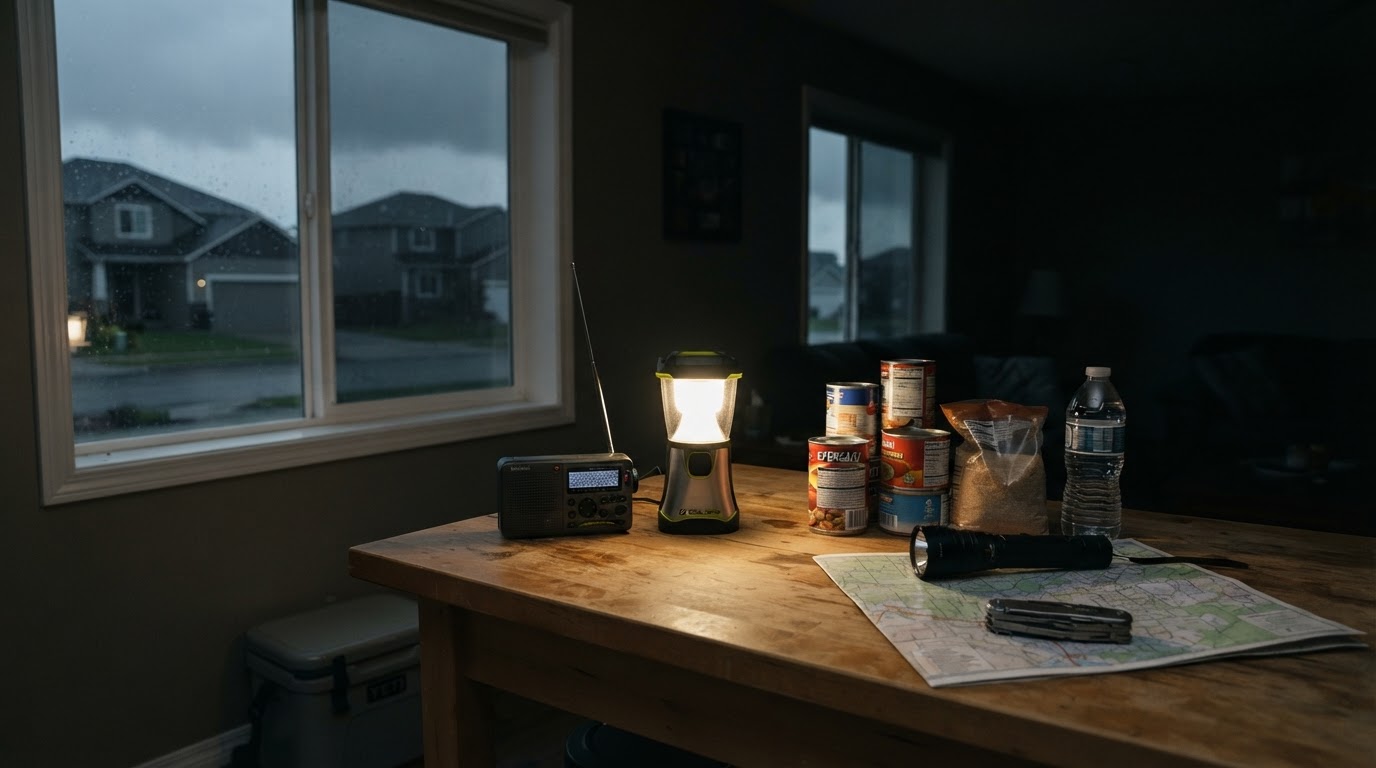
The systems and gear that carry a household through a multi-day outage: food safety, water storage, power stations vs generators, and the 72-hour margin.
This article contains affiliate links. If you buy through these links, we may earn a small commission at no extra cost to you.
The US has logged a major power outage in every month of 2026 so far (a streak Electrek and Yahoo News documented in July). Storm outages cut power to roughly 250,000 customers in New Jersey over the July 4 weekend, and a single July evening left 22,500 customers dark in south Orange County, California (SDG&E, via the Orange County Register).
It's easy to tell yourself outages are someone else's problem. Then the lights flicker, the sump pump stops, and your phone dies at 8%. Outages are among the most common emergencies in the US, and among the most predictable.
This guide covers the systems and gear side of outage prep: the safety numbers, water storage, power stations vs generators, and the 72-hour margin. For the hour-by-hour sequence, start with our companion guide: What to Do When the Power Grid Goes Down.
Stay Informed Without the Internet
Cell sites often have backup power, but its duration varies. During extended outages, internet and cell service can also be unavailable. An emergency radio does not depend on local cell service, so NOAA weather alerts can remain available through that separate path.
For a brownout, a small UPS keeps the router and modem running on battery through the flickers that would otherwise reset them. The CyberPower ST425 Standby UPS Battery Backup is a compact standby UPS (about $60, 425VA/260W, 8 outlets, UL certified): plug the modem and router into the battery-backed outlets and a 5-minute blip no longer drops the network. For multi-day outages the EcoFlow RIVER 3 Portable Power Station does the heavier lifting, but the UPS is the answer for the everyday blip.
- The Midland ER310 Emergency Radio is our overall pick: 72+ hours of battery, NOAA alerts loud enough to wake you, and an SOS beacon.
- The RunningSnail MD-090 Emergency Radio is the budget option for a car or a second floor of the house.
- The Kaito KA500 Emergency Radio adds solar for multi-day scenarios.
Keep the radio in the same place every time, with batteries stored beside it (not in the device; they corrode). Label the channel preset card for your county's NOAA station.
Food Safety: When to Toss, When to Keep
The 4-hour rule is the one that matters, and the numbers are USDA food-safety guidance: 4 hours for a closed refrigerator, 48 hours for a full freezer, 24 for a half-full one. After that, follow the USDA's own line: "when in doubt, throw it out." Food poisoning during an emergency is worse than wasting food, it's a trip to an ER that may itself be on backup power. Our guide to how long food lasts without power has the full keep-or-toss list.
- Keep the fridge and freezer doors closed, opening a door costs a day of cold chain in minutes
- Use coolers and ice from the freezer for the items you'll eat first
- A digital thermometer in the fridge ends the guessing: USDA's rule is to toss perishables that sat above 40°F for more than 2 hours
The Bathroom Problem Nobody Mentions
By day two of a real outage, sanitation quietly becomes the limit on how long you can stay put. Sewage systems move on water pressure, so when the water stops, nothing flushes. The fix is small: a 5-gallon bucket with a tight lid and litter, plus a separate supply of flush water you never drink from. Our emergency toilet guide walks through the whole setup, including how many manual flushes you can squeeze out of stored water.
Staying Warm (or Cool) Without Power
Most outage injuries and deaths come from temperature, not the dark. During heat waves, heat stroke is the emergency: the CDC warns body temperature may rise to 106°F or higher within 10 to 15 minutes, and that heat stroke can cause death or permanent disability if treatment is delayed. Move to the coolest room, wet cloths on pulse points, and hydrate. Never run a generator or car in an attached garage to run the AC; carbon monoxide is invisible and kills in minutes. If a heat dome coincides with an outage, go to a cooling center.
In winter, insulate one room with blankets and curtains, dress in layers, and use hand warmers. If you have a fireplace or gas heater, check the carbon monoxide detector batteries now; in an outage, CO detectors run on the same backup batteries you may not have changed in years.
Power Stations vs. Generators
For most households, a battery power station is the right first purchase: silent, indoor-safe, no fuel to store or spill. Our pick is the EcoFlow RIVER 3 Portable Power Station, enough for phones, radios, a CPAP, and a router through a multi-day outage, rechargeable from a car outlet.
Generators make sense only for serious needs (medical equipment, sump pumps, well pumps) and they come with rules: the CPSC's guidance is outside only, at least 20 feet from the house with the exhaust pointed away, never in a garage, and opening doors or windows will not make an indoor generator safe. Store enough fuel for 72 hours. If you go this route, install a CO alarm on every floor.
The 72-Hour Rule
FEMA's guidance is blunt: be self-sufficient for at least 3 days after an outage, because that's the realistic restoration window for a major event. Most households have less than 24 hours of contingency. Our emergency food and water guide walks through building that margin. Water is the first system to fail, since municipal pumps run on electricity. Fill the bathtub and every container at the first flicker; a bathtub bladder like waterBOB Bathtub Emergency Water Storage holds up to 100 gallons under a food-grade liner. Prescriptions are part of that margin too: our prescription supply guide covers 90-day fills and cold-chain storage. If a major outage triggers a federal disaster declaration, FEMA Individuals and Households Program can help cover repair and temporary housing costs; the apply-and-document walkthrough is in our FEMA disaster assistance guide.
Outage Checklist (Print and Stick on the Fridge)
- Radio + spare batteries in a known spot
- Water stored: 1 gallon per person per day
- Emergency toilet: 5-gal bucket + bags + litter, flush-water supply
- Flashlight per room, headlamp per person
- Power bank charged and in the go bag
- CO detector batteries tested this month
- Utility outage map + number saved in contacts
- Freezer thermometer in place
- Cash in the house (card readers die with the grid)
The pattern of 2026 is clear: outages are no longer rare events, they're a seasonal fact of life. Ten minutes of prep now turns an outage from a crisis into an inconvenience.
Frequently asked questions
What should I do when the power goes out?
First, check whether it is just your home (look at neighbors' lights, check your breaker panel) or the whole street. Report the outage, then switch off surge-sensitive electronics, keep fridge and freezer doors closed, and light the room with lanterns or a headlamp, not candles. The hour-by-hour sequence is in our companion guide, What to Do When the Power Grid Goes Down; the printable checklist below covers the gear.
How long is food safe in a fridge without power?
USDA guidance: an unopened fridge keeps food safe for about 4 hours; a full freezer holds 48 hours (24 if half full). After that, discard perishables that sat above 40°F. When in doubt, throw it out.
What do I do if the power outage lasts more than a day?
Shift to preservation mode: move food to the coldest spot, use coolers with ice for what you open, cook perishables first on a butane stove outdoors or a grill away from the house, and prioritize one warm room in winter.