
When 911 Does Not Answer: Getting Help When Emergency Lines Are Down
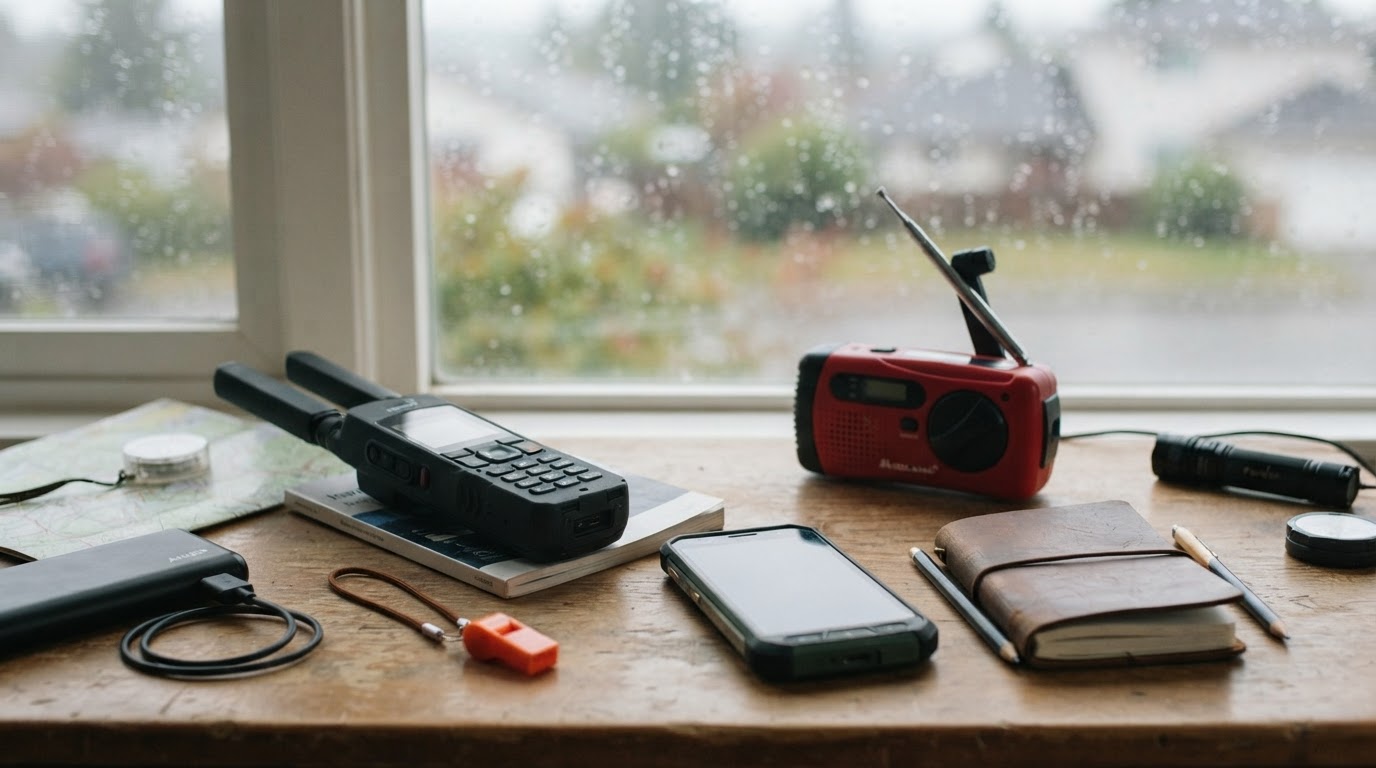
Busy signal on 911 during a disaster? Text-to-911 rules, the 10-second redial, backup call centers, satellite SOS, and low-tech backups that summon help.
This article contains affiliate links. If you buy through these links, we may earn a small commission at no extra cost to you.
You call 911 and get a busy signal, endless ringing, or a fast-busy tone that means the network is saturated. During hurricanes, wildfires, and earthquakes the emergency system can choke on call volume or take tower damage in your neighborhood. It usually recovers, but the minutes while it is down are exactly when you need a plan beyond "call again."
Quick answer: If 911 will not connect, hang up, wait 10 seconds, and redial by voice, which 911.gov calls the most reliable way to reach dispatch. If voice keeps failing, text 911 with your location and emergency first (the FCC says call if you can, text if you cannot, and only some call centers accept texts). Save the network for emergencies, use 211 or 311 for information, and keep a satellite messenger and a whistle for when no tower answers.
Why 911 stops answering in a disaster
Two different failures produce the same silence. The first is congestion: thousands of people call at once and the local trunks fill up. The second is damage: the call center loses power or connectivity, or nearby towers go dark. Call centers plan for the damage case by rerouting calls to backup centers in unaffected areas, which North Carolina's 911 board describes as common practice during hurricanes, so a stranger in another county may answer and need your full address, not landmarks.
Redial the smart way, then text
Do not sit on a dead line. Hang up, wait roughly 10 seconds before redialing, and keep the retry short: joint FCC and FEMA disaster guidance asks failed callers to pause about 10 seconds so retries do not deepen the congestion, and to convey only vital information. Try voice again because 911.gov is explicit that a voice call remains the most reliable way to reach dispatch even where texting works. If the call connects, lead with the street address, then the emergency, and do not hang up until the call-taker releases you.
If voice keeps failing after several retries, text 911. The FCC's rule is "call if you can, text if you cannot": text-to-911 is available only in certain areas, so check the FCC's registry for your county before you need it. Put your location and the emergency in the very first message, since texts can arrive delayed or out of order. Plain words only, no slang, no emojis, no group text, and never while driving. If your area does not accept texts, the carrier must send an automatic bounce-back, so no reply after a few minutes means the message likely never arrived.
Two limits catch people. Texting 911 needs an active texting plan; an old phone with no plan can still voice-call 911 but cannot text it. And app messages do not count: the FCC notes that WhatsApp and social-media messengers cannot reach 911. Do not post your emergency on social media and wait either. Responders do not monitor feeds during the event, a point state 911 boards repeat every hurricane season.
Keep the network clear for the calls that matter
Your family's check-ins compete with your neighbor's 911 call for the same congested towers. FEMA's post-disaster guidance says it plainly: text loved ones instead of calling, make voice calls only for emergencies, and mark yourself safe on social media or the Red Cross Safe and Well registry instead of phoning around. Skip streaming video, music downloads, and games right after the event; they burn the capacity that life-safety calls need.
The same discipline applies to what you ask 911 for. Do not call for shelter locations, road closures, outage status, or school closings; those calls queue behind cardiac arrests. Call 211 where it operates for disaster information, 311 for city services, or the utility's outage line for power status.
When no tower answers: the satellite and shoe-leather backups
Sometimes the problem is not congestion but coverage: towers down, phone dead, or no signal where you stand. That is the case a satellite messenger exists for. A ZOLEO Satellite Communicator (about $199 plus a required monthly plan) sends two-way messages and an SOS with your GPS position to a staffed monitoring center over the Iridium network, which is why it also anchors our satellite communicator roundup. It needs open sky, so step outside or to a window, and pair it with the app before the season, not during the outage.
Nothing electronic is the last resort. If someone needs help and no message goes out, go in person to the nearest fire station, police station, or staffed shelter, or flag down a passing patrol car or ambulance rather than assuming someone else already called. For signaling rescuers within earshot, a Fox 40 Sonik Blast CMG Whistle (about $9.99) carries far farther than shouting; Fox 40 rates the pea-less design at 115 dB, and three blasts, repeated, is the universal distress pattern. Agree the pattern with your household in advance as part of your family communication plan.
Battery discipline decides whether any of this works
A phone at 4 percent cannot redial, text, or run a messenger app. Per the FCC's disaster guidance, dim the screen, close power-hungry apps, and use airplane mode between check-ins; a Anker 30W Dual-Port USB-C Car Charger (about $14) refills a phone fast, but only with the car outside the garage. A charged Anker Power Bank 10,000mAh USB-C (about $26) lives in the junk drawer or go-bag for this day, holding roughly two phone refills without the grid or the car. Our power outage survival guide covers the wider routine: what to unplug, what to keep cold, and when to leave.
Quick Recommendations
- Program the non-emergency numbers now: your county's 10-digit dispatch line, 211, 311, poison control (1-800-222-1222), and the utility outage line. A voice call to the 10-digit dispatch number reaches the same room as 911 when the short code jams.
- Look up your county in the FCC text-to-911 registry this week and tell the household "call first, text if voice fails."
- Stage the backups charged: ZOLEO Satellite Communicator satellite messenger with an active plan, Anker Power Bank 10,000mAh USB-C power bank, Fox 40 Sonik Blast CMG Whistle whistle on a keychain, car radio preset to the local news station for alerts when data dies.
Sources: 911.gov FAQ on calling and texting 911 (call-if-you-can guidance, bounce-back messages, uninitialized-phone limits); FCC "Text to 911: What You Need to Know" and text-to-911 registry rules (availability by call center, six-month provisioning, app exclusions); FCC/FEMA "How to Communicate Before, During and After a Major Disaster" (10-second redial, brief calls, battery conservation, no streaming, broadcast alerts); FEMA disaster FAQ (text-don't-call guidance); North Carolina 911 Board hurricane guidance (backup-center rerouting, 211 for non-emergencies, no social-media rescue requests); manufacturer guidance for product specifications.